Boursier Valentina, Gioia Francesca, Musetti Alessandro, Schimmenti Adriano
Department of Humanities, University of Naples Federico II, Naples, Italy.
Department of Humanities, Social Sciences and Cultural Industries, University of Parma, Parma, Italy.
Front Psychiatry. 2020 Dec 8;11:586222. doi: 10.3389/fpsyt.2020.586222. eCollection 2020.
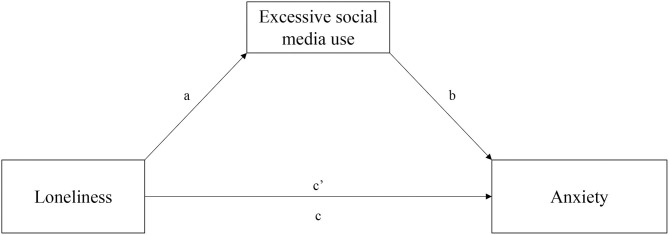
The outbreak of coronavirus disease 2019 (COVID-19) prompted people to face a distressing and unexpected situation. Uncertainty and social distancing changed people's behaviors, impacting on their feelings, daily habits, and social relationships, which are core elements in human well-being. In particular, restrictions due to the quarantine increased feelings of loneliness and anxiety. Within this context, the use of digital technologies has been recommended to relieve stress and anxiety and to decrease loneliness, even though the overall effects of social media consumption during pandemics still need to be carefully addressed. In this regard, social media use evidence risk and opportunities. In fact, according to a compensatory model of Internet-related activities, the online environment may be used to alleviate negative feelings caused by distressing life circumstances, despite potentially leading to negative outcomes. The present study examined whether individuals who were experiencing high levels of loneliness during the forced isolation for COVID-19 pandemic were more prone to feel anxious, and whether their sense of loneliness prompted excessive social media use. Moreover, the potentially mediating effect of excessive social media use in the relationship between perceived loneliness and anxiety was tested. A sample of 715 adults (71.5% women) aged between 18 and 72 years old took part in an online survey during the period of lockdown in Italy. The survey included self-report measures to assess perceived sense of loneliness, excessive use of social media, and anxiety. Participants reported that they spent more hours/day on social media during the pandemic than before the pandemic. We found evidence that perceived feelings of loneliness predicted both excessive social media use and anxiety, with excessive social media use also increasing anxiety levels. These findings suggest that isolation probably reinforced the individuals' sense of loneliness, strengthening the need to be part of virtual communities. However, the facilitated and prolonged access to social media during the COVID-19 pandemic risked to further increase anxiety, generating a vicious cycle that in some cases may require clinical attention.
2019年冠状病毒病(COVID-19)的爆发促使人们面对一种令人痛苦且意想不到的情况。不确定性和社交距离改变了人们的行为,影响着他们的情感、日常习惯和社会关系,而这些都是人类幸福的核心要素。特别是,因隔离措施导致的限制增加了孤独感和焦虑感。在此背景下,人们建议使用数字技术来缓解压力和焦虑,并减少孤独感,尽管大流行期间社交媒体使用的整体影响仍需谨慎对待。在这方面,社交媒体的使用既存在风险也带来机遇。事实上,根据与互联网相关活动的补偿模型,在线环境可用于缓解因痛苦生活境遇所引发的负面情绪,尽管这可能会导致负面结果。本研究考察了在COVID-19大流行期间因强制隔离而经历高度孤独感的个体是否更容易感到焦虑,以及他们的孤独感是否会促使其过度使用社交媒体。此外,还测试了过度使用社交媒体在感知到的孤独感与焦虑之间关系中可能起到的中介作用。715名年龄在18至72岁之间的成年人(71.5%为女性)参与了意大利封锁期间的一项在线调查。该调查包括用于评估感知到的孤独感、过度使用社交媒体和焦虑感的自我报告测量方法。参与者报告称,他们在大流行期间每天花在社交媒体上的时间比大流行之前更多。我们发现,有证据表明感知到的孤独感既预测了过度使用社交媒体,也预测了焦虑感,过度使用社交媒体也会增加焦虑水平。这些发现表明,隔离可能强化了个体的孤独感,增强了他们融入虚拟社区的需求。然而,在COVID-19大流行期间,便利且持久地使用社交媒体有可能进一步增加焦虑感,从而形成一个恶性循环,在某些情况下可能需要临床关注。