Dixit Shalabh, Yadaw Ram Baran, Mishra Krishna Kumar, Kumar Arvind
International Rice Research Institute, DAPO Box 7777, Metro Manila, Philippines.
Nepal Agricultural Research Council, National Rice Research Project, Hardinath, Nepal.
Euphytica. 2017;213:184. doi: 10.1007/s10681-017-1976-3. Epub 2017 Jul 24.
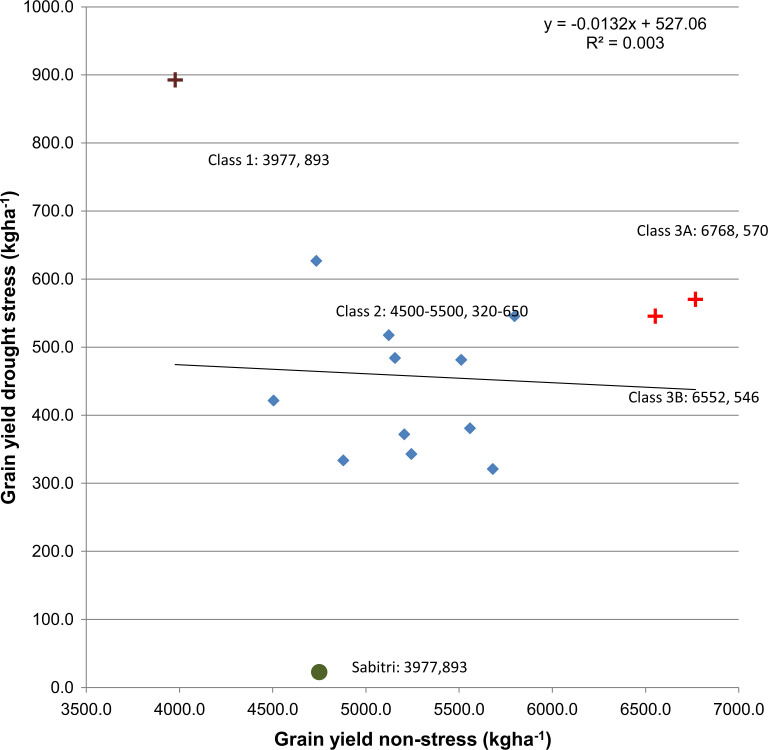
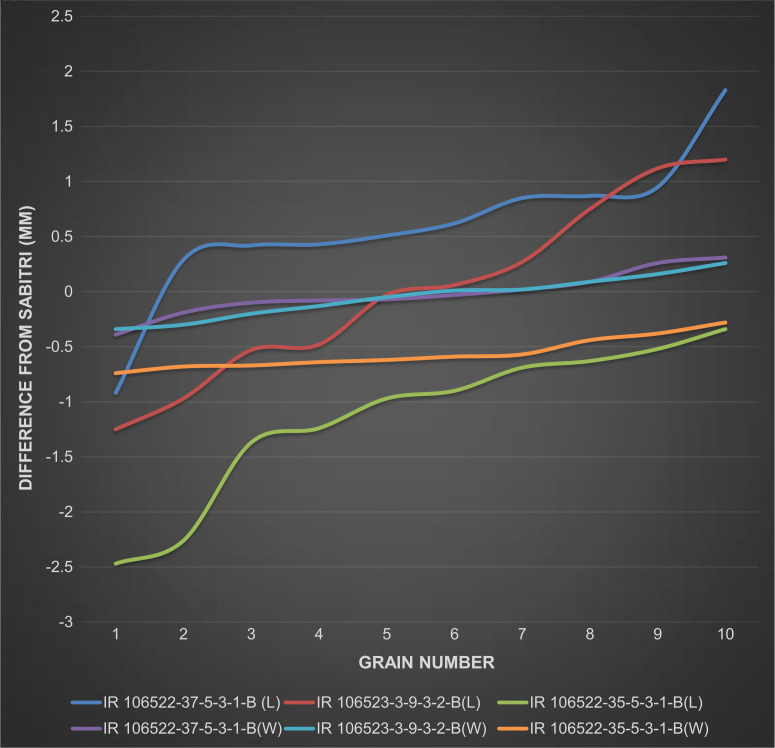
Sabitri is a rice variety grown in a large part of the rainfed areas of Nepal. It was originally developed for irrigated condition; hence, this variety suffers high yield decline under drought. Two QTLs, and , with large effects on grain yield under drought were identified in the Sabitri background in separate QTL mapping studies. The present study reports the development of Sabitri near isogenic lines (NILs) with combinations of these two QTLs and their characterization under drought. To do so, marker-assisted backcross breeding (MABB) was combined with phenotypic selection to develop high-yielding drought-tolerant NILs with Sabitri grain type. Apart from this, drought-tolerant variants for grain type with high yield under non-stress were identified among the developed NILs. Early days to flowering of up to 13 days and reduction in plant height of up to 13 cm as compared to Sabitri were observed in the developed NILs. Some of these NILs showed higher yield compared to Sabitri and relatively higher tolerance to drought, indicating the capture of positive alleles and interactions during the course of selection. The developed NILs possessed high yield potential which make them suitable materials for the testing of water-saving technologies in irrigated areas. Based on their performance, these NILs can be deployed in rainfed areas in Nepal and other countries of South Asia to increase yield stability.
萨比特里是一种在尼泊尔大部分雨养地区种植的水稻品种。它最初是为灌溉条件培育的;因此,该品种在干旱条件下产量大幅下降。在单独的数量性状基因座(QTL)定位研究中,在萨比特里背景下鉴定出了两个对干旱条件下的籽粒产量有重大影响的QTL,即 和 。本研究报告了具有这两个QTL组合的萨比特里近等基因系(NIL)的培育及其在干旱条件下的特征。为此,将分子标记辅助回交育种(MABB)与表型选择相结合,培育出具有萨比特里粒型的高产耐旱NIL。除此之外,在培育出的NIL中还鉴定出了在非胁迫条件下具有高产粒型的耐旱变异体。与萨比特里相比,培育出的NIL开花天数提前多达13天,株高降低多达13厘米。其中一些NIL与萨比特里相比产量更高,对干旱的耐受性相对更强,这表明在选择过程中捕获了有利等位基因及其相互作用。培育出的NIL具有高产潜力,使其成为灌溉地区节水技术测试的合适材料。基于它们的表现,这些NIL可部署在尼泊尔及南亚其他国家的雨养地区,以提高产量稳定性。