Dixit Shalabh, Huang B Emma, Sta Cruz Ma Teresa, Maturan Paul T, Ontoy Jhon Christian E, Kumar Arvind
International Rice Research Institute (IRRI), Los Baños, Laguna, Philippines.
Computational Informatics, CSIRO, Dutton Park, Queensland, Australia.
PLoS One. 2014 Oct 14;9(10):e109574. doi: 10.1371/journal.pone.0109574. eCollection 2014.
The coupling of biotic and abiotic stresses leads to high yield losses in rainfed rice (Oryza sativa L.) growing areas. While several studies target these stresses independently, breeding strategies to combat multiple stresses seldom exist. This study reports an integrated strategy that combines QTL mapping and phenotypic selection to develop rice lines with high grain yield (GY) under drought stress and non-stress conditions, and tolerance of rice blast.
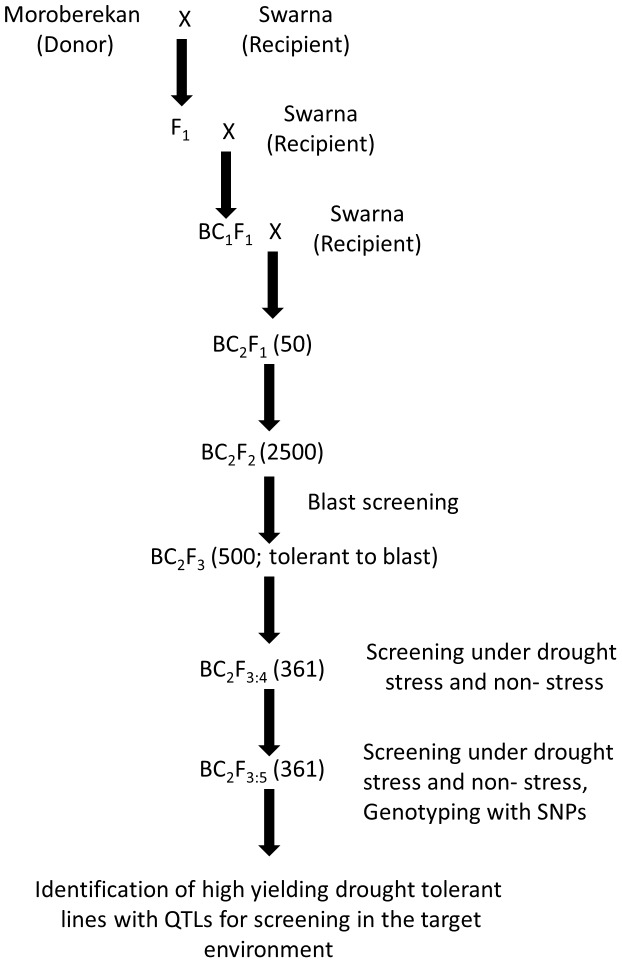
A blast-tolerant BC2F3-derived population was developed from the cross of tropical japonica cultivar Moroberekan (blast- and drought-tolerant) and high-yielding indica variety Swarna (blast- and drought-susceptible) through phenotypic selection for blast tolerance at the BC2F2 generation. The population was studied for segregation distortion patterns and QTLs for GY under drought were identified along with study of epistatic interactions for the trait.
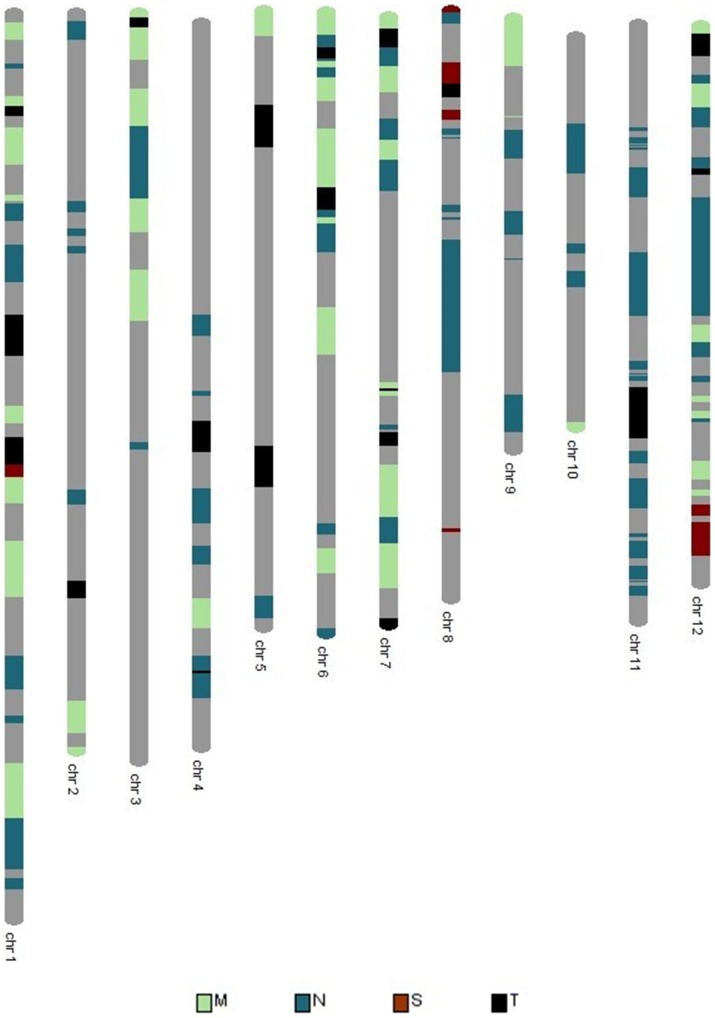
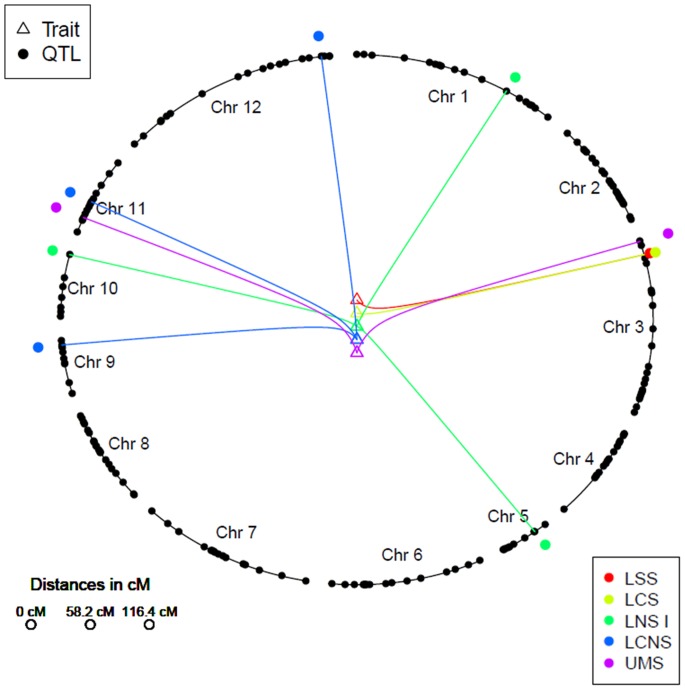
Segregation distortion, in favour of Moroberekan, was observed at 50 of the 59 loci. Majority of these marker loci co-localized with known QTLs for blast tolerance or NBS-LRR disease resistance genes. Despite the presence of segregation distortion, high variation for DTF, PH and GY was observed and several QTLs were identified under drought stress and non-stress conditions for the three traits. Epistatic interactions were also detected for GY which explained a large proportion of phenotypic variance observed in the population.
This strategy allowed us to identify QTLs for GY along with rapid development of high-yielding purelines tolerant to blast and drought with considerably reduced efforts. Apart from this, it also allowed us to study the effects of the selection cycle for blast tolerance. The developed lines were screened at IRRI and in the target environment, and drought and blast tolerant lines with high yield were identified. With tolerance to two major stresses and high yield potential, these lines may provide yield stability in rainfed rice areas.
生物和非生物胁迫的耦合导致雨养水稻(Oryza sativa L.)种植区产量大幅损失。虽然有几项研究分别针对这些胁迫,但很少存在应对多种胁迫的育种策略。本研究报告了一种综合策略,该策略结合了QTL定位和表型选择,以培育在干旱胁迫和非胁迫条件下具有高籽粒产量(GY)且对稻瘟病具有耐受性的水稻品系。
通过在BC2F2代对稻瘟病耐受性进行表型选择,从热带粳稻品种Moroberekan(抗稻瘟病和耐旱)与高产籼稻品种Swarna(感稻瘟病和感旱)的杂交中培育出一个抗稻瘟病的BC2F3衍生群体。研究了该群体的分离畸变模式,鉴定了干旱条件下GY的QTL,并对该性状的上位性相互作用进行了研究。
在59个位点中的50个位点观察到偏向Moroberekan的分离畸变。这些标记位点中的大多数与已知的抗稻瘟病QTL或NBS-LRR抗病基因共定位。尽管存在分离畸变,但观察到DTF、PH和GY有很大变异,并且在干旱胁迫和非胁迫条件下鉴定了这三个性状的几个QTL。还检测到GY的上位性相互作用,其解释了群体中观察到的很大一部分表型变异。
该策略使我们能够鉴定GY的QTL,同时以大幅减少的工作量快速培育出抗稻瘟病和耐旱的高产纯系。除此之外,它还使我们能够研究稻瘟病耐受性选择周期的影响。在国际水稻研究所和目标环境中对育成的品系进行了筛选,鉴定出了高产的耐旱和抗稻瘟病品系。由于对两种主要胁迫具有耐受性且具有高产潜力,这些品系可能为雨养水稻地区提供产量稳定性。