Department of Zoology, College of Science, King Saud University, P.O. Box 2455, Riyadh 11451, Saudi Arabia.
School of Biosciences and Biotechnology, Baba Ghulam Shah Badshah University, Rajouri 185234, India.
Int J Mol Sci. 2020 Dec 21;21(24):9770. doi: 10.3390/ijms21249770.
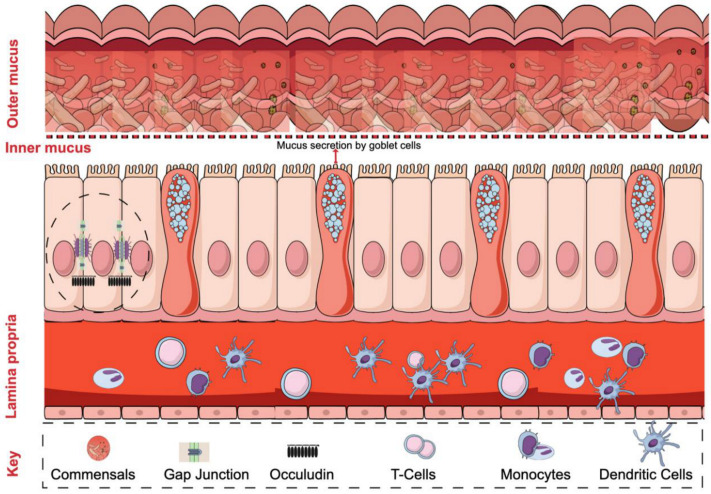
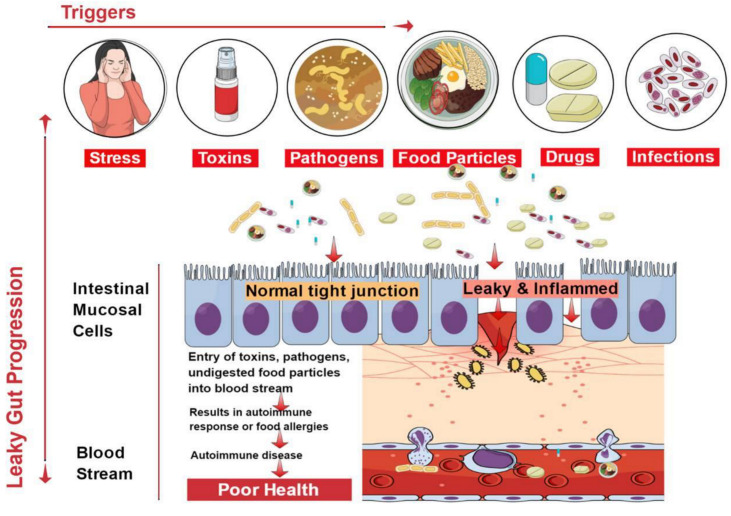
Damage to the tissue and the ruining of functions characterize autoimmune syndromes. This review centers around leaky gut syndromes and how they stimulate autoimmune pathogenesis. Lymphoid tissue commonly associated with the gut, together with the neuroendocrine network, collaborates with the intestinal epithelial wall, with its paracellular tight junctions, to maintain the balance, tolerance, and resistance to foreign/neo-antigens. The physiological regulator of paracellular tight junctions plays a vital role in transferring macromolecules across the intestinal barrier and thereby maintains immune response equilibrium. A new paradigm has explained the intricacies of disease development and proposed that the processes can be prevented if the interaction between the genetic factor and environmental causes is barred by re-instituting the intestinal wall function. The latest clinical evidence and animal models reinforce this current thought and offer the basis for innovative methodologies to thwart and treat autoimmune syndromes.
自身免疫综合征的特征是组织损伤和功能破坏。本综述围绕漏肠综合征及其如何刺激自身免疫发病机制展开。与肠道相关的淋巴组织,以及神经内分泌网络,与肠道上皮壁及其旁细胞紧密连接协同作用,以维持平衡、耐受和抵抗外来/新抗原。旁细胞紧密连接的生理调节剂在将大分子穿过肠道屏障转运方面发挥着重要作用,从而维持免疫反应平衡。一种新的范例解释了疾病发展的复杂性,并提出如果通过重新建立肠道壁功能来阻止遗传因素和环境原因之间的相互作用,就可以防止这些过程的发生。最新的临床证据和动物模型加强了这一观点,并为阻止和治疗自身免疫综合征的创新方法提供了依据。