Department of Anthropology, The Pennsylvania State University, State College, Pennsylvania, USA.
Am J Phys Anthropol. 2021 Jun;175(2):437-447. doi: 10.1002/ajpa.24200. Epub 2020 Dec 29.
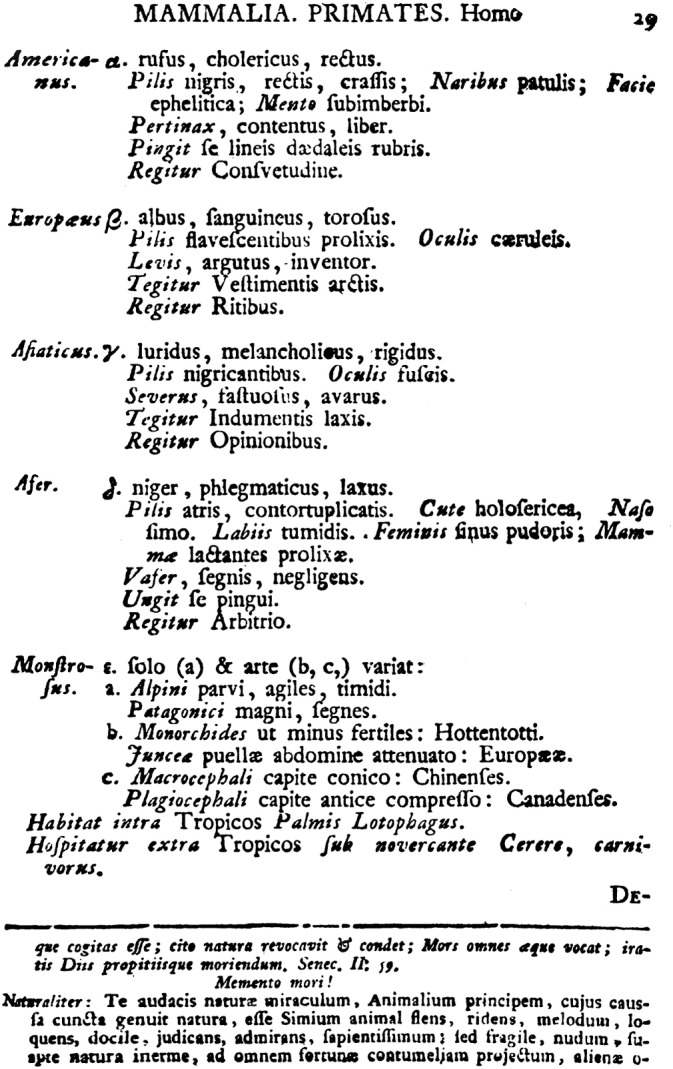
Skin color is the primary physical criterion by which people have been classified into groups in the Western scientific tradition. From the earliest classifications of Linnaeus, skin color labels were not neutral descriptors, but connoted meanings that influenced the perceptions of described groups. In this article, the history of the use of skin color is reviewed to show how the imprint of history in connection with a single trait influenced subsequent thinking about human diversity. Skin color was the keystone trait to which other physical, behavioral, and culture characteristics were linked. To most naturalists and philosophers of the European Enlightenment, skin color was influenced by the external environment and expressed an inner state of being. It was both the effect and the cause. Early investigations of skin color and human diversity focused on understanding the central polarity between "white" Europeans and nonwhite others, with most attention devoted to explaining the origin and meaning of the blackness of Africans. Consistently negative associations with black and darkness influenced philosophers David Hume and Immanuel Kant to consider Africans as less than fully human and lacking in personal agency. Hume and Kant's views on skin color, the integrity of separate races, and the lower status of Africans provided support to diverse political, economic, and religious constituencies in Europe and the Americas interested in maintaining the transatlantic slave trade and upholding chattel slavery. The mental constructs and stereotypes of color-based races remained, more strongly in some places than others, after the abolition of the slave trade and of slavery. The concept of color-based hierarchies of people arranged from the superior light-colored people to inferior dark-colored ones hardened during the late seventeenth century and have been reinforced by diverse forces ever since. These ideas manifest themselves as racism, colorism, and in the development of implicit bias. Current knowledge of the evolution of skin color and of the historical development of color-based race concepts should inform all levels of formal and informal education. Awareness of the influence of color memes and race ideation in general on human behavior and the conduct of science is important.
肤色是人们在西方科学传统中进行分类的主要身体标准。从林奈的最早分类开始,肤色标签就不是中性的描述符,而是带有影响描述群体看法的含义。在本文中,回顾了肤色使用的历史,以展示与单一特征相关的历史印记如何影响后来对人类多样性的思考。肤色是与其他身体、行为和文化特征相关联的关键特征。对于欧洲启蒙运动的大多数自然主义者和哲学家来说,肤色受外部环境的影响,并表达了内在的存在状态。它既是结果又是原因。早期对肤色和人类多样性的研究主要集中在理解“白”欧洲人和非白其他人之间的核心对立,大部分注意力都集中在解释非洲人的肤色起源和意义上。与黑色和黑暗的负面联系一直影响着哲学家大卫·休谟和伊曼纽尔·康德,使他们认为非洲人不如完全人类,缺乏个人能动性。休谟和康德关于肤色、种族的完整性以及非洲人地位低下的观点,为欧洲和美洲对维持跨大西洋奴隶贸易和维护奴隶制度感兴趣的各种政治、经济和宗教派别提供了支持。基于肤色的种族的心理结构和刻板印象在废除奴隶贸易和奴隶制后,在一些地方比其他地方更强烈地存在。肤色为基础的等级制度的概念,从优越的浅色人种到劣等的深色人种,在 17 世纪后期变得更加牢固,并自此以后受到各种力量的强化。这些观念表现为种族主义、肤色主义以及隐性偏见的发展。当前对肤色演变和基于肤色的种族概念的历史发展的了解,应该告知各级正式和非正式教育。意识到颜色模因和种族观念对人类行为和科学研究的影响非常重要。