Fogarty International Center, National Institutes of Health , Bethesda, MD, USA.
Glob Health Action. 2020 Dec 31;13(1):1846904. doi: 10.1080/16549716.2020.1846904.
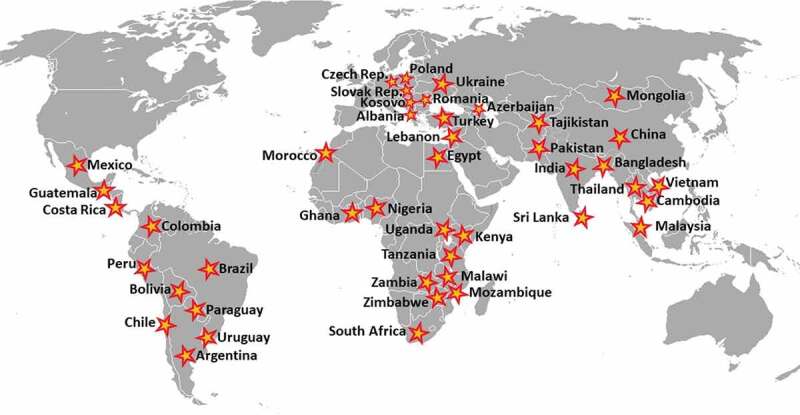
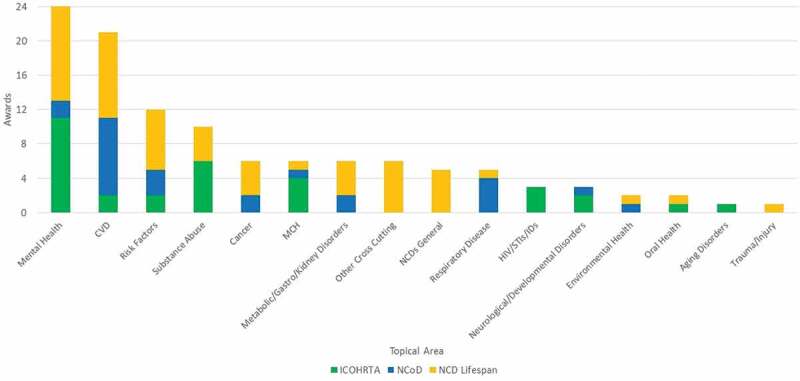
The burden of noncommunicable diseases (NCDs) continues to rise across the globe, and the risk of dying prematurely from an NCD in a low- and middle-income country (LMIC) is almost double that in a high-income country. Confronting this crisis requires a critical mass of scientists who are well versed in regional health problems and understand the cultural, social, economic, and political contexts that influence the effectiveness of interventions to address NCDs. Investing in research capacity strengthening in LMICs is critical to effectively combating disease, and local researchers are best poised to address the health challenges in their home countries given their understanding of the unique culture and context in which they are working. The Fogarty International Center of the U.S. National Institutes of Health has a set of programs focused on building individual and institutional NCD research capacity in LMICs. The Programs provide models for sustainable scientific research capacity strengthening, innovative funding mechanisms and partnership-building approaches. Investing in the training and scientific capacity of LMIC individuals and institutions not only helps foster a research culture and solidify local ownership of research, but it also ensures that the most appropriate solutions are developed, increasing the likelihood that those solutions will sustain over time. In addition, the Programs' investigators have advanced the science across a range of NCDs and associated risk factors. This article describes key lessons and compelling cases from the Programs that can be harnessed by other health researchers and funders to further the global response to the NCD burden.
全球范围内的非传染性疾病(NCDs)负担持续增加,中低收入国家(LMICs)因 NCD 而过早死亡的风险几乎是高收入国家的两倍。应对这一危机需要一大批精通区域卫生问题并了解影响干预 NCD 效果的文化、社会、经济和政治背景的科学家。投资于 LMICs 的研究能力建设对于有效防治疾病至关重要,由于了解他们所在国家独特的文化和背景,当地研究人员最适合解决他们国家的健康挑战。美国国立卫生研究院的 Fogarty 国际中心拥有一系列专注于增强 LMICs 个体和机构 NCD 研究能力的项目。这些项目为可持续的科学研究能力建设、创新的资金机制和伙伴关系建设方法提供了模式。投资于 LMICs 个人和机构的培训和科学能力不仅有助于培养研究文化和巩固研究的本地所有权,还有助于确保开发出最合适的解决方案,从而增加这些解决方案随着时间的推移持续下去的可能性。此外,该计划的研究人员在一系列 NCD 及其相关风险因素方面推进了科学。本文介绍了该计划中的关键经验教训和引人注目的案例,其他健康研究人员和资助者可以利用这些经验教训和案例来进一步应对 NCD 负担。