Anaesthesia-Intensive Care Unit Department, Grigore T Popa University of Medicine and Pharmacy, 700115 Iași, Romania.
Anaesthesia and Intensive Care Department, Regional Institute of Oncology, 700483 Iași, Romania.
Medicina (Kaunas). 2020 Dec 22;57(1):1. doi: 10.3390/medicina57010001.
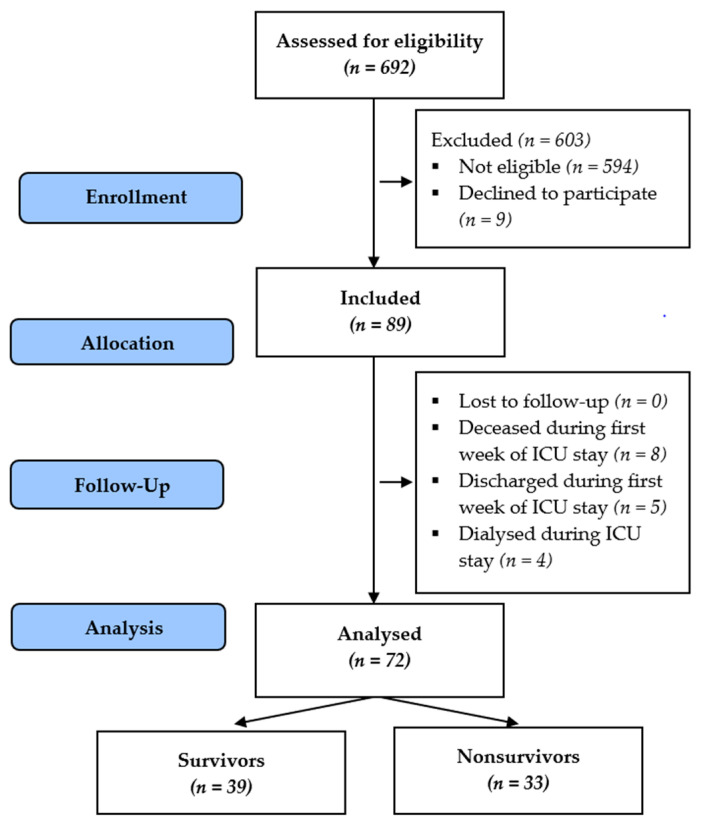
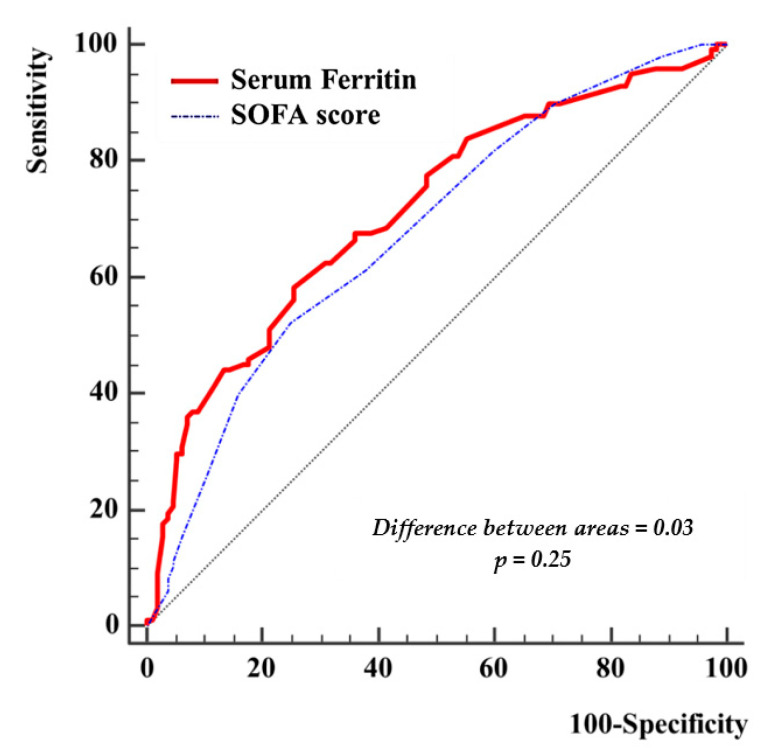
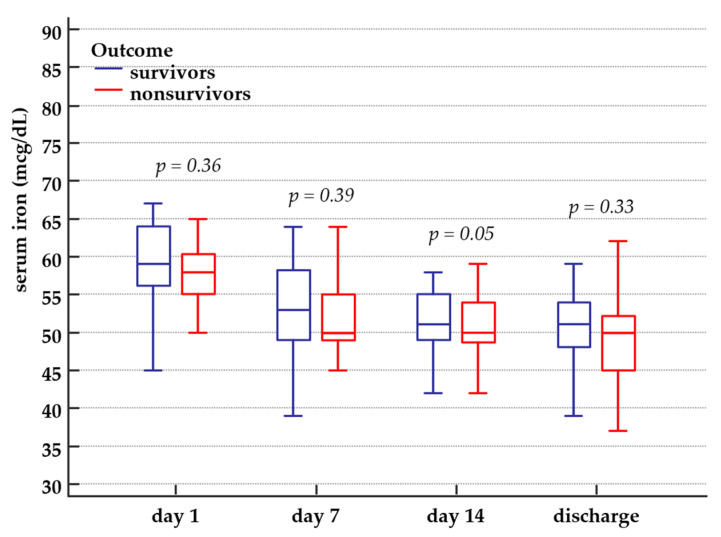
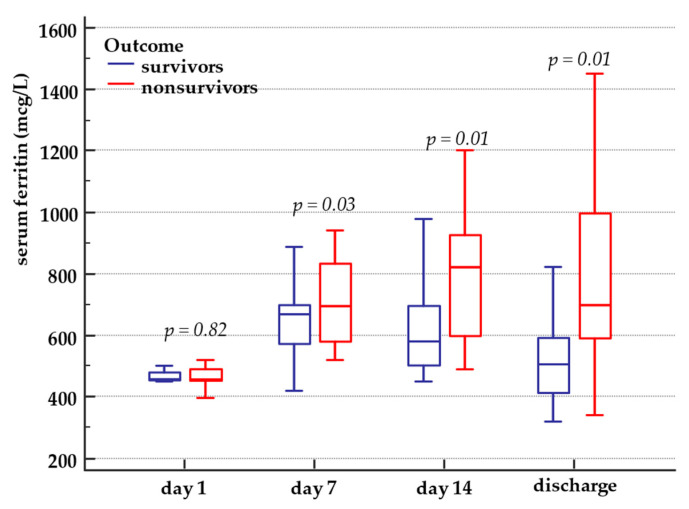
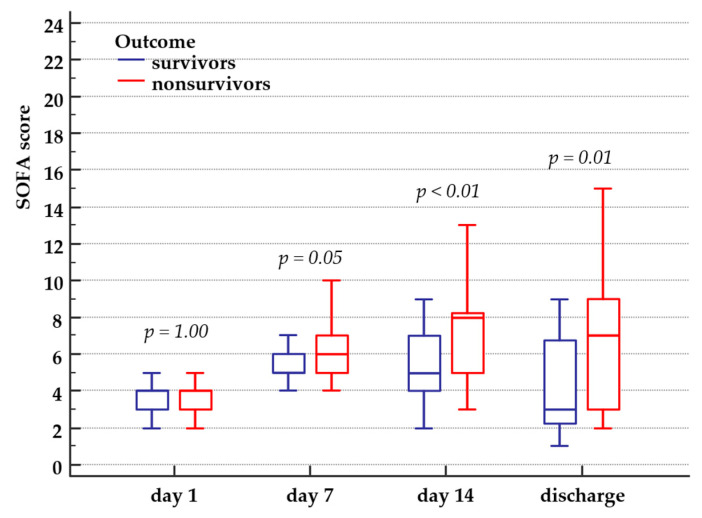
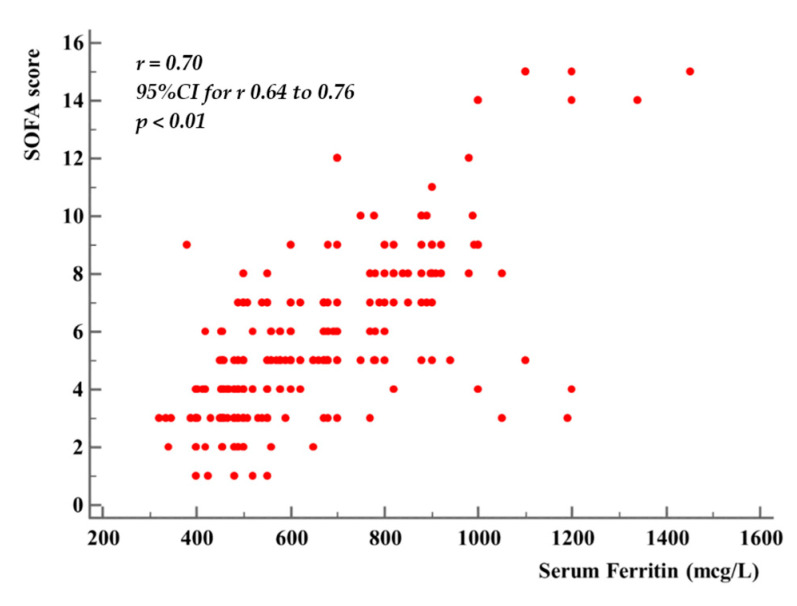
The simplified interpretation of serum ferritin levels, according to which low ferritin levels indicate iron deficiency and high levels indicate hemochromatosis is obsolete, as in the presence of inflammation serum ferritin levels, no longer correlate with iron stores. However, further data are needed to interpret serum ferritin levels correctly in patients with ongoing inflammation. Our study aimed to assess serum iron and ferritin dynamics in patients with long ICU stay and the possible correlations with organ dysfunction progression and outcome. We conducted a prospective study in a university hospital intensive care unit (ICU) over six months. All patients with an ICU length-of-stay of more than seven days were enrolled. Collected data included: demographics, Sequential Organ Failure Assessment (SOFA) score, admission, weekly serum iron and ferritin levels, ICU length-of-stay and outcome. Interactions between organ dysfunction progression and serum iron and ferritin levels changes were investigated. Outcome predictive value of serum ferritin was assessed. Seventy-two patients with a mean ICU length-of-stay of 15 (4.4) days were enrolled in the study. The average age of patients was 62 (16.8) years. There were no significant differences between survivors (39 patients, 54%) and nonsurvivors (33 patients, 46%) regarding demographics, serum iron and ferritin levels and SOFA score on ICU admission. Over time, serum iron levels remained normal or low, while serum ferritin levels statedly increased in all patients. Serum ferritin increase was higher in nonsurvivors than survivors. There was a significant positive correlation between SOFA score and serum ferritin (r = 0.7, 95%CI for r = 0.64 to 0.76, < 0.01). The predictive outcome accuracy of serum ferritin was similar to the SOFA score. In patients with prolonged ICU stay, serum ferritin dynamics reflects organ dysfunction progression and parallels SOFA score in terms of outcome predictive accuracy.
血清铁蛋白水平的简化解释是,低铁蛋白水平表示缺铁,高铁蛋白水平表示血色病,但这种解释已经过时,因为在存在炎症的情况下,血清铁蛋白水平不再与铁储存量相关。然而,需要进一步的数据来正确解释正在发生炎症的患者的血清铁蛋白水平。我们的研究旨在评估 ICU 住院时间长的患者的血清铁和铁蛋白动态,并评估其与器官功能障碍进展和预后的可能相关性。
我们在一家大学医院的 ICU 进行了一项为期六个月的前瞻性研究。所有 ICU 住院时间超过七天的患者均纳入研究。收集的数据包括:人口统计学资料、序贯器官衰竭评估(SOFA)评分、入院时、每周的血清铁和铁蛋白水平、ICU 住院时间和预后。研究了器官功能障碍进展与血清铁和铁蛋白水平变化之间的相互作用,并评估了血清铁蛋白的预后预测价值。
研究纳入了 72 名 ICU 住院时间平均为 15(4.4)天的患者。患者的平均年龄为 62(16.8)岁。存活患者(39 名,54%)和非存活患者(33 名,46%)在人口统计学资料、入院时的血清铁和铁蛋白水平以及 SOFA 评分方面无显著差异。随着时间的推移,血清铁水平保持正常或较低,而所有患者的血清铁蛋白水平持续升高。非存活患者的血清铁蛋白升高高于存活患者。SOFA 评分与血清铁蛋白呈显著正相关(r = 0.7,95%CI for r = 0.64 to 0.76,< 0.01)。血清铁蛋白对预后的预测准确性与 SOFA 评分相似。
在 ICU 住院时间长的患者中,血清铁蛋白动态反映了器官功能障碍的进展,与 SOFA 评分在预后预测准确性方面相似。