Bednarik Martin, Mizera Ales, Manas Miroslav, Navratil Milan, Huba Jakub, Achbergerova Eva, Stoklasek Pavel
Faculty of Technology, Tomas Bata University in Zlin, Vavreckova 275, 760 01 Zlin, Czech Republic.
Faculty of Applied Informatics, Tomas Bata University in Zlin, CEBIA-Tech, Nad Stranemi 4511, 760 05 Zlin, Czech Republic.
Materials (Basel). 2020 Dec 25;14(1):76. doi: 10.3390/ma14010076.
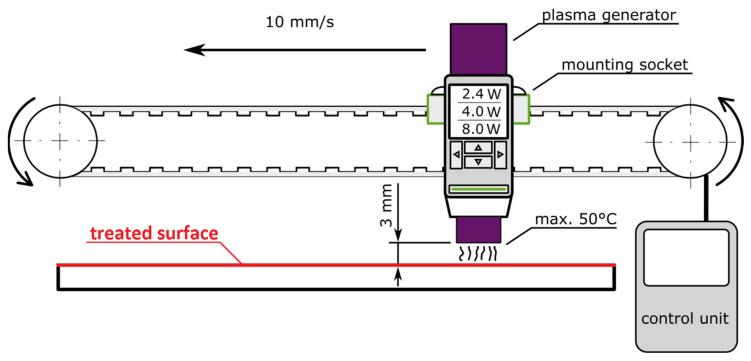
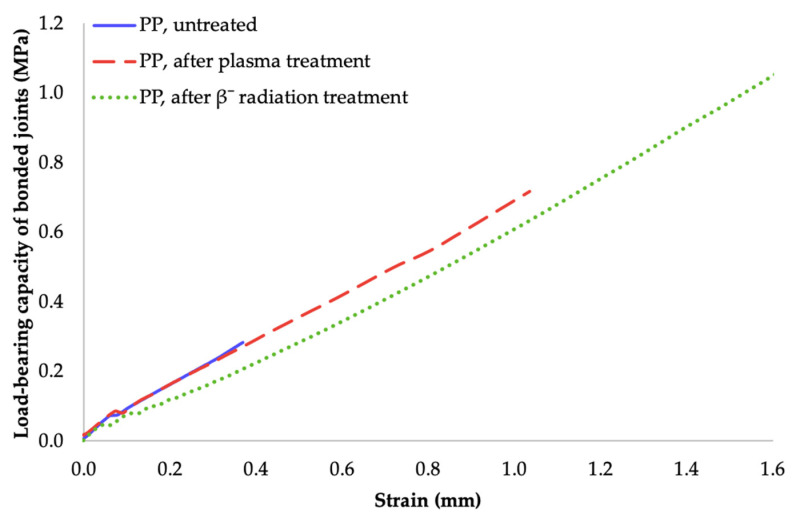
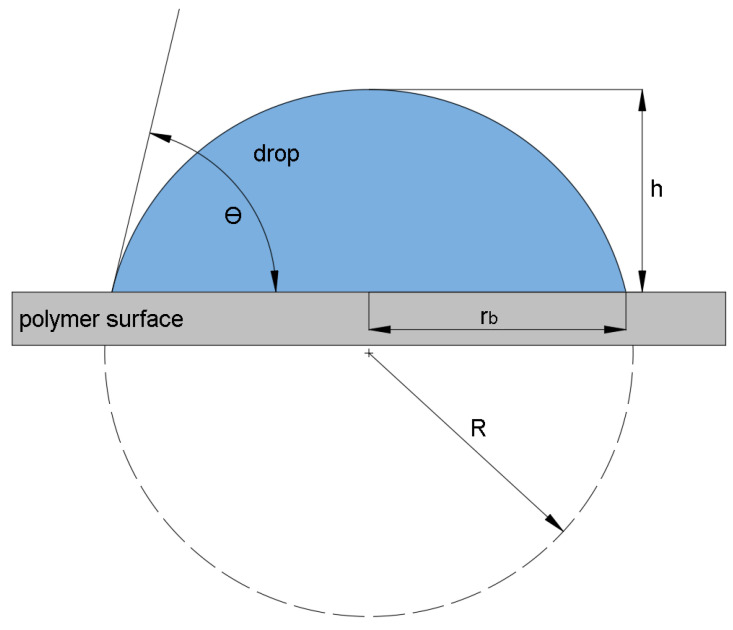
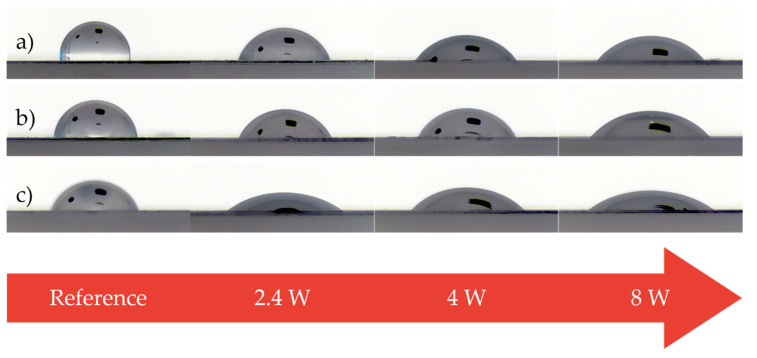
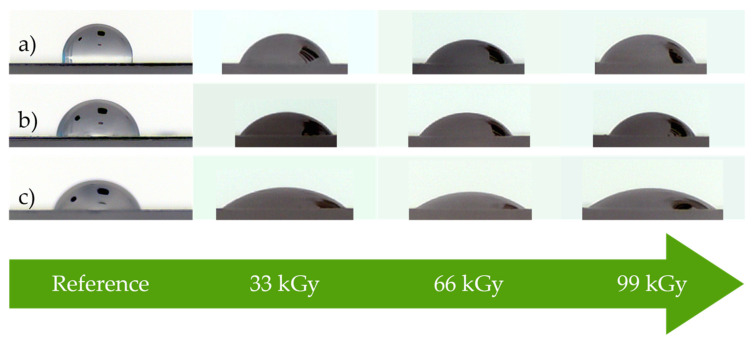
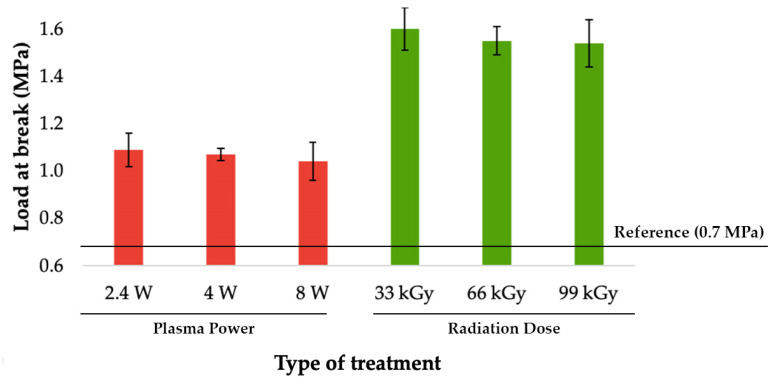
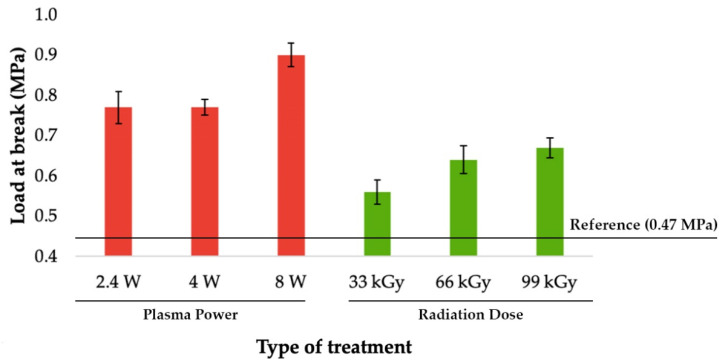
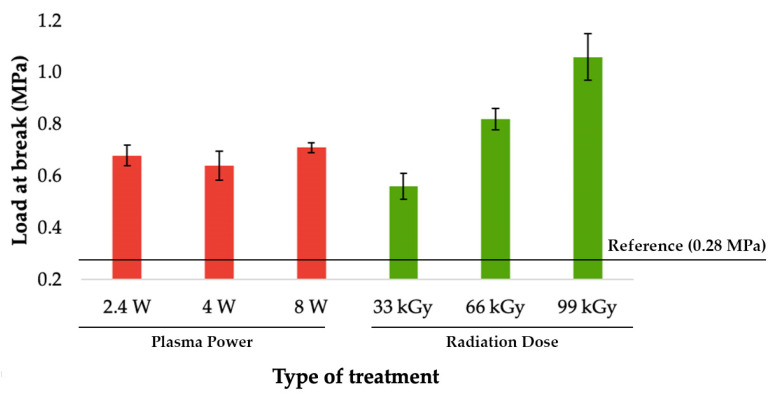
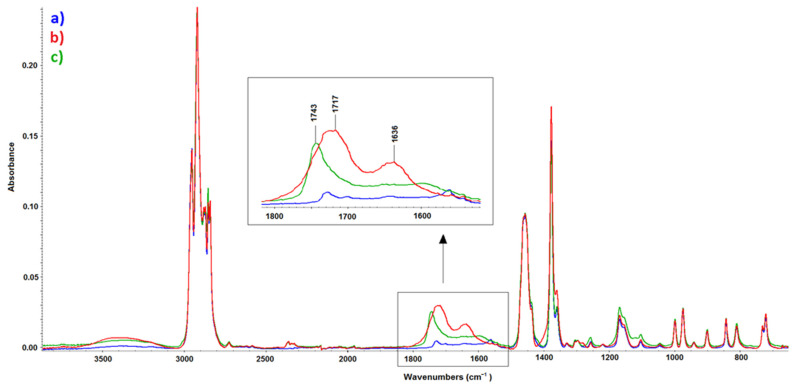
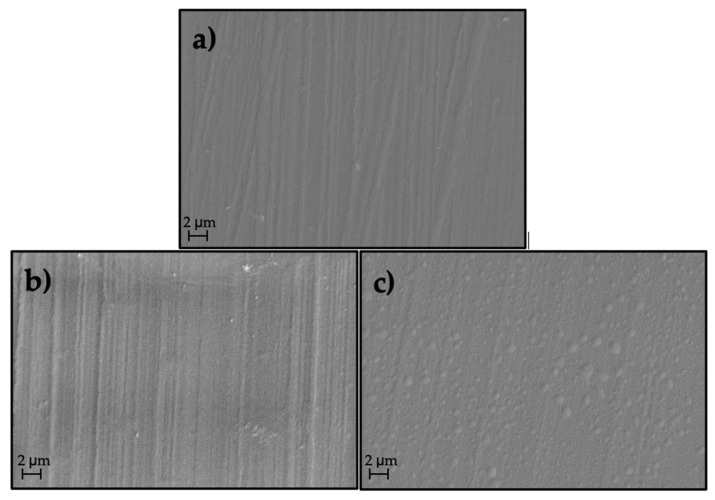
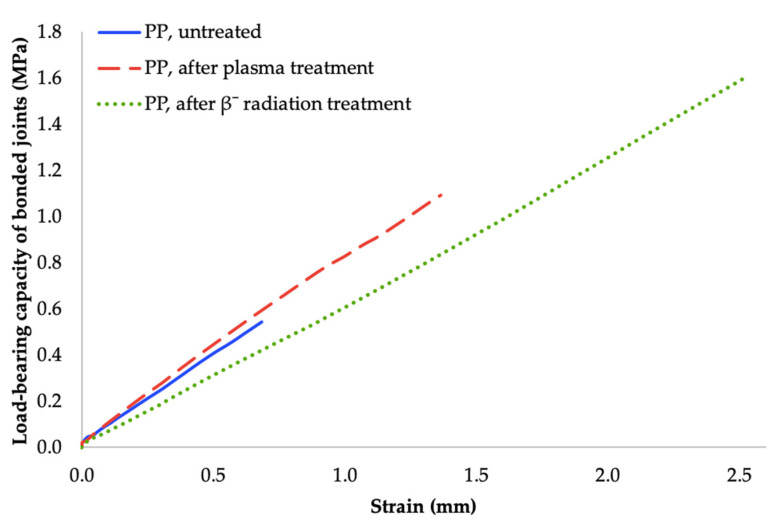
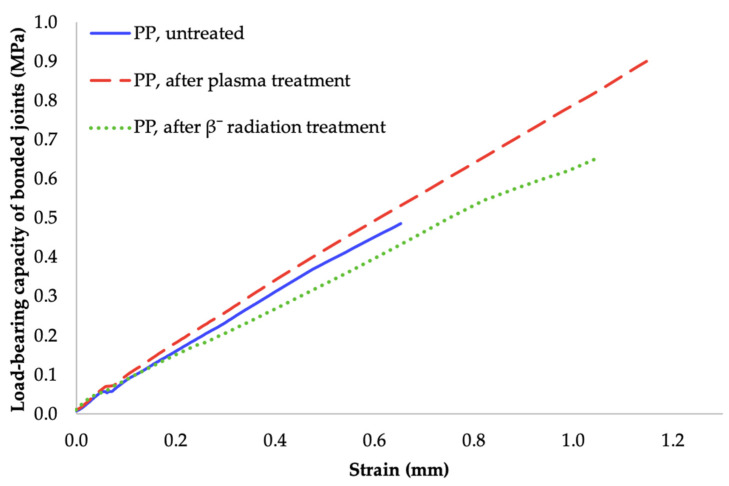
The goal of this research was to examine the effect of two surface modification methods, i.e., radiation cross-linking and plasma treatment, on the adhesive properties and the final quality of adhesive bonds of polypropylene (PP), which was chosen as the representative of the polyolefin group. Polymer cross-linking was induced by beta (accelerated electrons-β) radiation in the following dosages: 33, 66, and 99 kGy. In order to determine the usability of β radiation for these applications (improving the adhesive properties and adhesiveness of surface layers), the obtained results were compared with values measured on surfaces treated by cold atmospheric-pressure plasma with outputs 2.4, 4, and 8 W. The effects of both methods were compared by several parameters, namely wetting contact angles, free surface energy, and overall strength of adhesive bonds. Furthermore, Fourier transform infrared (FTIR) spectroscopy and scanning electron microscopy (SEM) were conducted. According to our findings the following conclusion was reached; both tested surface modification methods significantly altered the properties of the specimen's surface layer, which led to improved wetting, free surface energy, and bond adhesion. Following the β radiation, the free surface energy of PP rose by 80%, while the strength of the bond grew in some cases by 290% in comparison with the non-treated surface. These results show that when compared with cold plasma treatment the beta radiation appears to be an effective tool capable of improving the adhesive properties and adhesiveness of PP surface layers.
本研究的目的是考察两种表面改性方法,即辐射交联和等离子体处理,对聚丙烯(PP)(作为聚烯烃类的代表)的粘合性能和最终粘合质量的影响。聚合物交联是通过β(加速电子-β)辐射以33、66和99千戈瑞的剂量诱导产生的。为了确定β辐射在这些应用中的适用性(改善表面层的粘合性能和粘附性),将所得结果与在输出功率为2.4、4和8瓦的冷大气压等离子体处理过的表面上测得的值进行比较。通过几个参数,即润湿接触角、自由表面能和粘合键的整体强度,对这两种方法的效果进行了比较。此外,还进行了傅里叶变换红外(FTIR)光谱分析和扫描电子显微镜(SEM)分析。根据我们的研究结果得出以下结论:两种测试的表面改性方法都显著改变了试样表面层的性能,从而改善了润湿性、自由表面能和粘合附着力。经过β辐射后,PP的自由表面能提高了80%,而与未处理表面相比,粘合强度在某些情况下提高了290%。这些结果表明,与冷等离子体处理相比,β辐射似乎是一种能够改善PP表面层粘合性能和粘附性的有效工具。