Xiao Ning, Li Yang, Shao Ming-Lu, Cui Hua-Feng, Zhang Chang-Yun, Kong Su-Ping, Zhang Xin, Yu Hui-Juan, Tan Qi-Wen
College of Acupuncture and Moxibustion, Shandong University of Traditional Chinese Medicine, Jinan 250014, China.
Shanghai Pudong People's Hospital, Shanghai 201299, China.
Evid Based Complement Alternat Med. 2020 Dec 8;2020:8854033. doi: 10.1155/2020/8854033. eCollection 2020.
Acupuncture preconditioning was able to reduce the extent of ischaemia reperfusion (/) injury. Previous studies have shown that electroacupuncture (EA) pretreatment at T4-T5 Jiaji (EX-B2) acupoints had cardioprotective effects against myocardial / injury. However, the molecular mechanism remains inconclusive.
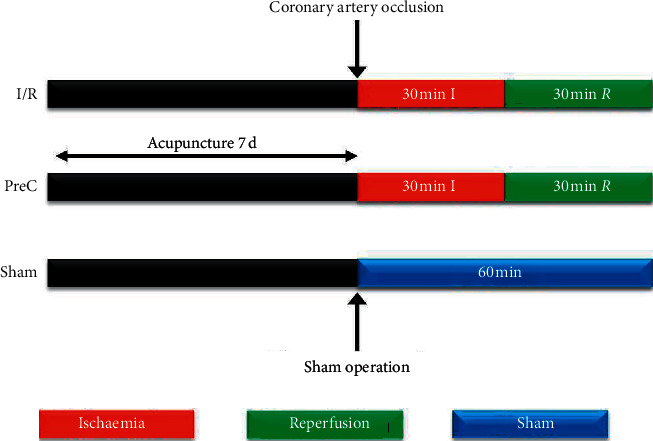
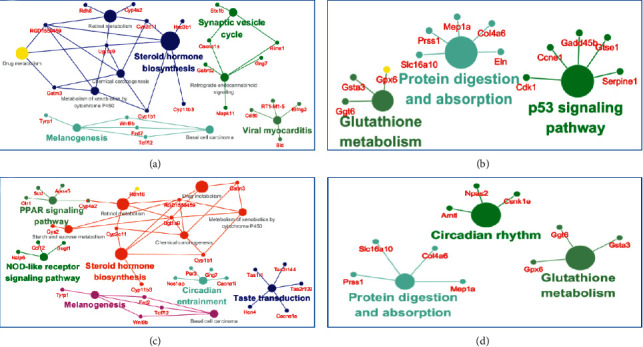
Wistar rats were pretreated with electroacupuncture for 7 days at the Neiguan (PC6), T4-T5 Jiaji (EX-B2), Yanglingquan (GB34), and Quchi (LI11) acupoints, which belong to different meridians. Then, we investigated the genome-wide gene expression profiles of rats prestimulated at these acupoints after / injury.
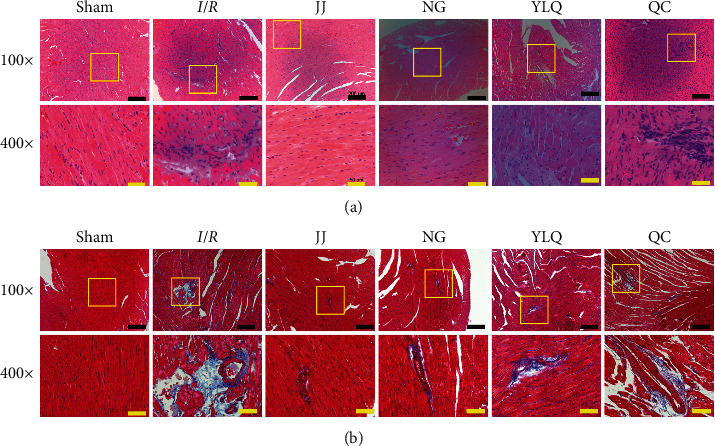
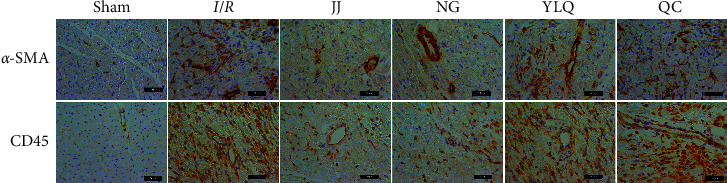
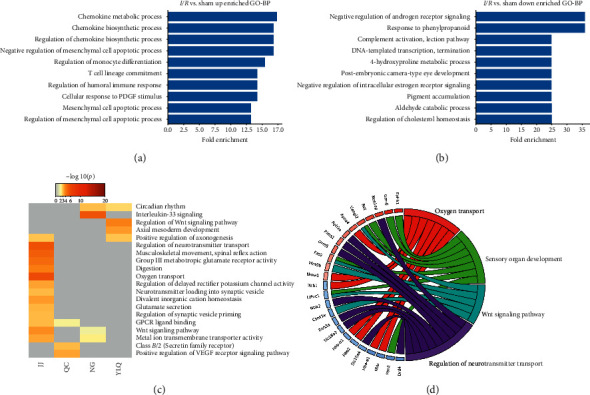
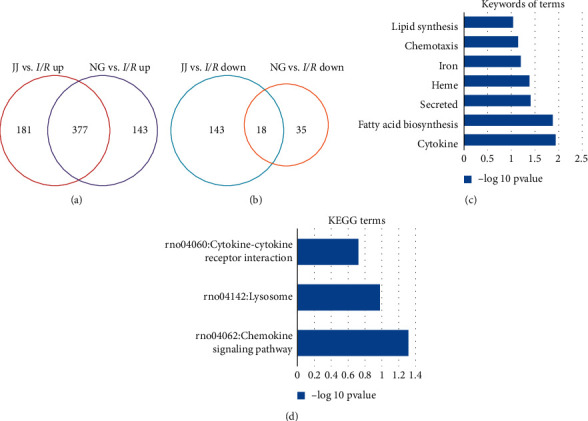
Our study revealed previously unknown cardioprotective roles of T4-T5 Jiaji (EX-B2) acupoints in the / progression. The extent of myocardial injury was significantly decreased in the Jiaji group compared with the / group. In addition, our data are among the first to link the EA preconditioning at Neiguan (PC6) acupoints and circadian rhythm in the / model. Also, for the first time, we explored the meridian and acupoint specificity involved in EA pretreatment at the heart meridian, in which Yanglingquan and Quchi acupoints were selected as the control group for heart-divergent-meridian and nonheart-meridian acupoints.
The present study suggested that EA pretreatment at Jiaji alters genome-wide gene expression and protects the rat myocardium against / injury, which are most likely through neurohumoral regulation.
针刺预处理能够减轻缺血再灌注(I/R)损伤的程度。既往研究表明,电针(EA)预处理T4 - T5夹脊(EX - B2)穴位对心肌I/R损伤具有心脏保护作用。然而,其分子机制仍不明确。
将Wistar大鼠分别在属于不同经络的内关(PC6)、T4 - T5夹脊(EX - B2)、阳陵泉(GB34)和曲池(LI11)穴位进行7天的电针预处理。然后,我们研究了这些穴位预刺激后的大鼠在I/R损伤后的全基因组基因表达谱。
我们的研究揭示了T4 - T5夹脊(EX - B2)穴位在I/R进展中此前未知的心脏保护作用。与I/R组相比,夹脊组心肌损伤程度显著降低。此外,我们的数据首次将内关(PC6)穴位的电针预处理与I/R模型中的昼夜节律联系起来。同时,我们首次探索了心经电针预处理中涉及的经络和穴位特异性,其中选择阳陵泉和曲池穴位作为心别络经和非心经穴位的对照组。
本研究表明,夹脊穴位的电针预处理可改变全基因组基因表达,并保护大鼠心肌免受I/R损伤,这很可能是通过神经体液调节实现的。