Shanghai OB/GYN Hospital, Fudan University, Shanghai, China.
Shanghai Key Laboratory of Female Reproductive Endocrine-Related Diseases, Fudan University, Shanghai, China.
Front Immunol. 2020 Dec 14;11:610963. doi: 10.3389/fimmu.2020.610963. eCollection 2020.
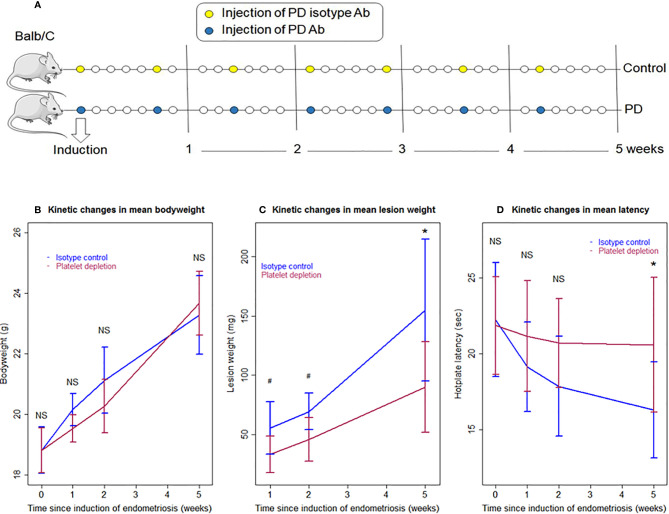
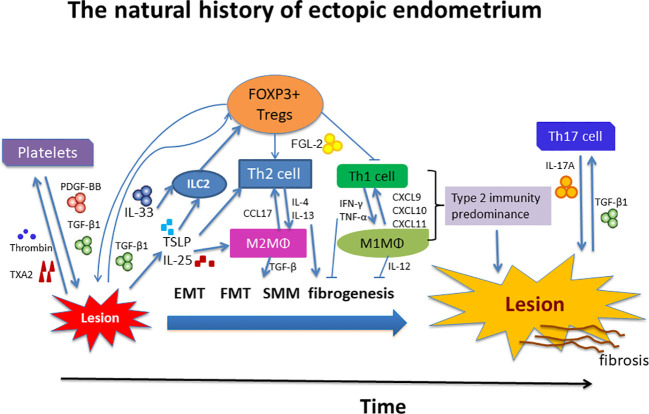
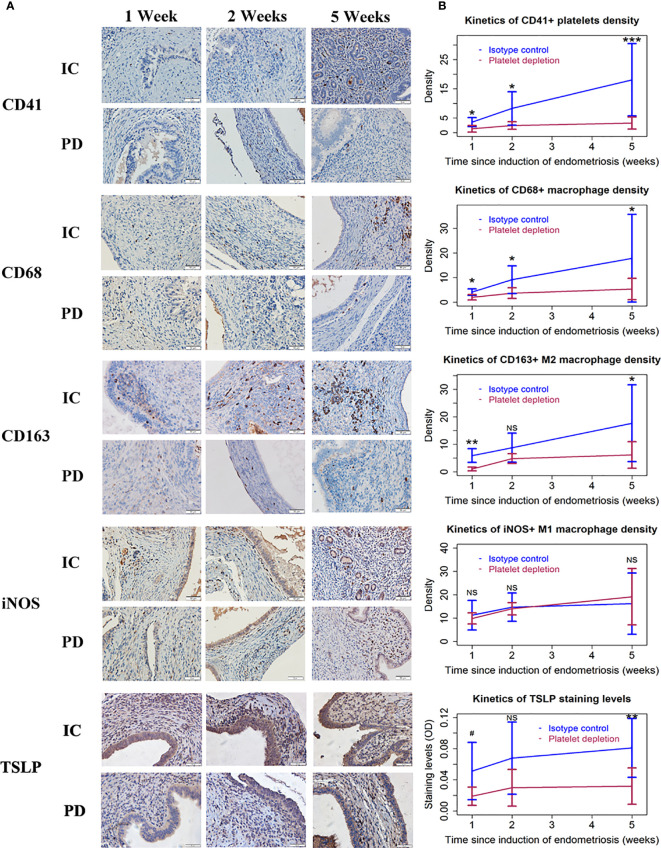
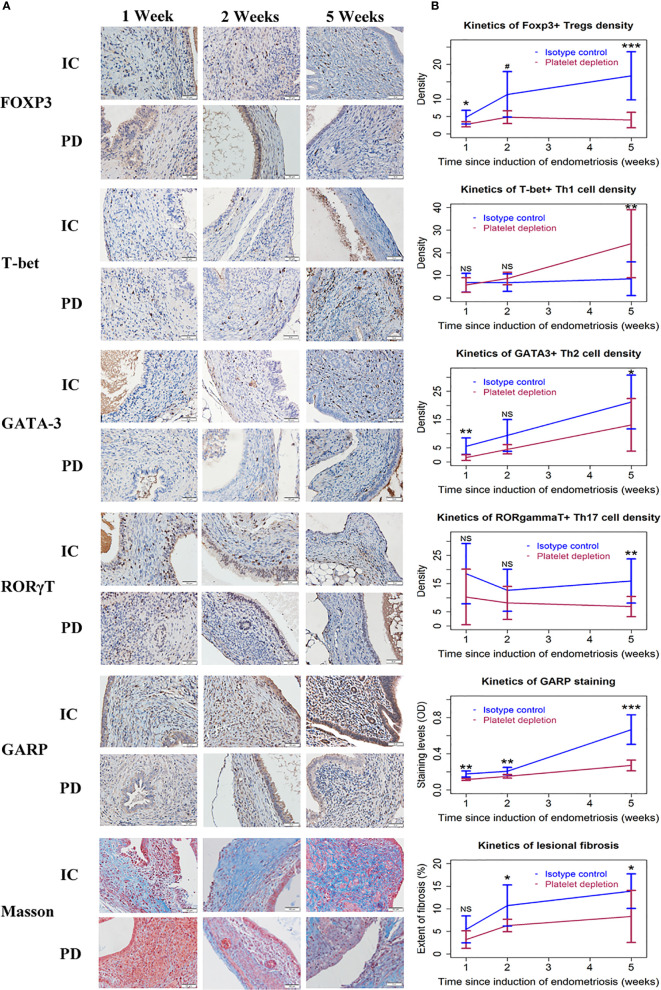
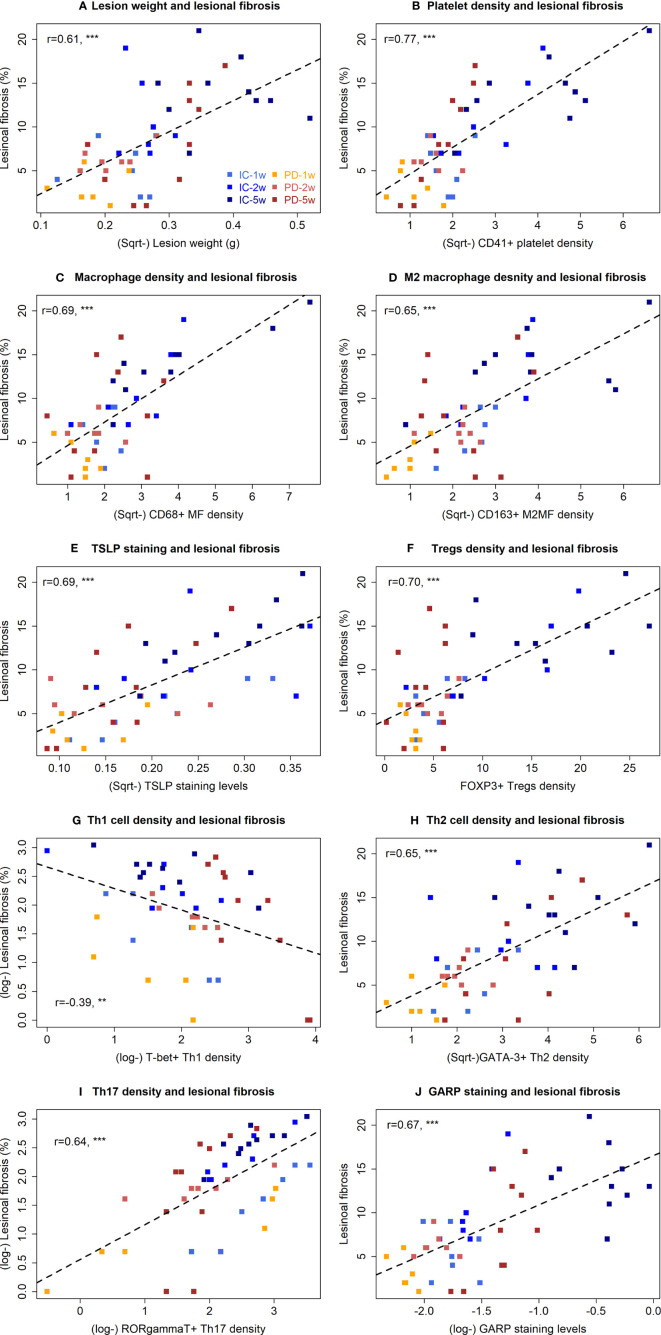
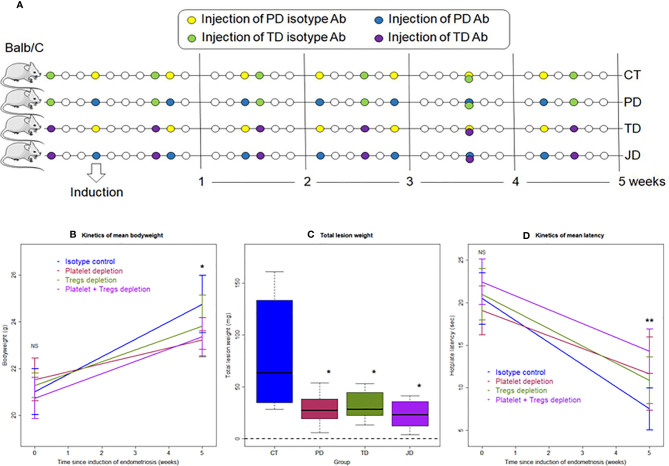
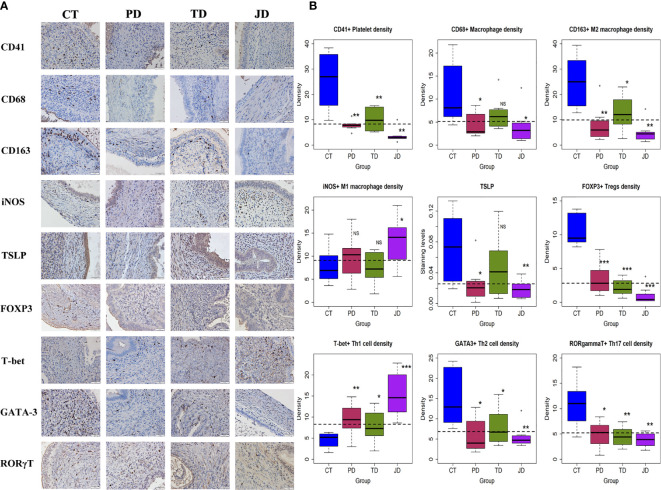
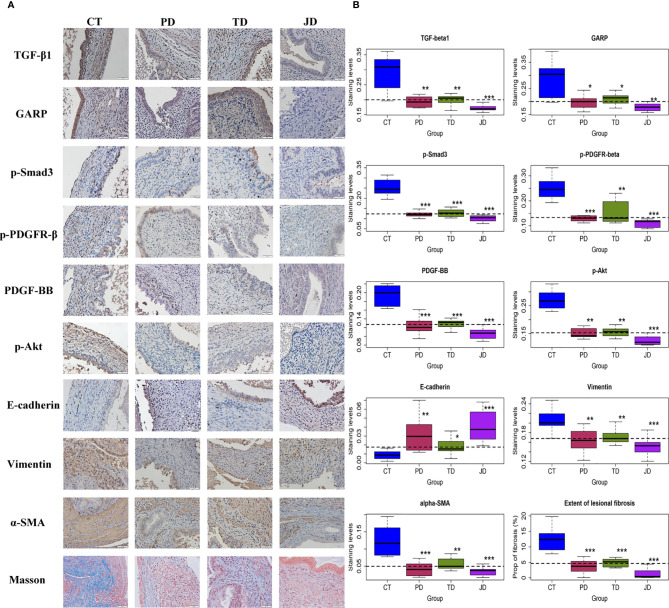
Endometriosis is a hormonal disease, as well as a chronic inflammatory disease. While various immune cells are documented to be involved in endometriosis, there is a wanton lack of a bigger picture on how these cells are coordinated to work concertedly. Since endometriotic lesions experience cyclical bleeding, they are fundamentally wounds that undergo repeated tissue injury and repair (ReTIAR). In this study, we attempted to characterize the role of platelets and regulatory T cells (Tregs) in modulating the lesional immune microenvironment and its subsequent effects on lesional progression and fibrogenesis. Through two mouse experiments, we show that, by disrupting predominantly a type 2 immune response in lesional microenvironment, both platelets and Tregs depletion decelerated lesional progression and fibrogenesis, likely through the suppression of the TGF-β1/Smad3 and PDGFR-β/PI3K/Akt signaling pathways. In particular, platelet depletion resulted in significantly reduced lesional expression of thymic stromal lymphopoietin (TSLP), leading to reduced aggregation of macrophages and alternatively activated (M2) macrophages, and of Tregs, T helper 2 (Th2) and Th17 cells but increased aggregation of Th1 cells, in lesions, which, in turn, yields retarded fibrogenesis. Similarly, Tregs depletion resulted in suppression of platelet aggregation, and reduced aggregation of M2 macrophages, Th2 and Th17 cells but increased aggregation of Th1 cells, in lesions. Thus, both platelet and Tregs depletion decelerated lesional progression and fibrogenesis by disrupting predominantly a type 2 immunity in lesional microenvironment. Taken together, this suggests that both platelets and Tregs may induce a type 2 immunity in lesional microenvironment that is conducive to lesional progression and fibrogenesis.
子宫内膜异位症是一种激素疾病,也是一种慢性炎症性疾病。虽然有文献记载各种免疫细胞参与了子宫内膜异位症,但对于这些细胞如何协调工作以达到协同作用,还缺乏一个更全面的认识。由于子宫内膜异位病灶经历周期性出血,它们本质上是反复经历组织损伤和修复(ReTIAR)的创伤。在这项研究中,我们试图描述血小板和调节性 T 细胞(Tregs)在调节病灶免疫微环境及其对病灶进展和纤维化的后续影响中的作用。通过两项小鼠实验,我们表明,通过破坏病灶微环境中的主要是 2 型免疫反应,血小板和 Tregs 的耗竭均能减缓病灶的进展和纤维化,可能是通过抑制 TGF-β1/Smad3 和 PDGFR-β/PI3K/Akt 信号通路。特别是,血小板耗竭导致病灶中胸腺基质淋巴细胞生成素(TSLP)的表达显著减少,导致巨噬细胞和替代激活(M2)巨噬细胞以及 Tregs、Th2 和 Th17 细胞的聚集减少,而 Th1 细胞的聚集增加,从而导致纤维化的进展减缓。同样,Tregs 的耗竭导致血小板聚集的抑制,以及 M2 巨噬细胞、Th2 和 Th17 细胞聚集的减少,而 Th1 细胞的聚集增加,从而抑制病灶的进展和纤维化。因此,血小板和 Tregs 的耗竭通过破坏病灶微环境中的 2 型免疫反应,减缓了病灶的进展和纤维化。总之,这表明血小板和 Tregs 可能在病灶微环境中诱导有利于病灶进展和纤维化的 2 型免疫反应。