Yap Saw Yin, Sreekantan Srimala, Hassan Mohd, Sudesh Kumar, Ong Ming Thong
School of Materials and Mineral Resources Engineering, Universiti Sains Malaysia, Nibong Tebal 14300, Penang, Malaysia.
School of Biological Sciences, Universiti Sains Malaysia, Gelugor 11800, Penang, Malaysia.
Polymers (Basel). 2020 Dec 29;13(1):104. doi: 10.3390/polym13010104.
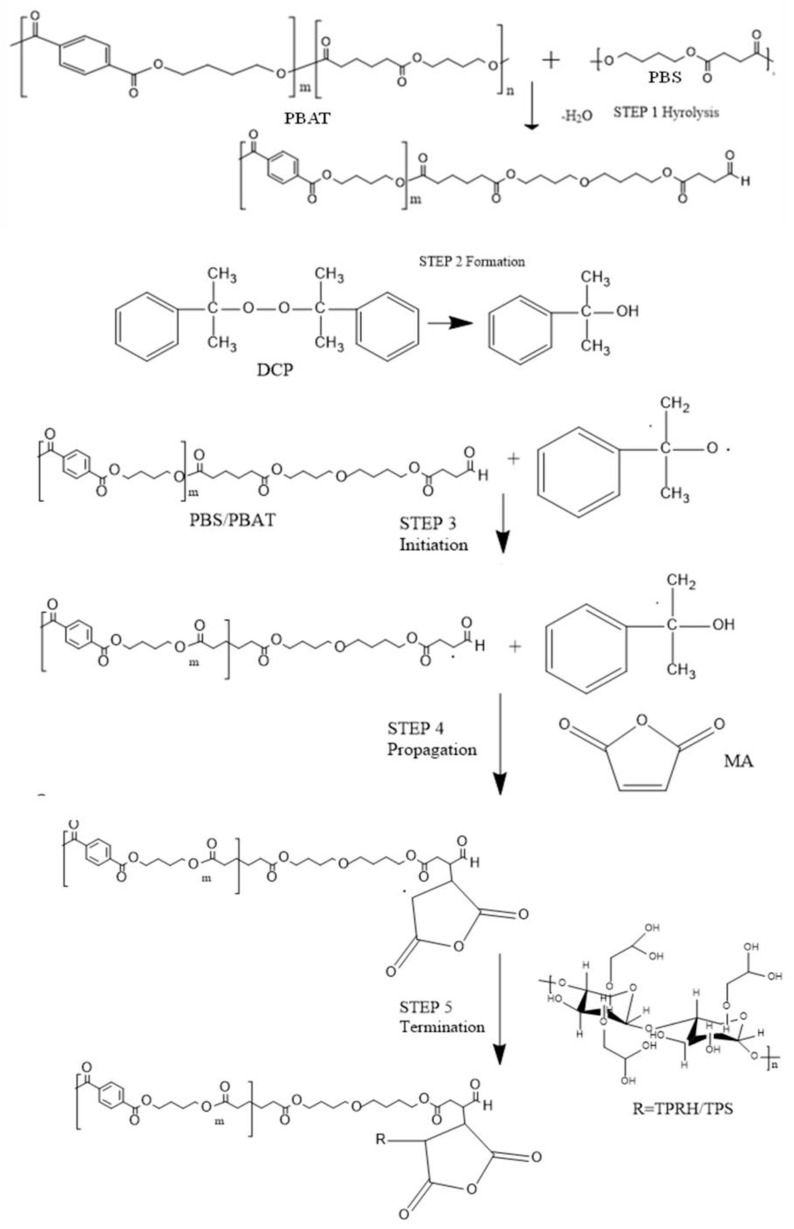
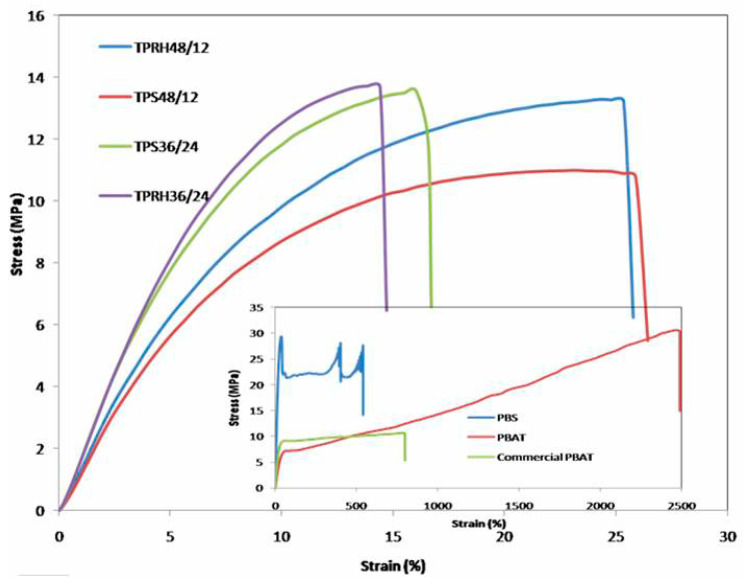
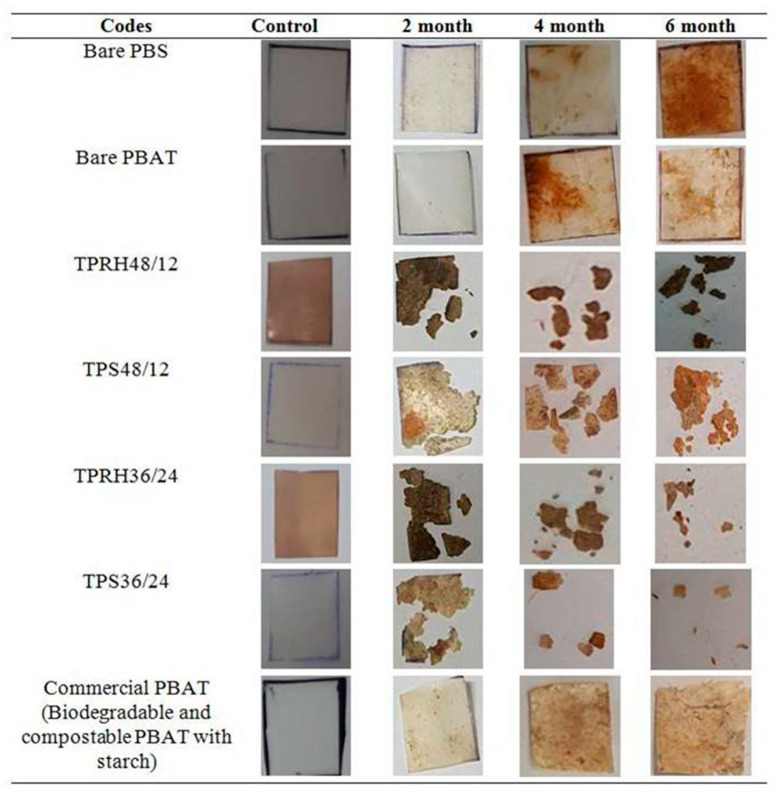
The fabrication of affordable biodegradable plastics remains a challenging issue for both the scientific community and industries as mechanical properties and biodegradability improve at the expense of the high cost of the material. Hence, the present work deals with fabrication and characterization of biodegradable polymer with 40% rice husk waste filler and 60% polymer-containing mixture of polybutylene succinate (PBS) and poly butylenes adipate-Co-terephthalate (PBAT) to achieve good mechanical properties, 92% biodegradation in six months, and competitive pricing. The challenge in incorporating high amounts of hydrophilic nature filler material into hydrophobic PBS/PBAT was addressed by adding plasticizers such as glycerol and calcium stearate. The compatibilizers such as maleic anhydride (MA) and dicumyl peroxide (DCP) was used to improve the miscibility between hydrophobic PBS/PBAT and hydrophilic filler material. The component with the formulation of 24:36:40 (PBS/PBAT/TPRH) possessed the tensile strength of 14.27 MPa, modulus of 200.43 MPa, and elongation at break of 12.99%, which was suitable for the production of molded products such as a tray, lunch box, and straw. The obtained composite polymer achieved 92% mass loss after six months of soil burial test confirming its biodegradability.
对于科学界和工业界而言,制造价格亲民的可生物降解塑料仍然是一个具有挑战性的问题,因为机械性能和生物降解性的提升是以材料的高成本为代价的。因此,目前的工作涉及制备和表征一种可生物降解聚合物,该聚合物含有40%的稻壳废料填料以及60%的由聚丁二酸丁二醇酯(PBS)和聚己二酸/对苯二甲酸丁二醇酯(PBAT)组成的聚合物混合物,以实现良好的机械性能、六个月内92%的生物降解率以及具有竞争力的价格。通过添加甘油和硬脂酸钙等增塑剂,解决了将大量具有亲水性的填料材料掺入疏水性PBS/PBAT中的难题。使用马来酸酐(MA)和过氧化二异丙苯(DCP)等相容剂来改善疏水性PBS/PBAT与亲水性填料材料之间的相容性。配方为24:36:40(PBS/PBAT/稻壳)的组分具有14.27兆帕的拉伸强度、200.43兆帕的模量以及12.99%的断裂伸长率,适用于生产托盘、饭盒和吸管等模塑产品。经过六个月的土壤掩埋试验后,所制得的复合聚合物质量损失达到92%,证实了其生物降解性。