Dou Bo, Zheng Xiangrong, Tan Danfeng, Yin Xixi
Department of Pediatrics, Xiangya Hospital, Central South University, Changsha, China.
Front Cell Dev Biol. 2020 Dec 17;8:580824. doi: 10.3389/fcell.2020.580824. eCollection 2020.
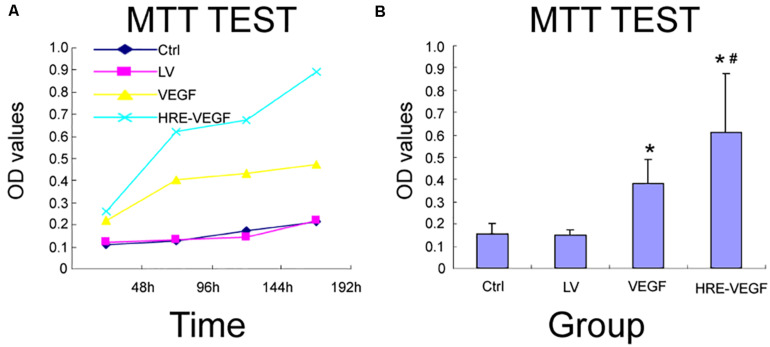
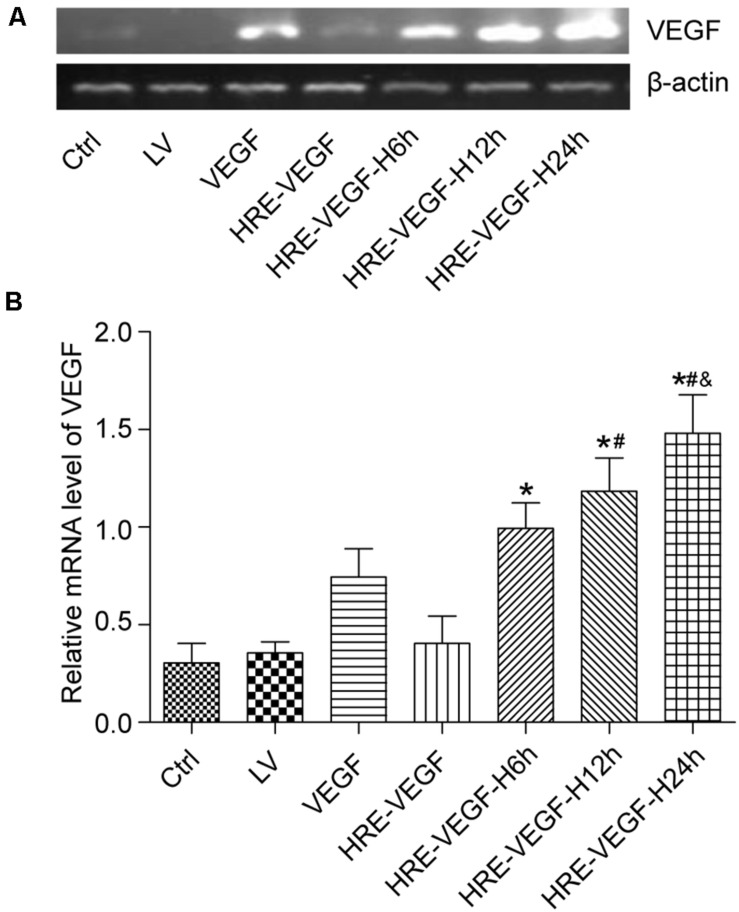
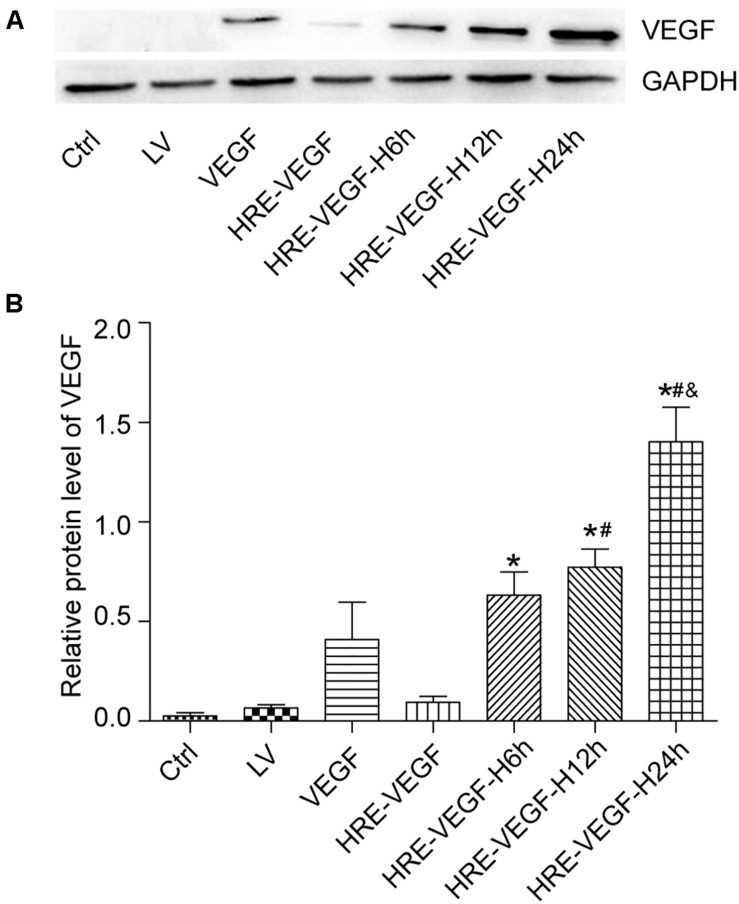
In this study, we analyzed neural stem cells transfected with the HRE-VEGF gene in groups experiencing different periods of hypoxia. The results of RT-PCR showed that the expression of vascular endothelial growth factor (VEGF) mRNA gradually increased with the prolonged period of hypoxia ( < 0.05). The results from the western-blot test showed that expression of the VEGF protein increased with as the period of hypoxia increased ( < 0.05). The results of MTT combined with Elisa reagent showed that with the prolonged period of hypoxia, the secretion of VEGF protein increased, and that the proliferation of target cells and neural stem cells was better promoted ( < 0.05). These results imply that HRE can safely and effectively regulate VEGF expression. By controlling the period of hypoxia, we can increase the expression level, and limit it in more safe values to avoid the possibility of cancer caused by the over-enhancement of proliferation of target cells due to the overexpression of the VEGF protein.
在本研究中,我们分析了在经历不同缺氧时间段的组中用HRE-VEGF基因转染的神经干细胞。RT-PCR结果显示,血管内皮生长因子(VEGF)mRNA的表达随缺氧时间延长而逐渐增加(P<0.05)。蛋白质免疫印迹试验结果显示,VEGF蛋白的表达随缺氧时间增加而增加(P<0.05)。MTT结合酶联免疫吸附测定试剂的结果显示,随着缺氧时间延长,VEGF蛋白的分泌增加,并且能更好地促进靶细胞和神经干细胞的增殖(P<0.05)。这些结果表明,缺氧反应元件(HRE)能够安全有效地调节VEGF的表达。通过控制缺氧时间,我们可以提高表达水平,并将其限制在更安全的值,以避免因VEGF蛋白过度表达导致靶细胞增殖过度增强而引发癌症的可能性。