Wu Qiuji, Xiang Ziyue, Ying Yibo, Huang Zhiyang, Tu Yurong, Chen Min, Ye Jiahui, Dou Haicheng, Sheng Sunren, Li Xiaoyang, Ying Weiyang, Zhu Sipin
Department of Orthopaedics, The Second Affiliated Hospital and Yuying Children's Hospital of Wenzhou Medical University, Wenzhou, Zhejiang, China.
Second Medical College of Wenzhou Medical University, Wenzhou, Zhejiang, China.
Cell Death Discov. 2021 Oct 21;7(1):301. doi: 10.1038/s41420-021-00701-y.
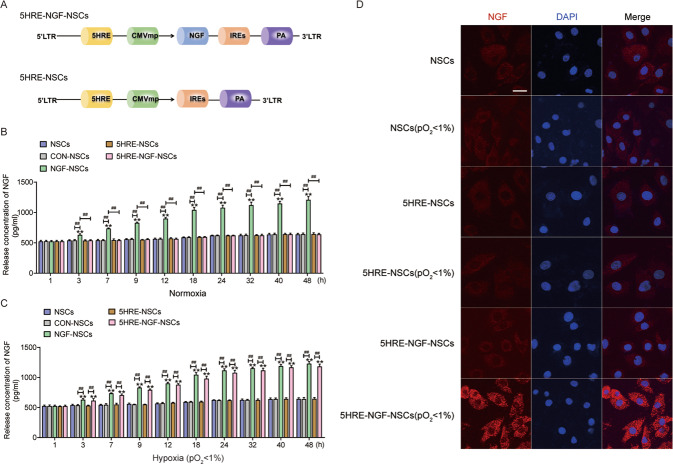
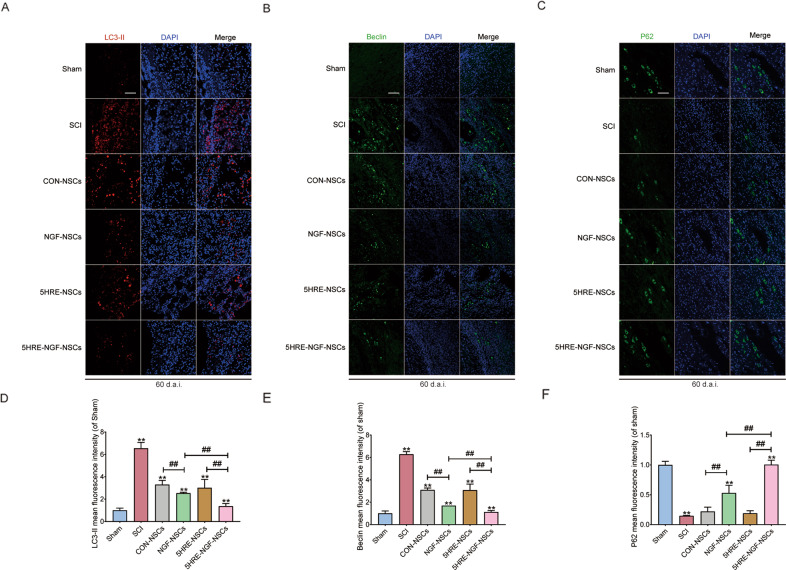
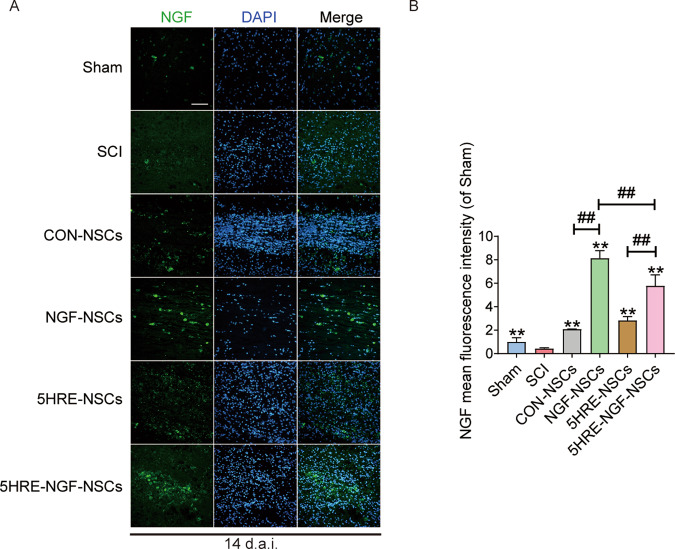
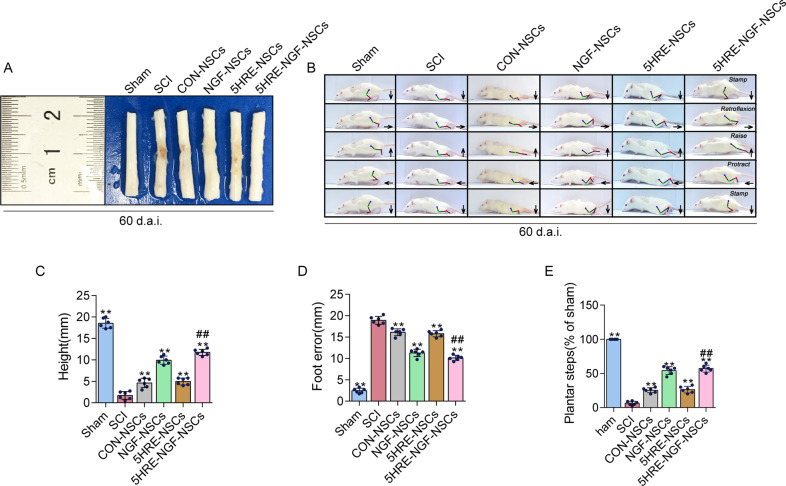
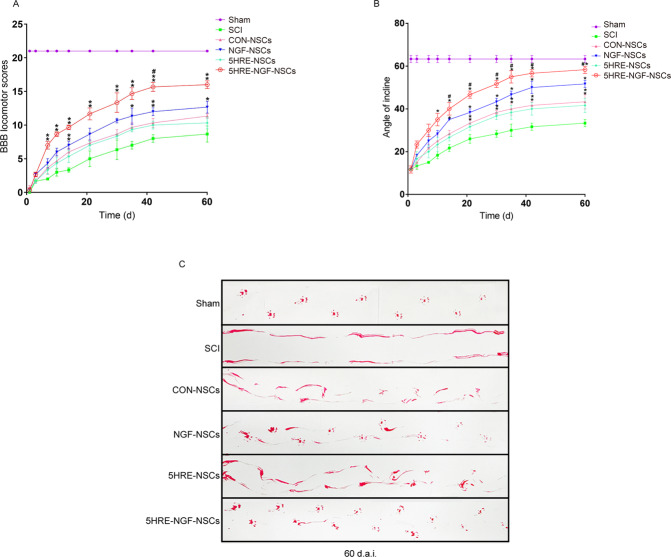
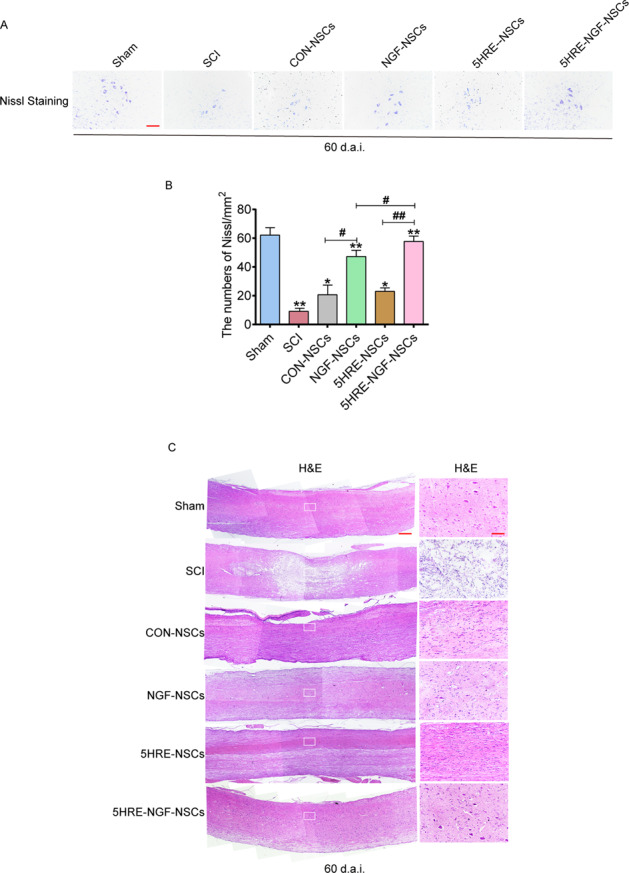
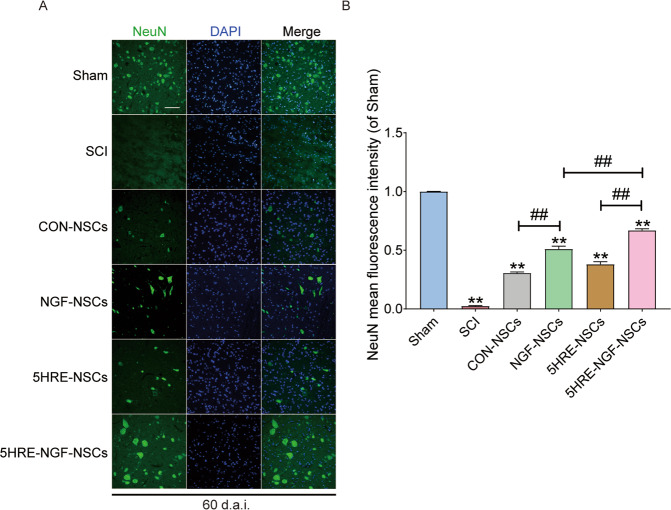
The ischemia and hypoxia microenvironment after spinal cord injury (SCI) makes SCI repair a challenging problem. With various stimulus, chances for neural stem cells (NSCs) to differentiate into neurons, astrocytes, oligodendrocytes are great and is considered as a potential source of the stem cell therapy to SCI. Our research used adeno-associated virus (AAV) to carry the target gene to transfect neural stem cells. Transfected NSCs can express nerve growth factor (NGF) navigated by five hypoxia-responsive elements (5HRE). Therefore, the 5HRE-NGF-NSCs could express NGF specifically in hypoxia sites to promote the tissue repair and function recovery. Based on the regeneration of neurocytes and promotion of the recovery found in SCI models, via locomotor assessment, histochemical staining and molecular examinations, our results demonstrated that 5HRE-NGF-NSCs could improve the motor function, neurons survival and molecules expression of SCI rats. Meanwhile, the downregulated expression of autophagy-related proteins indicated the inhibitive effect of 5HRE-NGF-NSCs on autophagy. Our research showed that 5HRE-NGF-NSCs contribute to SCI repair which might via inhibiting autophagy and improving the survival rate of neuronal cells. The new therapy also hampered the hyperplasia of neural glial scars and induced axon regeneration. These positive functions of 5HRE-NGF-NSCs all indicate a promising SCI treatment.
脊髓损伤(SCI)后的缺血缺氧微环境使得SCI修复成为一个具有挑战性的问题。在各种刺激下,神经干细胞(NSCs)分化为神经元、星形胶质细胞、少突胶质细胞的可能性很大,被认为是SCI干细胞治疗的潜在来源。我们的研究使用腺相关病毒(AAV)携带靶基因转染神经干细胞。转染后的神经干细胞可以表达由五个缺氧反应元件(5HRE)引导的神经生长因子(NGF)。因此,5HRE-NGF-NSCs能够在缺氧部位特异性表达NGF,以促进组织修复和功能恢复。基于在SCI模型中发现的神经细胞再生和恢复促进作用,通过运动评估、组织化学染色和分子检测,我们的结果表明,5HRE-NGF-NSCs可以改善SCI大鼠的运动功能、神经元存活和分子表达。同时,自噬相关蛋白表达下调表明5HRE-NGF-NSCs对自噬有抑制作用。我们的研究表明,5HRE-NGF-NSCs可能通过抑制自噬和提高神经元细胞存活率来促进SCI修复。这种新疗法还抑制了神经胶质瘢痕的增生并诱导了轴突再生。5HRE-NGF-NSCs的这些积极作用都表明了一种有前景的SCI治疗方法。