Bailén María, Bressa Carlo, Martínez-López Sara, González-Soltero Rocío, Montalvo Lominchar Maria Gregoria, San Juan Celia, Larrosa Mar
MAS Microbiota Group, School of Biomedical and Health Sciences, Universidad Europea de Madrid, Madrid, Spain.
Front Nutr. 2020 Dec 18;7:583608. doi: 10.3389/fnut.2020.583608. eCollection 2020.
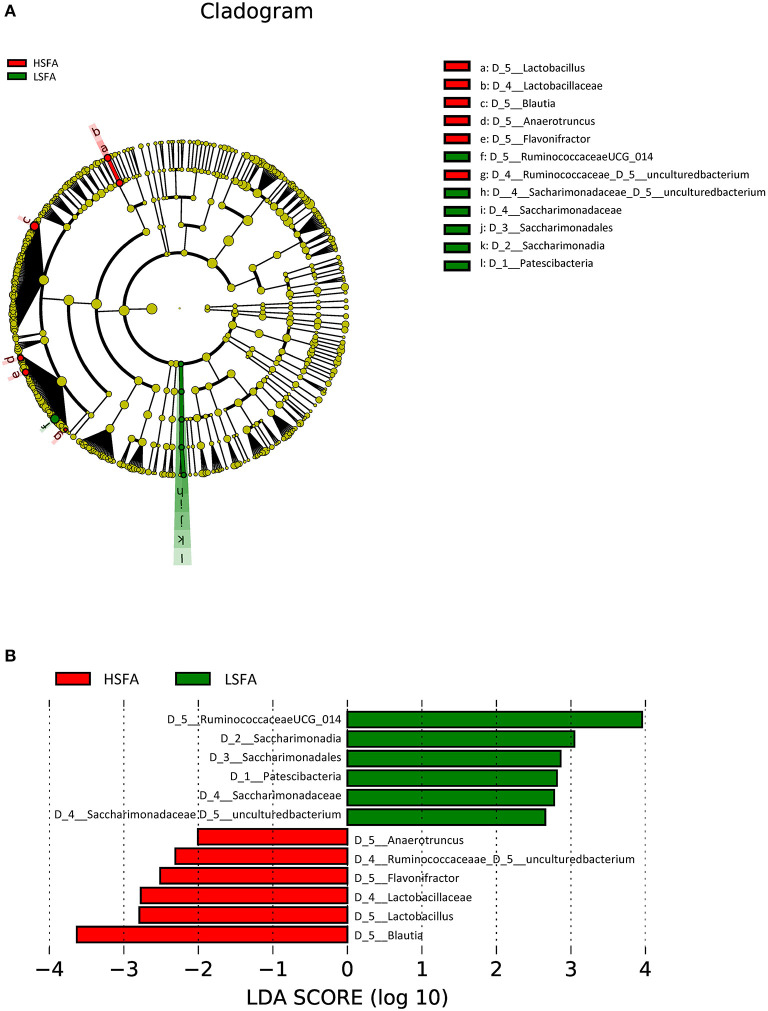
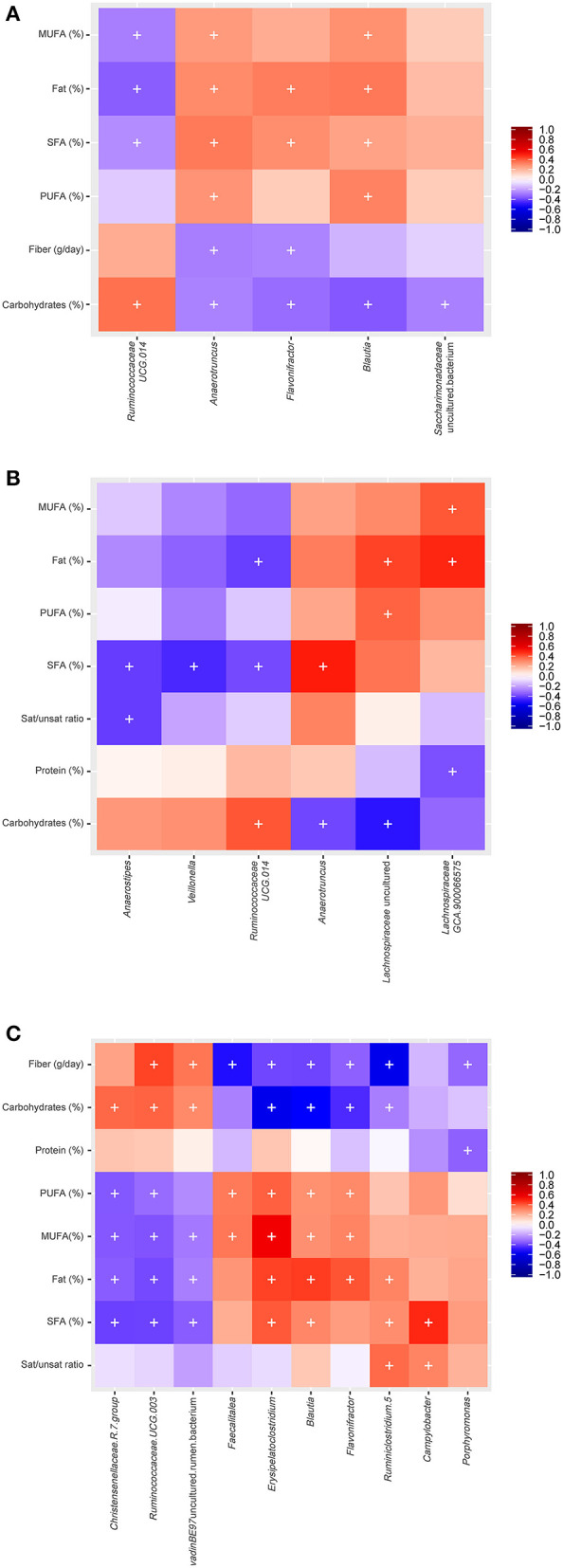
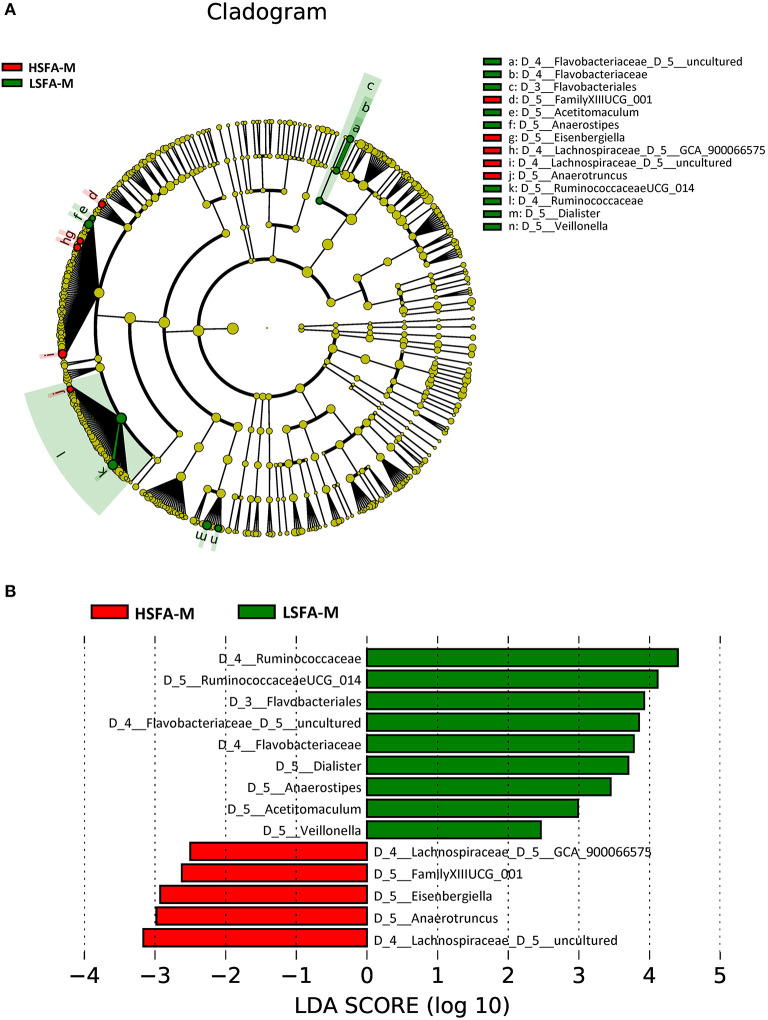
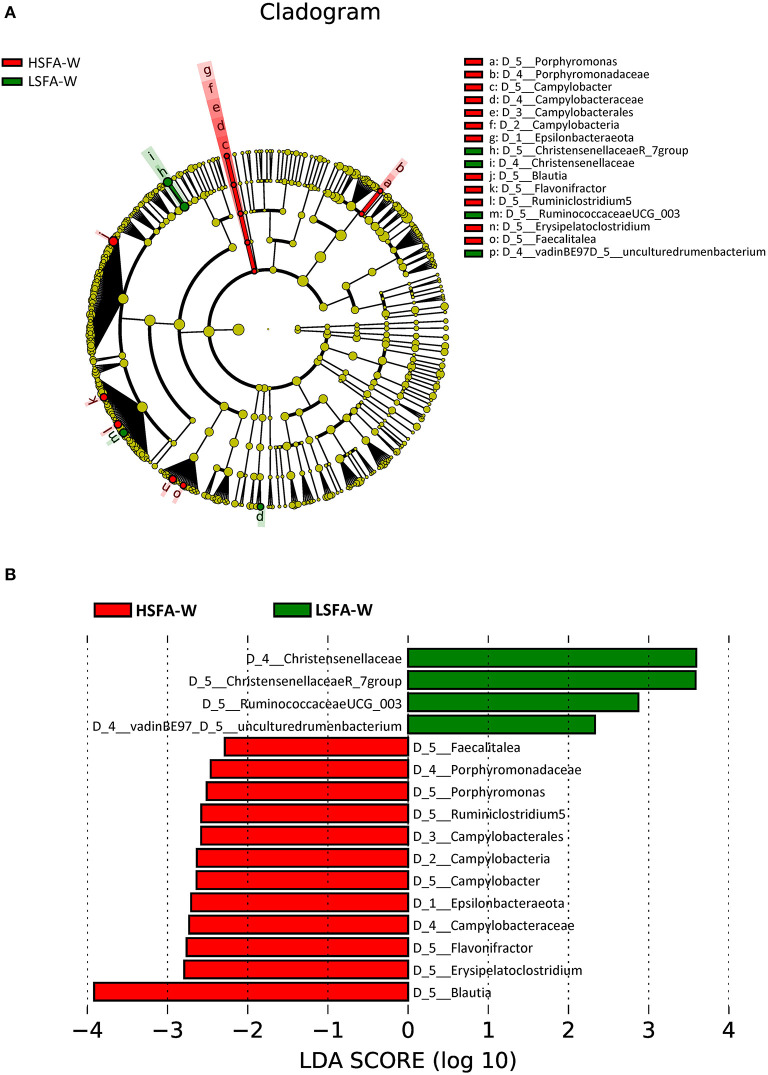
A high intake of dietary saturated fatty acids (SFAs) is related to an increased risk of obesity, inflammation and cancer-related diseases, and this risk is attenuated only when SFAs are replaced by unsaturated fats and unrefined carbohydrates. The gut microbiota has recently emerged as a new environmental factor in the pathophysiology of these disorders, and is also one of the factors most influenced by diet. We sought to determine whether the gut microbiota of healthy individuals whose intake of SFAs exceeds World Health Organization (WHO) recommendations exhibits features similar to those reported in people with obesity, inflammation, cancer or metabolic disease. Healthy non-obese subjects were divided into two groups based on their SFAs intake. Body composition and gut microbiota composition were analyzed, and associations between bacterial taxa, diet and body fat composition were determined globally and separately by sex. Metagenome functional pathways were predicted by PICRUSt analysis. Subjects whose SFAs intake exceeded WHO recommendations also had a dietary pattern of low fiber intake. This high saturated fat/low fiber diet was associated with a greater sequence abundance of the genus, a butyrate producer associated with obesity. Analysis of data of high SFAs intake by sex showed that females presented with a greater abundance of and , whereas males showed higher levels of , a genus from the order ( and two genera from the family. PICRUSt analysis confirmed these data, showing a correlation with a decrease in the abundance of sequences encoding for transporters of some metals such as iron, which is needed to maintain a healthy metabolism. Thus, the microbiota of healthy people on a high SFAs diet contain bacterial taxa () that could be related to the development of some diseases, especially obesity and other pro-inflammatory diseases in women. In summary, the present study identifies bacterial taxa that could be considered as early predictors for the onset of different diseases in healthy subjects. Also, sex differences in gut microbiota suggest that women and men differentially benefit from following a specific diet.
高膳食饱和脂肪酸(SFA)摄入量与肥胖、炎症及癌症相关疾病风险增加有关,且只有当饱和脂肪酸被不饱和脂肪和未精制碳水化合物替代时,这种风险才会减弱。肠道微生物群最近已成为这些疾病病理生理学中的一个新环境因素,也是受饮食影响最大的因素之一。我们试图确定,饱和脂肪酸摄入量超过世界卫生组织(WHO)建议的健康个体的肠道微生物群是否具有与肥胖、炎症、癌症或代谢疾病患者所报告的特征相似。健康的非肥胖受试者根据其饱和脂肪酸摄入量分为两组。分析身体成分和肠道微生物群组成,并从整体上以及按性别分别确定细菌分类群、饮食与体脂成分之间的关联。通过PICRUSt分析预测宏基因组功能途径。饱和脂肪酸摄入量超过WHO建议的受试者也有低纤维摄入量的饮食模式。这种高饱和脂肪/低纤维饮食与一个与肥胖相关的丁酸盐产生菌属的序列丰度增加有关。按性别对高饱和脂肪酸摄入量数据的分析表明,女性中该菌属和另一菌属的丰度更高,而男性中来自某目(此处原文有缺失)的一个菌属以及某科(此处原文有缺失)的两个菌属水平更高。PICRUSt分析证实了这些数据,显示与维持健康代谢所需的一些金属(如铁)转运蛋白编码序列丰度降低相关。因此,高饱和脂肪酸饮食的健康人的微生物群含有可能与某些疾病(尤其是女性肥胖和其他促炎疾病)发展相关的细菌分类群(此处原文有缺失)。总之,本研究确定了可被视为健康受试者不同疾病发病早期预测指标的细菌分类群。此外,肠道微生物群的性别差异表明,女性和男性从遵循特定饮食中获益不同。