Department of Public Health, Sirjan School of Medical Sciences, Sirjan, Iran.
Student Research Committee, School of Medicine, Isfahan University of Medical Sciences, Isfahan, Iran.
Int Breastfeed J. 2021 Jan 4;16(1):1. doi: 10.1186/s13006-020-00354-0.
This study aims to systematically review the effects of maternal vitamin and/or mineral supplementation on the content of breast milk.
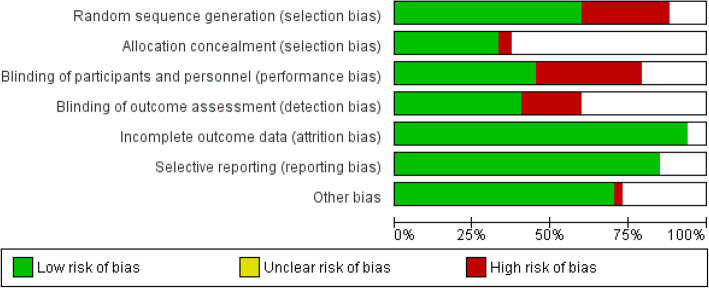
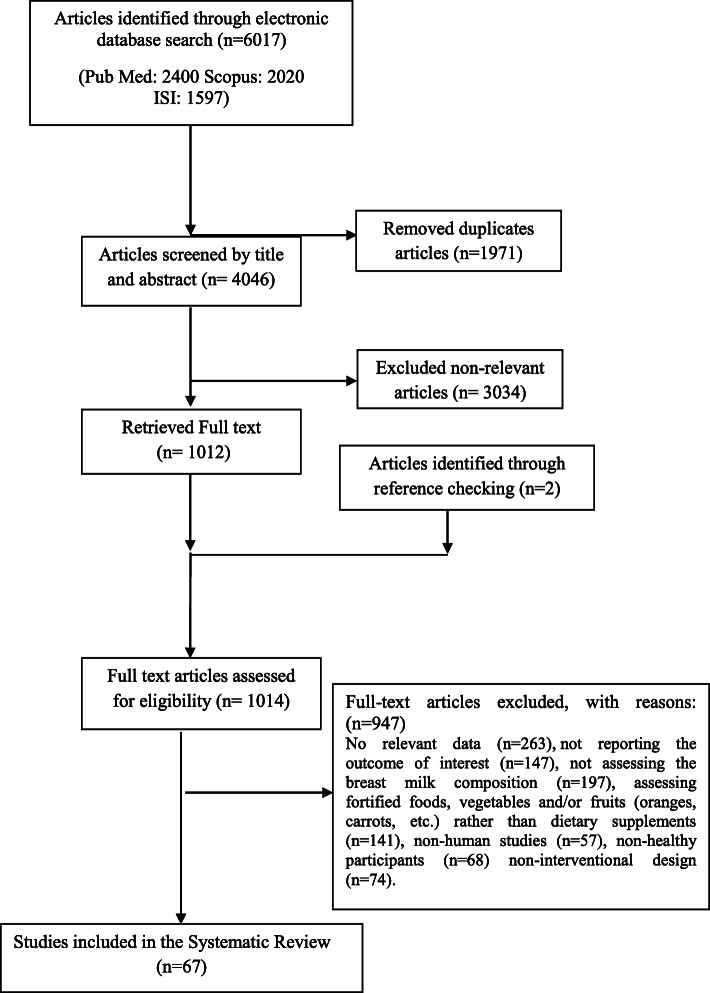
We systematically searched electronic databases including Medline via PubMed, Scopus and ISI Web of Science till May 24, 2018. The following terms were used systematically in all mentioned databases: ("human milk" OR "breast milk" OR "breast milk composition" OR "human breast milk composition" OR "composition breast milk" OR "mother milk" OR "human breast milk" OR "maternal milk") AND ("vitamin a" OR "retinol" OR "retinal" OR "retinoic acid" OR "beta-carotene" OR "beta carotene" OR "ascorbic acid" OR "l-ascorbic acid" OR "l ascorbic acid" OR "vitamin c" OR "vitamin d" OR "cholecalciferol" OR "ergocalciferol" OR "calciferol" OR "vitamin e" OR "tocopherol" OR "tocotrienol" OR "alpha-tocopherol" OR "alpha tocopherol" OR "α-tocopherol" OR "α tocopherol" OR "vitamin k" OR "vitamin b" OR "vitamin b complex" OR "zinc" OR "iron" OR "copper" Or "selenium" OR "manganese" OR "magnesium") and we searched Medline via Medical subject Headings (MeSH) terms. We searched Google Scholar for to increase the sensitivity of our search. The search was conducted on human studies, but it was not limited to the title and abstract. Methodological quality and risk of bias of included studies were evaluated by Jadad scale and Cochrane risk of bias tools, respectively.
This review included papers on three minerals (zinc, iron, selenium) and 6 vitamins (vitamin A, B, D, C, E and K) in addition to multi-vitamin supplements. Although studies had different designs, e.g. not using random allocation and/or blinding, our findings suggest that maternal use of some dietary supplements, including vitamin A, D, vitamin B1, B2 and vitamin C might be reflected in human milk. Vitamin supplements had agreater effect on breast milk composition compared to minerals. Higher doses of supplements showed higher effects and they were reflected more in colostrum than in the mature milk.
Maternal dietary vitamin and/or mineral supplementation, particularly fat- soluble vitamins, vitamin B1, B2 and C might be reflected in the breast milk composition. No difference was found between mega dose and single dose administration of minerals.
本研究旨在系统地回顾母亲补充维生素和/或矿物质对母乳成分的影响。
我们系统地检索了电子数据库,包括通过 PubMed 搜索 Medline、Scopus 和 ISI Web of Science,检索截止日期为 2018 年 5 月 24 日。在所有提到的数据库中,我们系统地使用了以下术语:(“人乳”或“母乳”或“母乳成分”或“人乳成分”或“母乳成分”或“母乳”或“人乳”或“母奶”)和(“维生素 A”或“视黄醇”或“视网膜”或“视黄酸”或“β-胡萝卜素”或“β-胡萝卜素”或“抗坏血酸”或“L-抗坏血酸”或“L 抗坏血酸”或“维生素 C”或“维生素 D”或“胆钙化醇”或“麦角钙化醇”或“钙化醇”或“维生素 E”或“生育酚”或“生育三烯酚”或“α-生育酚”或“α-生育酚”或“α-生育酚”或“α-生育酚”或“维生素 K”或“维生素 B”或“维生素 B 复合物”或“锌”或“铁”或“铜”或“硒”或“锰”或“镁”)并通过 Medical subject Headings(MeSH)术语搜索了 Medline。我们在 Google Scholar 上进行了搜索,以提高我们搜索的敏感性。该搜索仅针对人类研究,但不限于标题和摘要。通过 Jadad 量表和 Cochrane 偏倚风险工具分别评估纳入研究的方法学质量和偏倚风险。
本综述包括关于三种矿物质(锌、铁、硒)和六种维生素(维生素 A、B、D、C、E 和 K)的论文,以及多种维生素补充剂。尽管这些研究设计不同,例如未采用随机分配和/或盲法,但我们的研究结果表明,母亲使用某些膳食补充剂,包括维生素 A、D、维生素 B1、B2 和维生素 C,可能会反映在人乳中。维生素补充剂对母乳成分的影响大于矿物质。较高剂量的补充剂显示出更高的效果,并且它们在初乳中比在成熟乳中反映得更多。
母亲的饮食维生素和/或矿物质补充,特别是脂溶性维生素、维生素 B1、B2 和 C,可能反映在母乳成分中。矿物质的大剂量和单剂量给药之间没有差异。