Gerrity Daniel, Papp Katerina, Stoker Mitchell, Sims Alan, Frehner Wilbur
Southern Nevada Water Authority, P.O. Box 99954, Las Vegas, NV, 89193, USA.
Department of Civil and Environmental Engineering and Construction, University of Nevada Las Vegas, 4505 S. Maryland Parkway, Box 454015, Las Vegas, NV, 89154, USA.
Water Res X. 2021 Jan 1;10:100086. doi: 10.1016/j.wroa.2020.100086. Epub 2020 Dec 31.
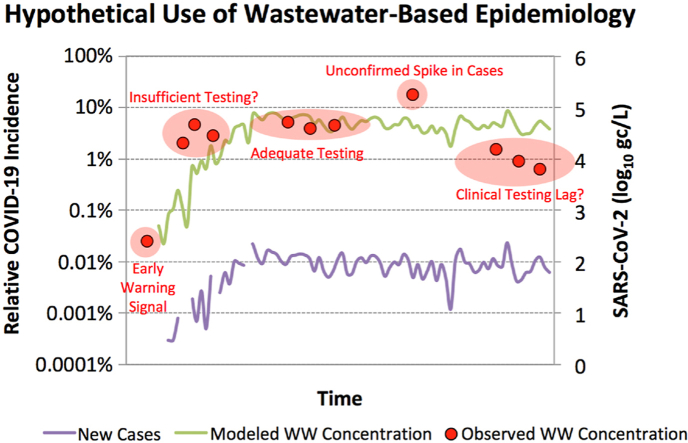
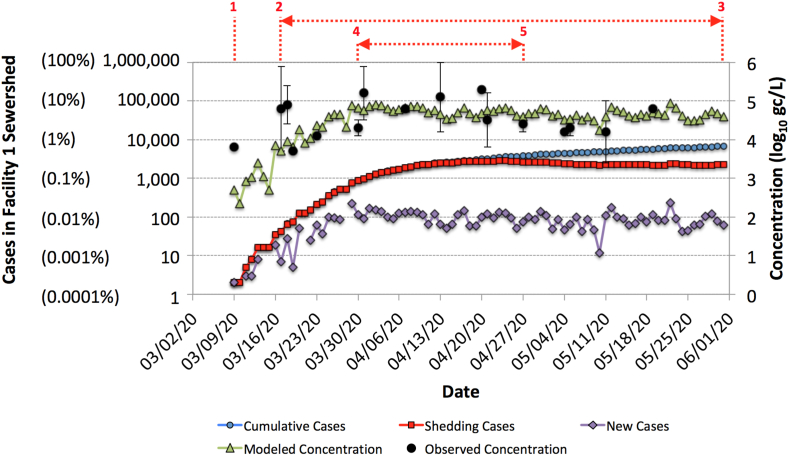
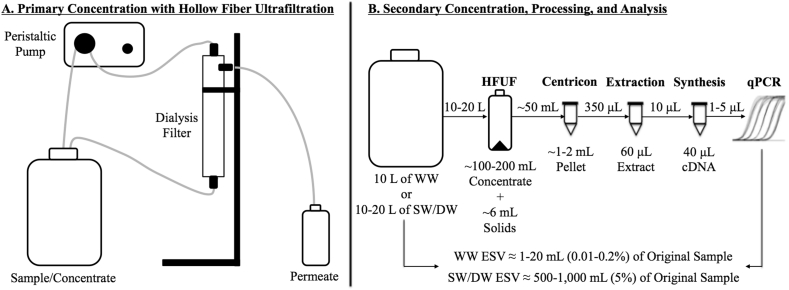
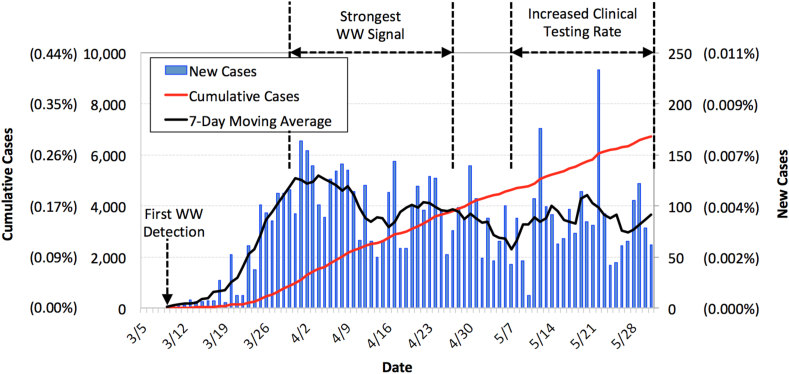
The World Health Organization (WHO) classified COVID-19 as a global pandemic, with the situation ultimately requiring unprecedented measures to mitigate the effects on public health and the global economy. Although SARS-CoV-2 (the virus responsible for COVID-19) is primarily respiratory in nature, multiple studies confirmed its genetic material could be detected in the feces of infected individuals, thereby highlighting sewage as a potential indicator of community incidence or prevalence. Numerous wastewater surveillance studies subsequently confirmed detection of SARS-CoV-2 RNA in wastewater and wastewater-associated solids/sludge. However, the methods employed in early studies vary widely so it is unclear whether differences in reported concentrations reflect true differences in epidemiological conditions, or are instead driven by methodological artifacts. The current study aimed to compare the performance of virus recovery and detection methods, detect and quantify SARS-CoV-2 genetic material in two Southern Nevada sewersheds from March-May 2020, and better understand the potential link between COVID-19 incidence/prevalence and wastewater concentrations of SARS-CoV-2 RNA. SARS-CoV-2 surrogate recovery (0.34%-55%) and equivalent sample volume (0.1 mL-1 L) differed between methods and target water matrices, ultimately impacting method sensitivity and reported concentrations. Composite sampling of influent and primary effluent resulted in a ∼10-fold increase in concentration relative to corresponding grab primary effluent samples, presumably highlighting diurnal variability in SARS-CoV-2 signal. Detection and quantification of four SARS-CoV-2 genetic markers (up to ∼10 gene copies per liter), along with ratios of SARS-CoV-2 to pepper mild mottle virus (PMMoV), exhibited comparability with public health data for two sewersheds in an early phase of the pandemic. Finally, a wastewater model informed by fecal shedding rates highlighted the potential significance of cases (i.e., incidence rather than prevalence) when interpreting wastewater surveillance data.
世界卫生组织(WHO)将 COVID-19 列为全球大流行病,最终形势要求采取前所未有的措施来减轻对公共卫生和全球经济的影响。尽管严重急性呼吸综合征冠状病毒 2(SARS-CoV-2,即导致 COVID-19 的病毒)本质上主要是呼吸道病毒,但多项研究证实,在受感染个体的粪便中可以检测到其遗传物质,从而凸显污水是社区发病率或流行率的潜在指标。随后,大量废水监测研究证实了在废水以及与废水相关的固体/污泥中检测到了 SARS-CoV-2 RNA。然而,早期研究中采用的方法差异很大,因此尚不清楚报告浓度的差异是反映了流行病学状况的真实差异,还是由方法假象导致的。本研究旨在比较病毒回收和检测方法的性能,在 2020 年 3 月至 5 月期间对内华达州南部的两个排水流域中的 SARS-CoV-2 遗传物质进行检测和定量,并更好地了解 COVID-19 发病率/流行率与 SARS-CoV-2 RNA 废水浓度之间的潜在联系。不同方法和目标水基质之间的 SARS-CoV-2 替代物回收率(0.34%-55%)和等效样品体积(0.1 mL-1 L)有所不同,最终影响了方法的灵敏度和报告浓度。进水和一级出水的混合采样相对于相应的抓取一级出水样品,浓度增加了约 10 倍,这可能凸显了 SARS-CoV-2 信号的日变化。对四种 SARS-CoV-2 遗传标记物(每升高达约 10 个基因拷贝)的检测和定量,以及 SARS-CoV-2 与辣椒轻斑驳病毒(PMMoV)的比率,在大流行早期阶段与两个排水流域的公共卫生数据具有可比性。最后,一个基于粪便排泄率的废水模型突出了在解释废水监测数据时病例(即发病率而非流行率)的潜在重要性。