Division of Transplantation Immunology and Mucosal Biology, Faculty of Life Sciences and Medicine, MRC Centre for Transplantation, King's College London, Guy's Hospital, 5th Floor Tower Wing, London, SE1 9RT, UK.
Department of Urology, Hokkaido University Graduate School of Medicine, Sapporo, Japan.
Surg Endosc. 2021 Dec;35(12):6897-6902. doi: 10.1007/s00464-020-08197-w. Epub 2021 Jan 4.
Virtual reality (VR) training is widely used for surgical training, supported by comprehensive, high-quality validation. Technological advances have enabled the development of procedural-based VR training. This study assesses the effectiveness of procedural VR compared to basic skills VR in minimally invasive surgery.
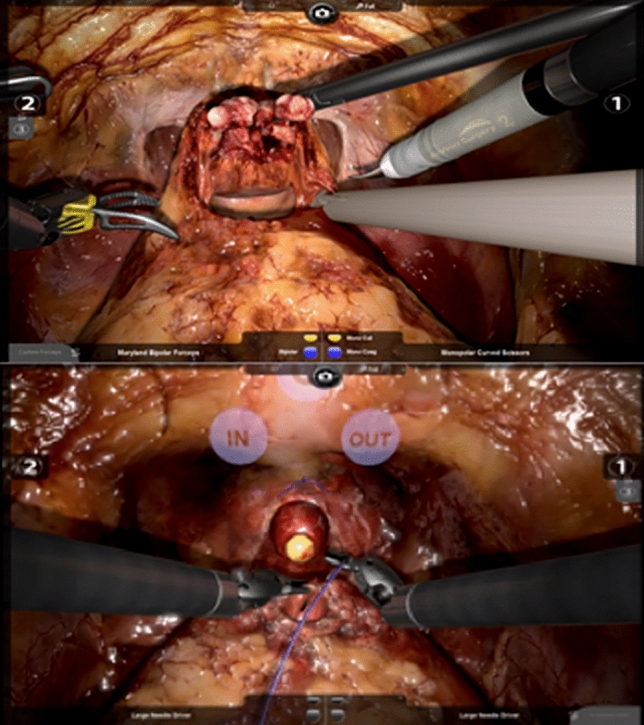
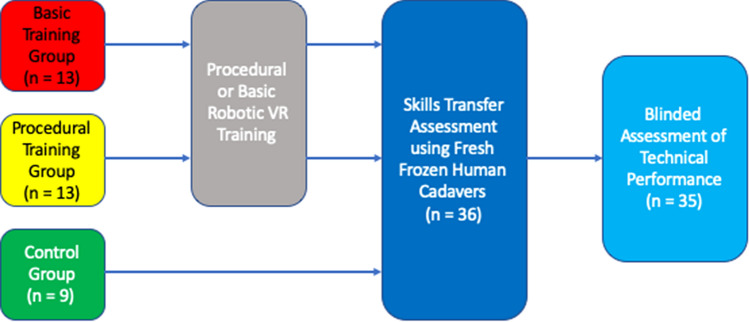
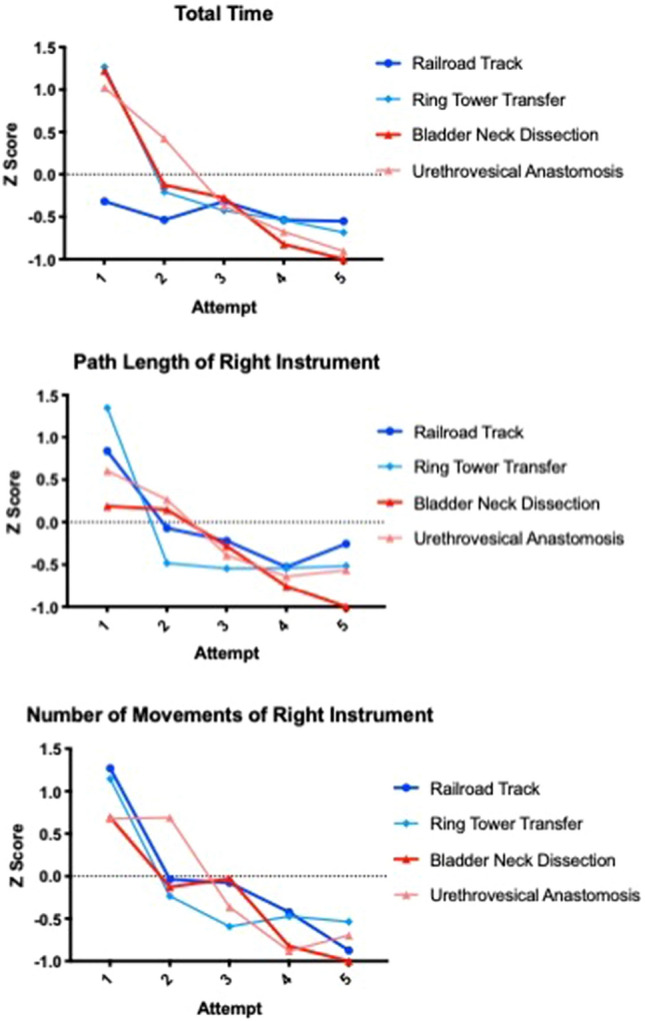
26 novice participants were randomised to either procedural VR (n = 13) or basic VR simulation (n = 13). Both cohorts completed a structured training programme. Simulator metric data were used to plot learning curves. All participants then performed parts of a robotic radical prostatectomy (RARP) on a fresh frozen cadaver. Performances were compared against a cohort of 9 control participants without any training experience. Performances were video recorded and assessed blindly using GEARS post hoc.
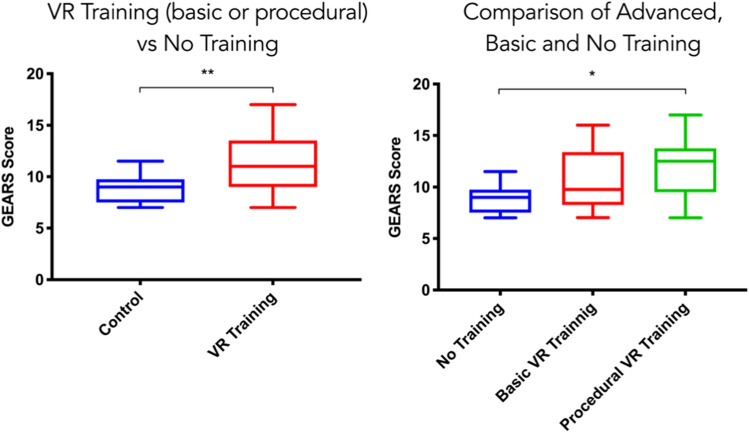
Learning curve analysis demonstrated improvements in technical skill for both training modalities although procedural training was associated with greater training effects. Any VR training resulted in significantly higher GEARS scores than no training (GEARS score 11.3 ± 0.58 vs. 8.8 ± 2.9, p = 0.002). Procedural VR training was found to be more effective than both basic VR training and no training (GEARS 11.9 ± 2.9 vs. 10.7 ± 2.8 vs. 8.8 ± 1.4, respectively, p = 0.03).
This trial has shown that a structured programme of procedural VR simulation is effective for robotic training with technical skills successfully transferred to a clinical task in cadavers. Further work to evaluate the role of procedural-based VR for more advanced surgical skills training is required.
虚拟现实 (VR) 培训在外科培训中得到广泛应用,得到了全面、高质量的验证支持。技术进步使基于程序的 VR 培训得以发展。本研究评估了程序性 VR 与微创手术中的基本技能 VR 相比的有效性。
26 名新手参与者被随机分配到程序性 VR(n=13)或基本 VR 模拟(n=13)组。两组参与者都完成了一个结构化的培训计划。模拟器指标数据用于绘制学习曲线。所有参与者随后在新鲜冷冻的尸体上进行部分机器人根治性前列腺切除术(RARP)。表现与一组没有任何培训经验的 9 名对照参与者进行了比较。使用 GEARS 事后分析对表现进行了盲法视频记录和评估。
学习曲线分析表明,两种培训模式的技术技能都有所提高,尽管程序性培训与更大的培训效果相关。任何 VR 培训都比没有培训产生更高的 GEARS 评分(GEARS 评分 11.3±0.58 与 8.8±2.9,p=0.002)。程序性 VR 培训比基本 VR 培训和没有培训更有效(GEARS 11.9±2.9 与 10.7±2.8 与 8.8±1.4,分别为 p=0.03)。
本试验表明,程序性 VR 模拟的结构化培训计划对机器人培训有效,技术技能成功转移到尸体上的临床任务。需要进一步研究评估基于程序的 VR 在更高级手术技能培训中的作用。