Vidyagina Elena O, Kharchenko Nikolay N, Shestibratov Konstantin A
Branch of the Shemyakin-Ovchinnikov Institute of Bioorganic Chemistry of the Russian Academy of Sciences, Science avenue 6, Pushchino, Moscow Region 142290, Russia.
Voronezh State University of Forestry and Technologies Named after G.F.Morozov, 8 Timiryazeva Str., Voronezh 394087, Russia.
Plants (Basel). 2021 Jan 2;10(1):77. doi: 10.3390/plants10010077.
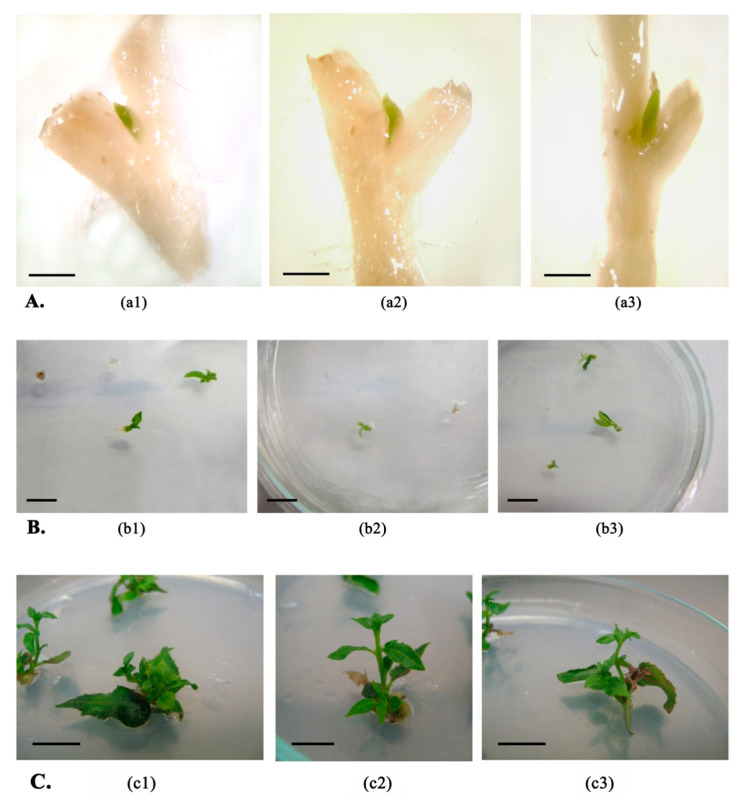
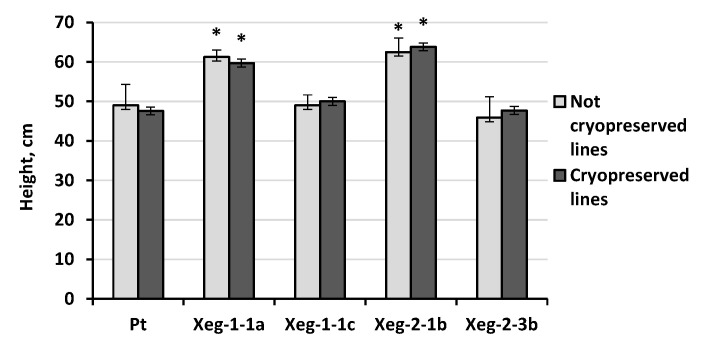
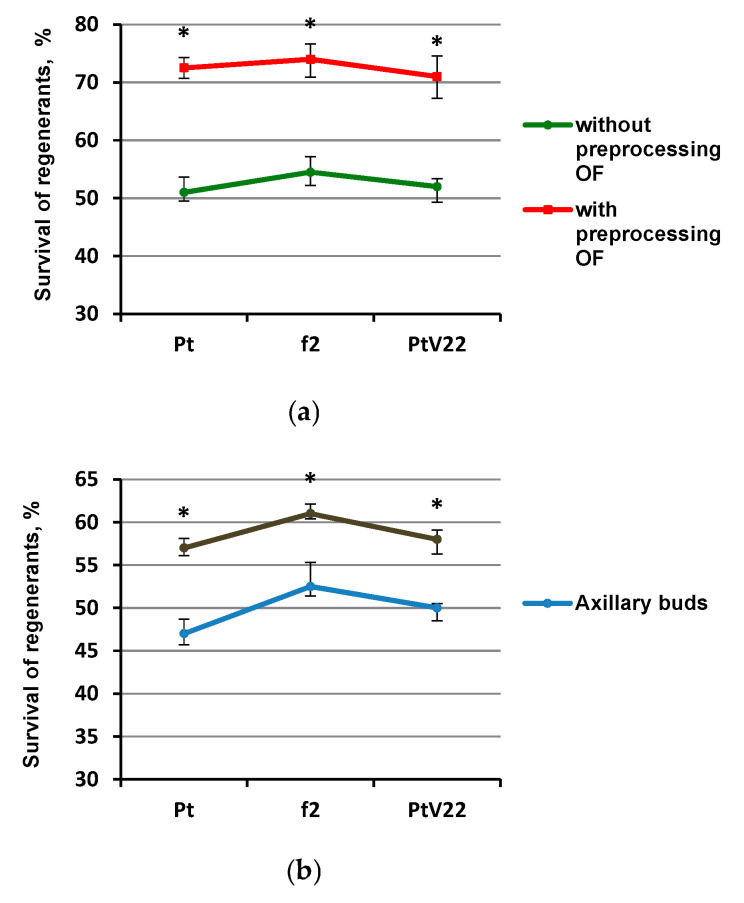
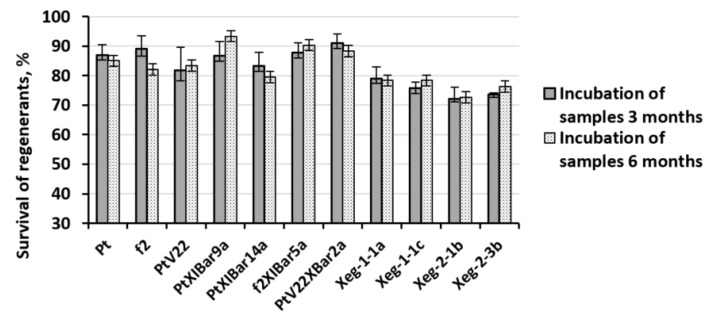
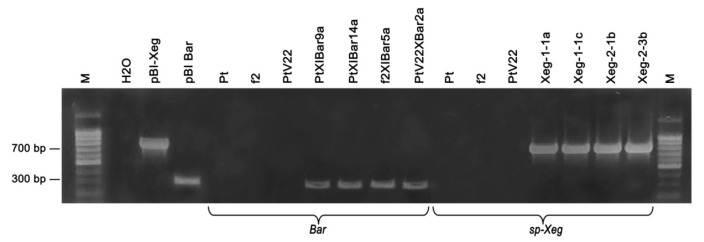
Axillary buds of in vitro microshoots were successfully frozen at -196 °C by the one-step freezing method using the protective vitrification solution 2 (PVS2). Microshoots were taken from 11 transgenic lines and three wild type lines. Influence of different explant pretreatments were analyzed from the point of their influence towards recovery after cryopreservation. It was found out that the use of axillary buds as explants after removal of the apical one increases recovery on average by 8%. The cultivation on growth medium of higher density insignificantly raises the regenerants survival rate. Pretreatment of the osmotic fluid (OF) shows the greatest influence on the survival rate. It leads to the increase in survival rate by 20%. The cryopreservation technology providing regenerants average survival rate of 83% was developed. It was based on the experimental results obtained with explant pretreatment. Incubation time in liquid nitrogen did not affect the explants survival rate after thawing. After six months cryostorage of samples their genetic variability was analyzed. Six variable simple sequence repeat (SSR) loci were used to analyze genotype variability after the freezing-thawing procedure. The microsatellite analysis showed the genetic status identity of plants after cryopreservation and of the original genotypes. The presence of the recombinant gene in the transgenic lines after cryostorage were confirmed so as the interclonal variation in the growth rate under greenhouse conditions. The developed technique is recommended for long-term storage of various breeding and genetically modified lines of aspen plants, as it provides a high percentage of explants survival with no changes in genotype.
使用保护型玻璃化溶液2(PVS2)通过一步冷冻法成功将离体微枝的腋芽在-196°C下冷冻。微枝取自11个转基因品系和3个野生型品系。从不同外植体预处理对冷冻保存后恢复的影响方面分析其影响。结果发现,去除顶芽后使用腋芽作为外植体平均可使恢复率提高8%。在较高密度的生长培养基上培养对再生体存活率的提高不显著。渗透液(OF)预处理对存活率影响最大,可使存活率提高20%。基于外植体预处理获得的实验结果,开发了一种能使再生体平均存活率达到83%的冷冻保存技术。液氮中的孵育时间对解冻后外植体的存活率没有影响。对样品进行六个月的冷冻保存后,分析其遗传变异性。使用六个可变简单序列重复(SSR)位点分析冻融处理后的基因型变异性。微卫星分析表明,冷冻保存后植物的遗传状态与原始基因型相同。确认了冷冻保存后转基因品系中重组基因的存在以及温室条件下克隆间生长速率的差异。所开发的技术推荐用于白杨植物各种育种和转基因品系的长期保存,因为它能提供高比例的外植体存活率且基因型无变化。