Gould Daniel, Dowsey Michelle M, Spelman Tim, Jo Olivia, Kabir Wassif, Trieu Jason, Bailey James, Bunzli Samantha, Choong Peter
Department of Surgery, University of Melbourne, St. Vincent's Hospital Melbourne, 3065 Melbourne, Australia.
Department of Othopaedics, St. Vincent's Hospital Melbourne, 3065 Melbourne, Australia.
J Clin Med. 2021 Jan 2;10(1):134. doi: 10.3390/jcm10010134.
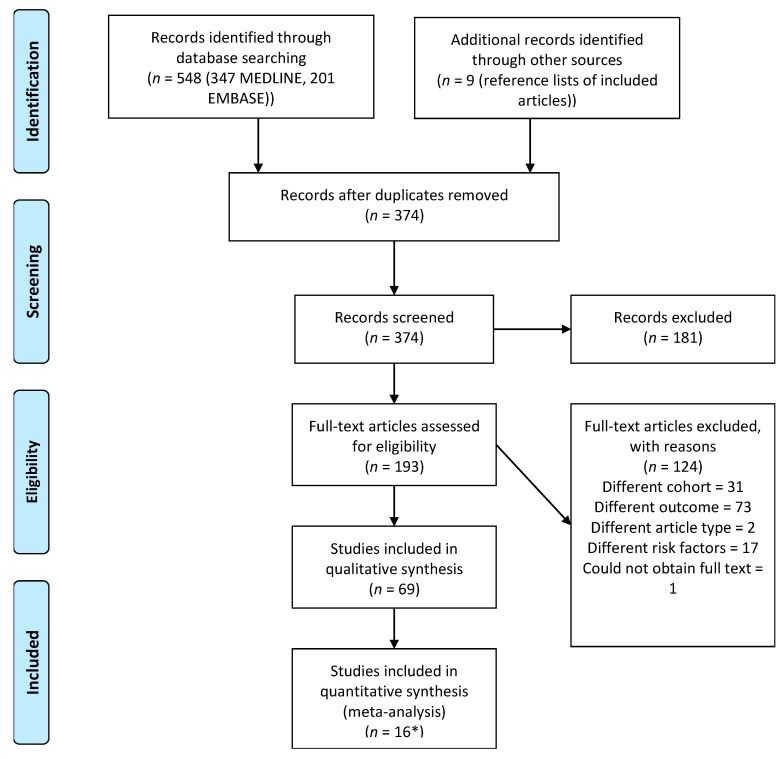
Total knee arthroplasty (TKA) is a highly effective procedure for advanced osteoarthritis of the knee. Thirty-day hospital readmission is an adverse outcome related to complications, which can be mitigated by identifying associated risk factors. We aimed to identify patient-related characteristics associated with unplanned 30-day readmission following TKA, and to determine the effect size of the association between these risk factors and unplanned 30-day readmission. We searched MEDLINE and EMBASE from inception to 8 September 2020 for English language articles. Reference lists of included articles were searched for additional literature. Patients of interest were TKA recipients (primary and revision) compared for 30-day readmission to any institution, due to any cause, based on patient risk factors; case series were excluded. Two reviewers independently extracted data and carried out critical appraisal. In-hospital complications during the index admission were the strongest risk factors for 30-day readmission in both primary and revision TKA patients, suggesting discharge planning to include closer post-discharge monitoring to prevent avoidable readmission may be warranted. Further research could determine whether closer monitoring post-discharge would prevent unplanned but avoidable readmissions. Increased comorbidity burden correlated with increased risk, as did specific comorbidities. Body mass index was not strongly correlated with readmission risk. Demographic risk factors included low socioeconomic status, but the impact of age on readmission risk was less clear. These risk factors can also be included in predictive models for 30-day readmission in TKA patients to identify high-risk patients as part of risk reduction programs.
全膝关节置换术(TKA)是治疗晚期膝关节骨关节炎的一种高效手术。30天内再次入院是一种与并发症相关的不良结局,通过识别相关风险因素可以减轻这种情况。我们旨在确定与TKA术后计划外30天再次入院相关的患者特征,并确定这些风险因素与计划外30天再次入院之间关联的效应大小。我们检索了MEDLINE和EMBASE数据库,从建库至2020年9月8日,查找英文文章。对纳入文章的参考文献列表进行检索以获取更多文献。感兴趣的患者是接受TKA手术的患者(初次手术和翻修手术),根据患者风险因素,比较因任何原因在30天内再次入住任何机构的情况;排除病例系列研究。两名研究者独立提取数据并进行严格评价。在初次和翻修TKA患者中,首次住院期间的院内并发症是30天再次入院的最强风险因素,这表明出院计划可能需要包括出院后更密切的监测,以防止可避免的再次入院。进一步的研究可以确定出院后更密切的监测是否能预防计划外但可避免的再次入院。合并症负担增加与风险增加相关,特定合并症也是如此。体重指数与再次入院风险的相关性不强。人口统计学风险因素包括社会经济地位低,但年龄对再次入院风险的影响不太明确。这些风险因素也可以纳入TKA患者30天再次入院的预测模型中,以识别高危患者,作为降低风险计划的一部分。