Xiao Jia, Weng Jie, Wen Fang, Ye Juan
Department of Clinical Oncology, The First People's Hospital of Yueyang, No. 39 of Dongmaoling Road, Yueyang, Hunan Province 414000, P. R. China.
Department of Head and Neck Oncology, The Second Affiliated Hospital of Zunyi Medical University, No. 149 Dalian Road, Zunyi, Guizhou Province 563000, P. R. China.
ACS Omega. 2020 Dec 17;5(51):32861-32867. doi: 10.1021/acsomega.0c01541. eCollection 2020 Dec 29.
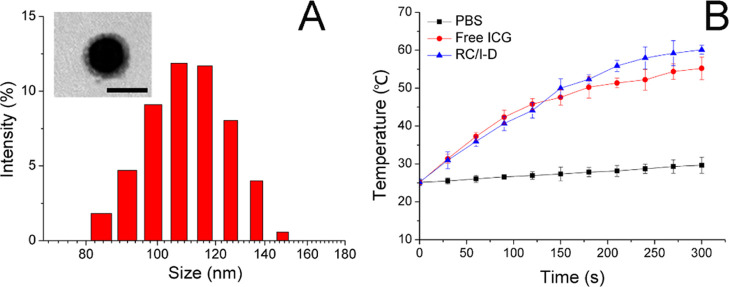
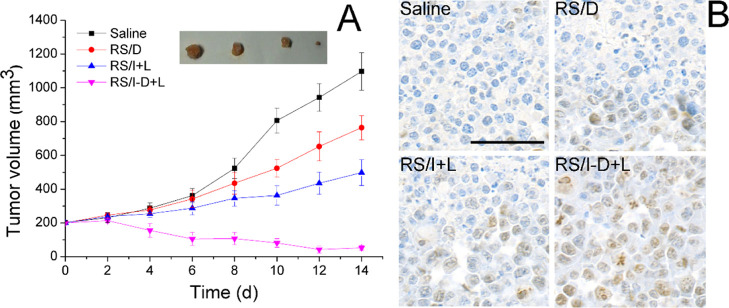
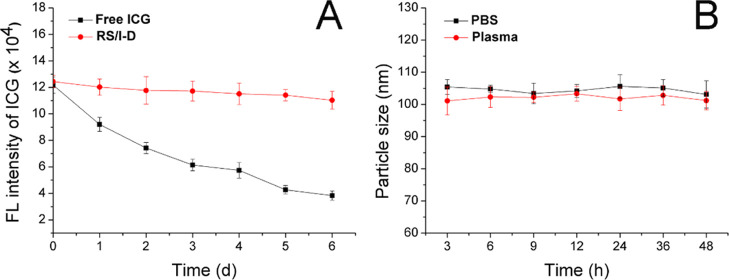
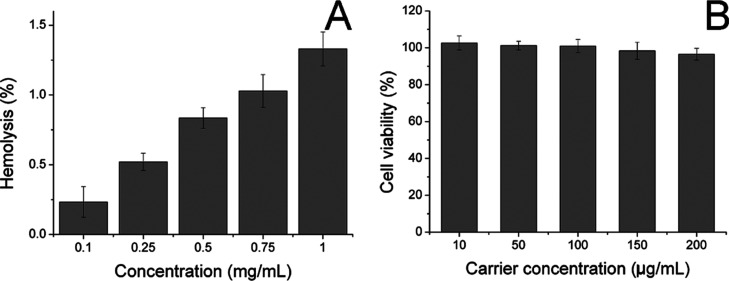
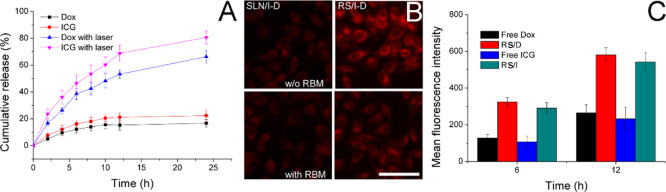
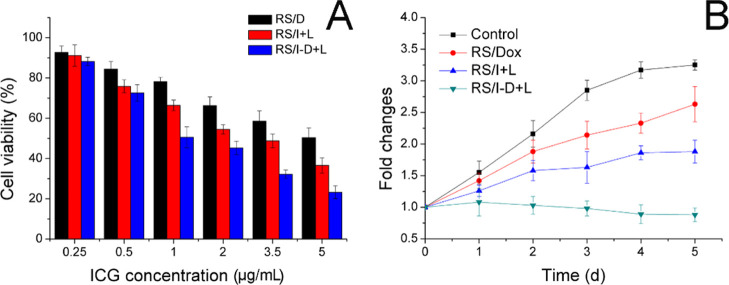
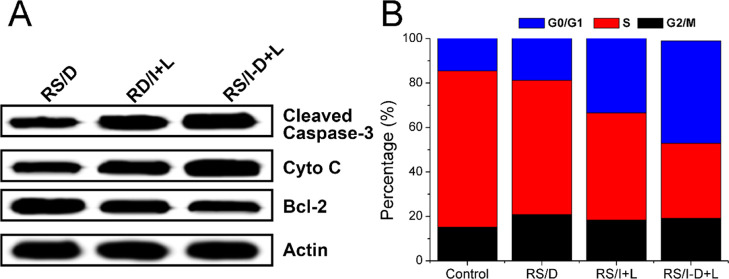
The effective chemotherapy of cancer is usually hindered by the unsatisfied cell internalization of the drug delivery systems (DDS) as well as drug resistance of cancer cells. In order to solve these dilemmas in one design, red blood cell membrane (RBM)-coated silica nanoparticles (RS) were fabricated to codeliver doxorubicin (Dox) and indocyanine green (ICG) to effectively treat the model lung cancer using photothermal-assisted chemotherapy. Our results demonstrated that the RS/I-D was the nanoparticle at around 100 nm with superior stability and biocompatibility. Especially, the photothermal effects of ICG were well preserved and could be applied to accelerate the drug release from the DDS. More importantly, the RBM modification can mediate enhanced cell internalization of drugs as compared to their free forms, which finally resulted in enhanced anticancer efficacy in Dox-resistant A549 cells (A549/Dox) both and with enhanced cell apoptosis and cell arrest.
癌症的有效化疗通常受到药物递送系统(DDS)细胞内化不理想以及癌细胞耐药性的阻碍。为了在一种设计中解决这些难题,制备了红细胞膜(RBM)包覆的二氧化硅纳米颗粒(RS),以共同递送阿霉素(Dox)和吲哚菁绿(ICG),通过光热辅助化疗有效治疗模型肺癌。我们的结果表明,RS/I-D是一种粒径约为100 nm的纳米颗粒,具有优异的稳定性和生物相容性。特别是,ICG的光热效应得到了很好的保留,可用于加速药物从DDS中释放。更重要的是,与游离形式的药物相比,RBM修饰可以介导药物细胞内化增强,最终导致对阿霉素耐药的A549细胞(A549/Dox)的抗癌疗效增强,同时细胞凋亡增加和细胞停滞。