National Key Laboratory of Crop Genetic Improvement and Center of Integrative Biology, College of Life Science and Technology, Huazhong Agricultural University, Wuhan 430070, China.
Department of Genetics, School of Life Sciences, Fudan University, Shanghai 200438, China.
Plant Commun. 2019 Dec 12;1(3):100014. doi: 10.1016/j.xplc.2019.100014. eCollection 2020 May 11.
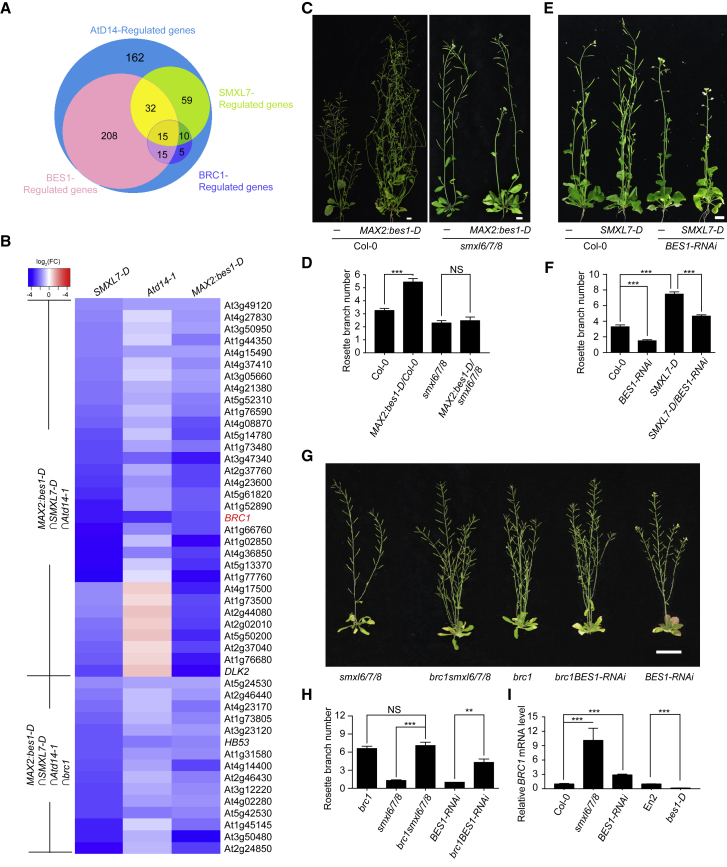
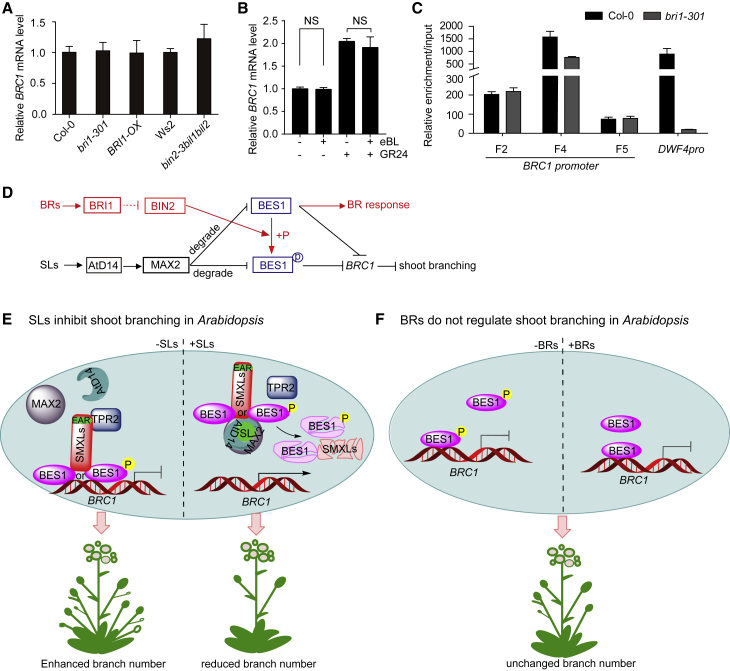
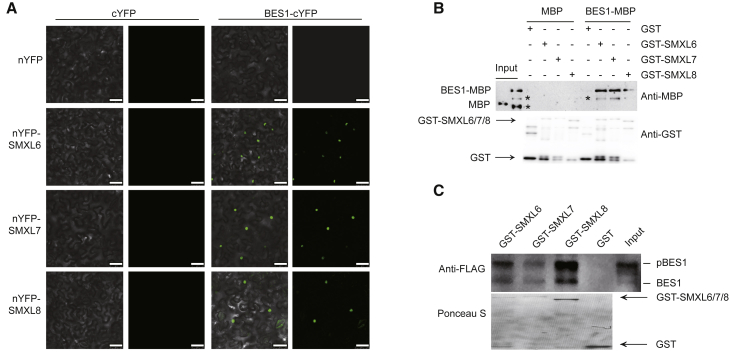
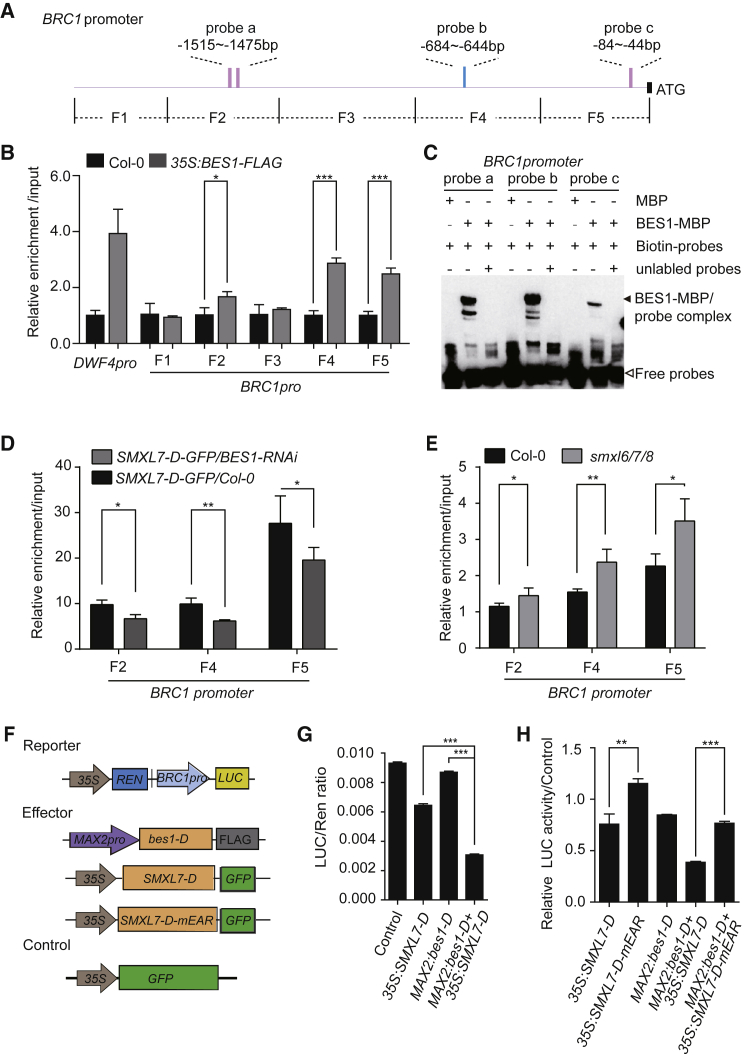
Shoot branching, determining plant architecture and crop yield, is critically controlled by strigolactones (SLs). However, how SLs inhibit shoot branching after its perception by the receptor complex remains largely obscure. In this study, using the transcriptomic and genetic analyss as well as biochemical studies, we reveal the key role of BES1 in the SL-regulated shoot branching. We demonstrate that BES1 and D53-like SMXLs, the substrates of SL receptor complex D14-MAX2, interact with each other to inhibit expression, which specifically triggers the SL-regulated transcriptional network in shoot branching. BES1 directly binds the promoter and recruits SMXLs to inhibit expression. Interestingly, despite being the shared component by SL and brassinosteroid (BR) signaling, BES1 gains signal specificity through different mechanisms in response to BR and SL signals.
分枝的发生决定着植物的结构和产量,这一过程受到独脚金内酯(SLs)的严格调控。然而,SL 被受体复合物感知后如何抑制分枝的发生在很大程度上仍不清楚。在这项研究中,我们通过转录组学和遗传学分析以及生化研究,揭示了 BES1 在 SL 调控的分枝中的关键作用。我们证明,BES1 和 D53 样 SMXLs,即 SL 受体复合物 D14-MAX2 的底物,相互作用以抑制 表达,这专门触发了 SL 调控的分枝中的转录网络。BES1 直接结合 启动子并招募 SMXLs 以抑制 表达。有趣的是,尽管 BES1 是 SL 和油菜素内酯(BR)信号的共同组成部分,但它通过不同的机制在响应 BR 和 SL 信号时获得信号特异性。