Department of Stomatology, Fujian Provincial Governmental Hospital, Fuzhou, China.
Fujian Key Laboratory of Oral Diseases & Fujian Provincial Engineering Research Center of Oral Biomaterial & Stomatological Key Laboratory of Fujian College and University, School and Hospital of Stomatology, Fujian Medical University, Fuzhou, China.
BMC Dev Biol. 2021 Jan 6;21(1):1. doi: 10.1186/s12861-020-00229-x.
Phosphate is the major ingredient of bone tissue, and is also an important component of commercial bone substitute materials, bone scaffolds, and implant surface coatings. With the dissolution of the bone substitute materials and the degradation by cells, local ion concentrations will change and affect bone tissue reconstruction. Bone marrow -derived mesenchymal stem cells (BM-MSCs) are main autologous cells to repair injured bone. When bone injure occurs, BM-MSCs migrate to the damaged area, differentiate into osteoblasts, and secrete bioactive factors to promote bone tissue repaired. This study aimed to investigate the effect of inorganic phosphate (Pi) at a series of concentration on migration and osteogenic differentiation of human bone marrow -derived mesenchymal stem cells(hBM-MSCs).
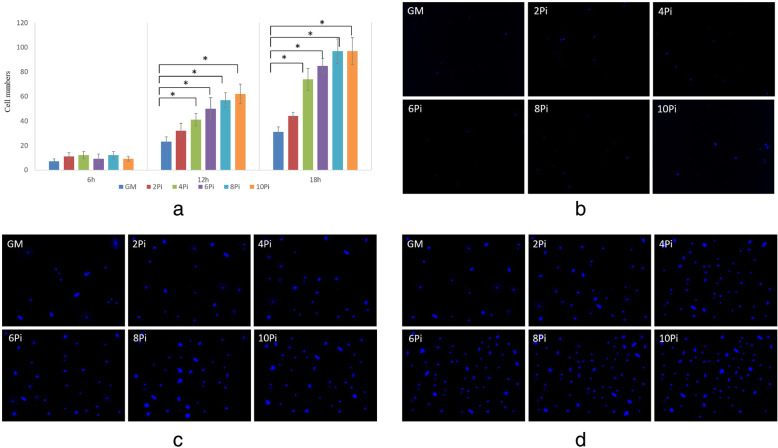
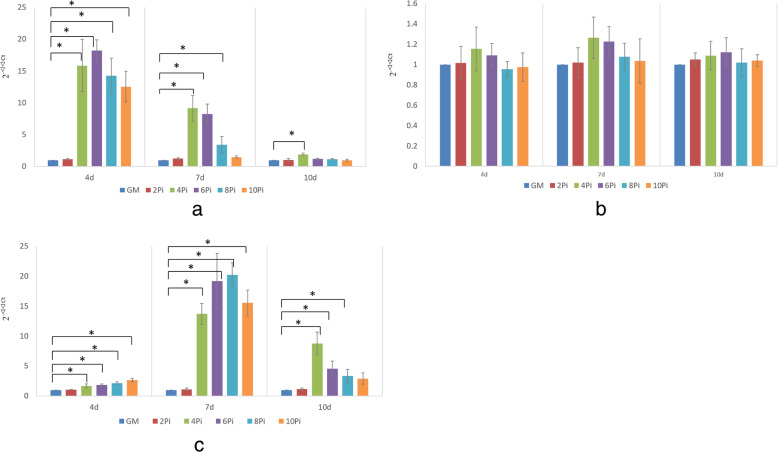
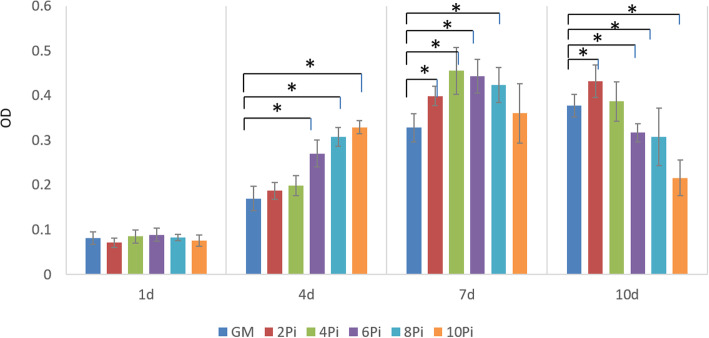
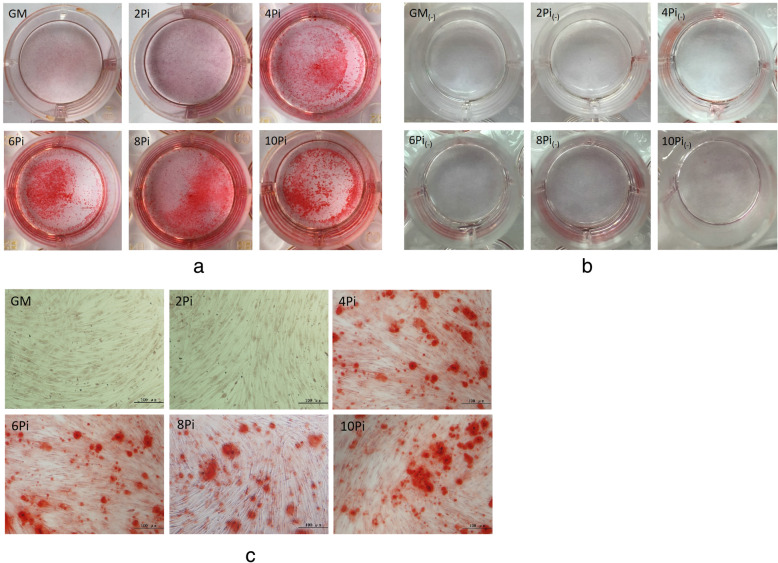
The culture of hBM-MSCs in mediums with different concentration of Pi from 2 mM to 10 mM were performed. HBM-MSCs migration were examined with transwell assays. HBM-MSCs proliferation were evaluated by cell counting kit-8 colorimetric method. Osteogenic genes expression were analyzed by real-time reverse transcriptase polymerase chain reaction. Mineralized nodules formation were demonstrated by Alizarin red staining.
4-10 mM Pi could effectively promote the migration of hBM-MSCs at 12 h and 18 h. There was no significant difference in the migration number of hBM-MSCs in Pi culture mediums at a concentration of 6, 8, and10mM. 2-10 mM Pi could promote the proliferation of hBM-MSCs to varying degrees in the observation period, while 4-10 mM Pi could promote the osteogenic differentiation and mineralization of hBM-MSCs.
The findings in our study showed 4-10 mM Pi could promote the migration, osteogenic differentiation, and mineralization of hBM-MSCs.
磷是骨组织的主要成分,也是商业骨替代材料、骨支架和植入物表面涂层的重要组成部分。随着骨替代材料的溶解和细胞的降解,局部离子浓度将发生变化,并影响骨组织的重建。骨髓间充质干细胞(BM-MSCs)是修复受损骨的主要自体细胞。当发生骨损伤时,BM-MSCs 迁移到受损区域,分化为成骨细胞,并分泌生物活性因子促进骨组织修复。本研究旨在探讨一系列浓度的无机磷(Pi)对人骨髓间充质干细胞(hBM-MSCs)迁移和成骨分化的影响。
在含有 2mM-10mM 不同浓度 Pi 的培养基中培养 hBM-MSCs。采用 Transwell 实验检测 hBM-MSCs 的迁移。通过细胞计数试剂盒-8 比色法评估 hBM-MSCs 的增殖。采用实时逆转录聚合酶链反应分析成骨基因表达。茜素红染色显示矿化结节形成。
4-10mM Pi 可有效促进 hBM-MSCs 在 12h 和 18h 时的迁移。在浓度为 6、8 和 10mM 的 Pi 培养基中,hBM-MSCs 的迁移数量没有显著差异。2-10mM Pi 在观察期内可不同程度地促进 hBM-MSCs 的增殖,而 4-10mM Pi 可促进 hBM-MSCs 的成骨分化和矿化。
本研究结果表明,4-10mM Pi 可促进 hBM-MSCs 的迁移、成骨分化和矿化。