Sanchez-Casanova Silvia, Martin-Saavedra Francisco M, Escudero-Duch Clara, Falguera Uceda Maria I, Prieto Martin, Arruebo Manuel, Acebo Paloma, Fabiilli Mario L, Franceschi Renny T, Vilaboa Nuria
Hospital Universitario La Paz-IdiPAZ, Paseo de La Castellana 261, Madrid, 28046, Spain; CIBER de Bioingenieria, Biomateriales y Nanomedicina, CIBER-BBN, Spain.
Hospital Universitario La Paz-IdiPAZ, Paseo de La Castellana 261, Madrid, 28046, Spain; CIBER de Bioingenieria, Biomateriales y Nanomedicina, CIBER-BBN, Spain.
Biomaterials. 2020 May;241:119909. doi: 10.1016/j.biomaterials.2020.119909. Epub 2020 Feb 21.
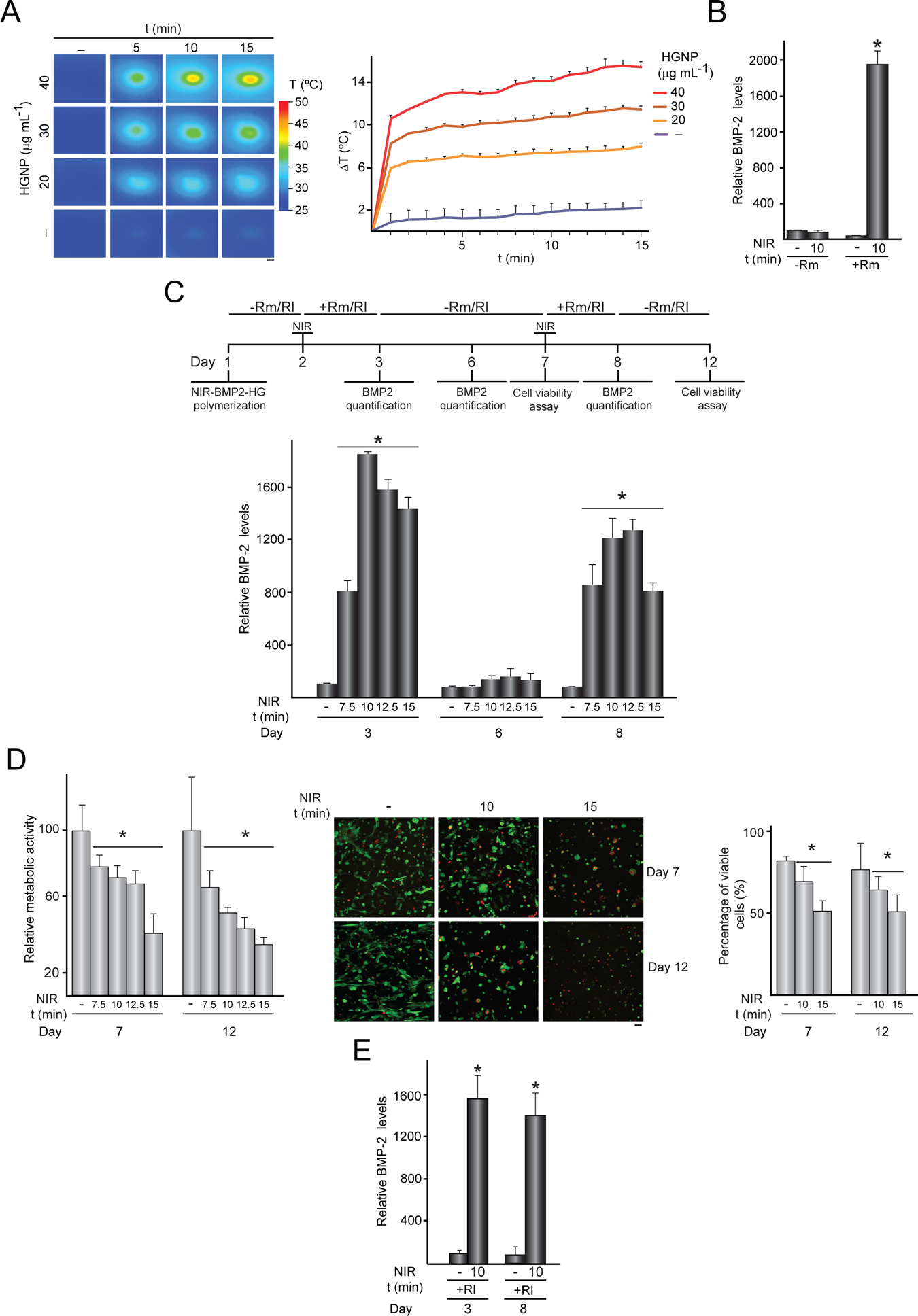
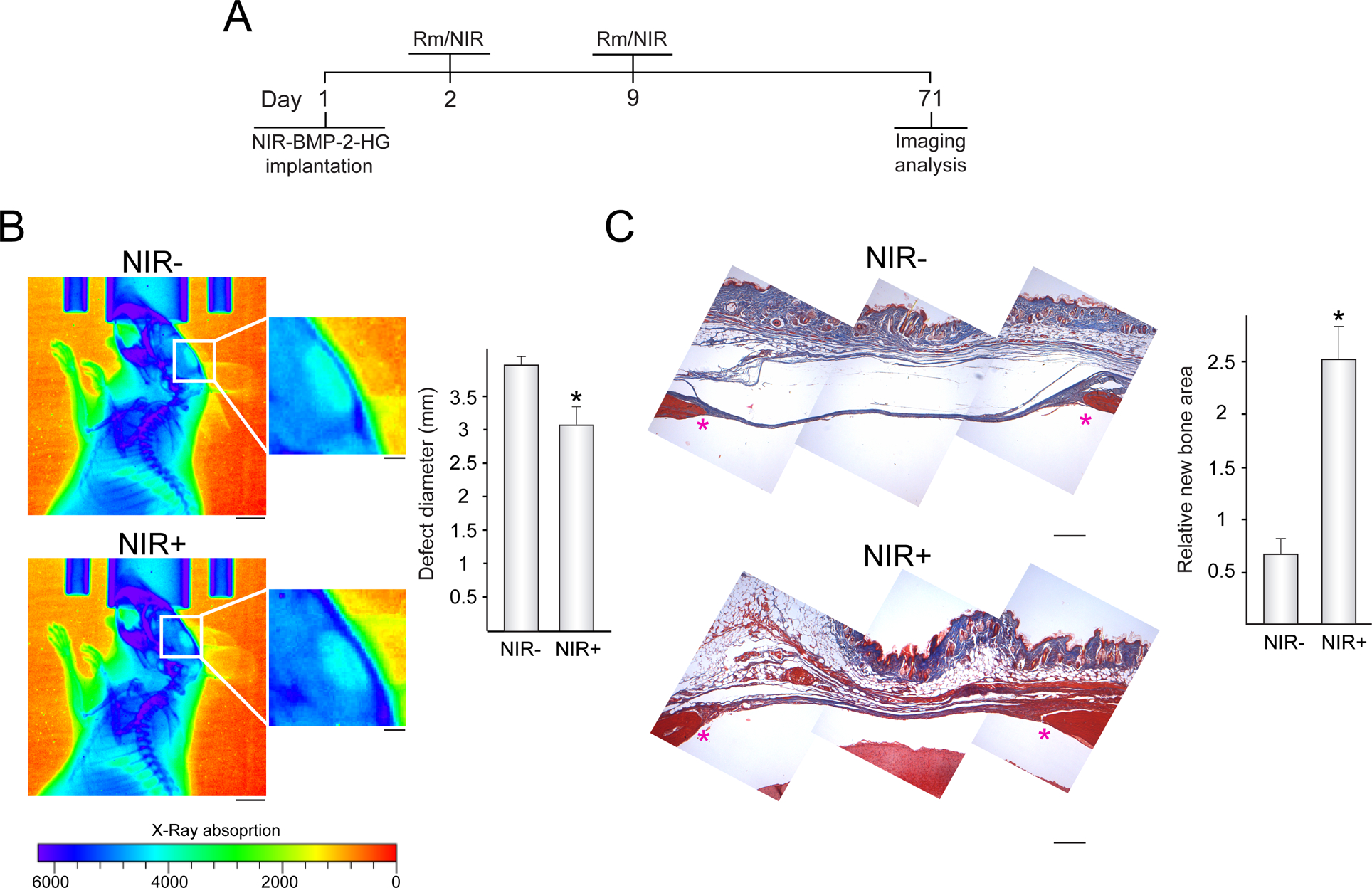
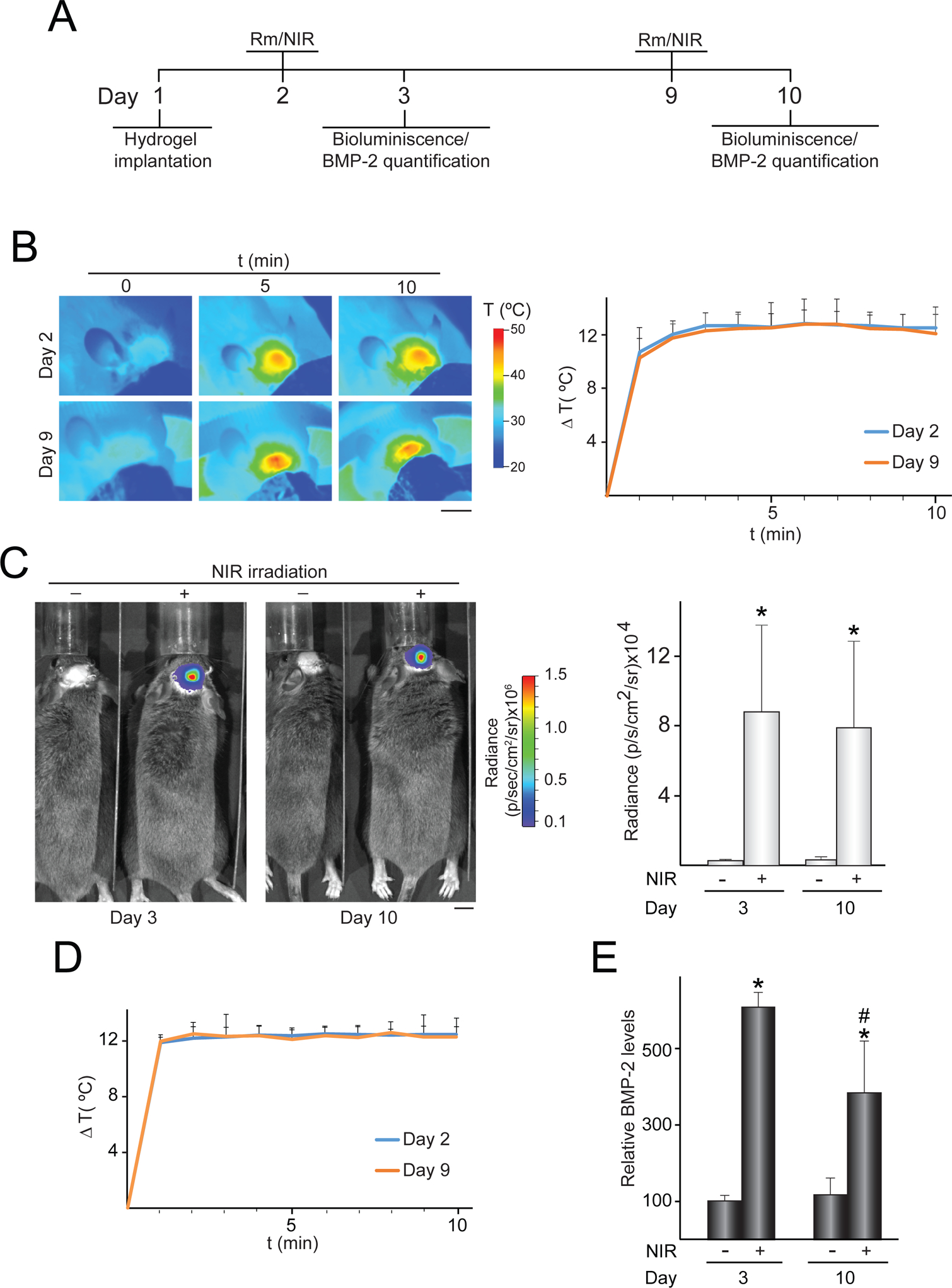
Achievement of spatiotemporal control of growth factors production remains a main goal in tissue engineering. In the present work, we combined inducible transgene expression and near infrared (NIR)-responsive hydrogels technologies to develop a therapeutic platform for bone regeneration. A heat-activated and dimerizer-dependent transgene expression system was incorporated into mesenchymal stem cells to conditionally control the production of bone morphogenetic protein 2 (BMP-2). Genetically engineered cells were entrapped in hydrogels based on fibrin and plasmonic gold nanoparticles that transduced incident energy of an NIR laser into heat. In the presence of dimerizer, photoinduced mild hyperthermia induced the release of bioactive BMP-2 from NIR-responsive cell constructs. A critical size bone defect, created in calvaria of immunocompetent mice, was filled with NIR-responsive hydrogels entrapping cells that expressed BMP-2 under the control of the heat-activated and dimerizer-dependent gene circuit. In animals that were treated with dimerizer, NIR irradiation of implants induced BMP-2 production in the bone lesion. Induction of NIR-responsive cell constructs conditionally expressing BMP-2 in bone defects resulted in the formation of new mineralized tissue, thus indicating the therapeutic potential of the technological platform.
实现生长因子产生的时空控制仍然是组织工程的一个主要目标。在本研究中,我们将诱导型转基因表达和近红外(NIR)响应水凝胶技术相结合,开发了一种用于骨再生的治疗平台。将热激活和二聚体依赖性转基因表达系统整合到间充质干细胞中,以条件性控制骨形态发生蛋白2(BMP-2)的产生。基因工程细胞被包裹在基于纤维蛋白和等离子体金纳米颗粒的水凝胶中,这些纳米颗粒将近红外激光的入射能量转化为热量。在存在二聚体的情况下,光诱导的轻度热疗促使生物活性BMP-2从近红外响应细胞构建体中释放出来。在免疫活性小鼠的颅骨上制造一个临界尺寸的骨缺损,用包裹着在热激活和二聚体依赖性基因回路控制下表达BMP-2的细胞的近红外响应水凝胶填充。在用二聚体治疗的动物中,对植入物进行近红外照射可诱导骨损伤中BMP-2的产生。在骨缺损中条件性表达BMP-2的近红外响应细胞构建体的诱导导致了新矿化组织的形成,从而表明了该技术平台的治疗潜力。