Department of Pathobiology, College of Veterinary Medicine, Auburn University, Auburn, AL, USA.
Biological Sciences, College of Sciences and Math, Auburn University, Auburn, AL, USA.
BMC Microbiol. 2021 Jan 6;21(1):8. doi: 10.1186/s12866-020-02065-2.
Hypervirulent Aeromonas hydrophila (vAh) is an emerging pathogen in freshwater aquaculture that results in the loss of over 3 million pounds of marketable channel catfish, Ictalurus punctatus, and channel catfish hybrids (I. punctatus, ♀ x blue catfish, I. furcatus, ♂) each year from freshwater catfish production systems in Alabama, U.S.A. vAh isolates are clonal in nature and are genetically unique from, and significantly more virulent than, traditional A. hydrophila isolates from fish. Even with the increased virulence, natural infections cannot be reproduced in aquaria challenges making it difficult to determine modes of infection and the pathophysiology behind the devastating mortalities that are commonly observed. Despite the intimate connection between environmental adaptation and plastic response, the role of environmental adaption on vAh pathogenicity and virulence has not been previously explored. In this study, secreted proteins of vAh cultured as free-living planktonic cells and within a biofilm were compared to elucidate the role of biofilm growth on virulence.
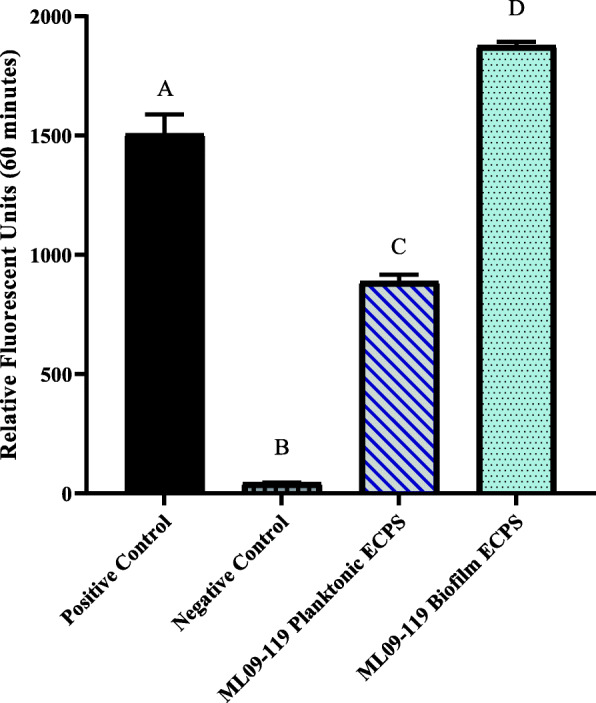
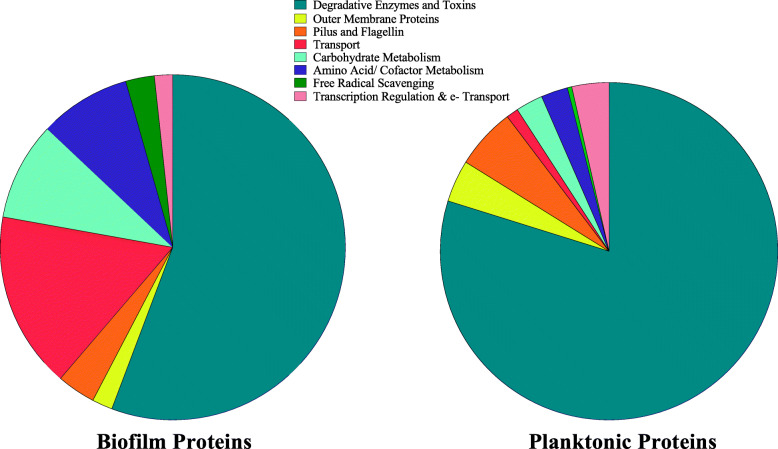
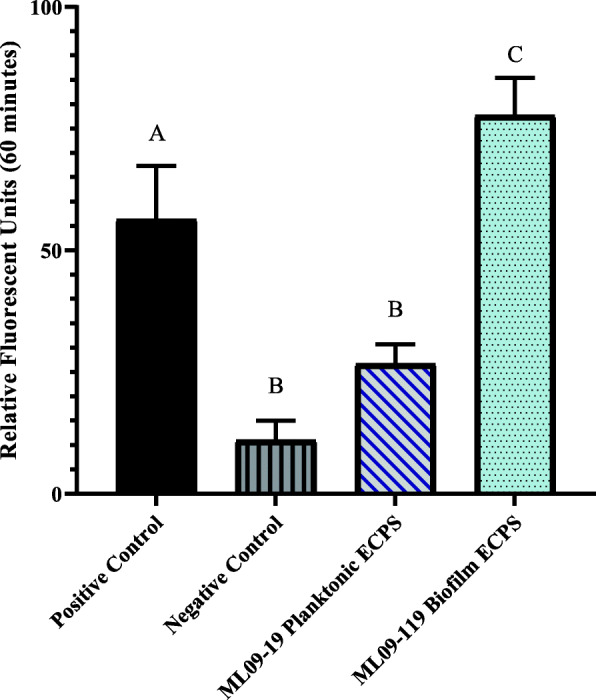
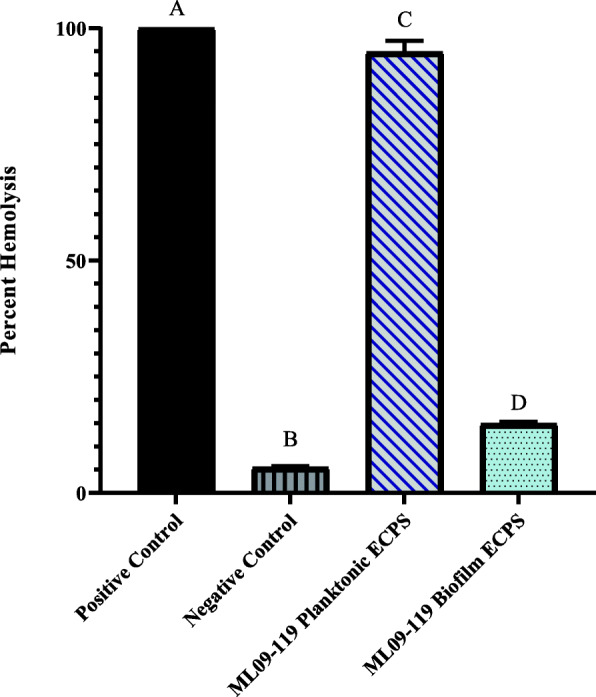
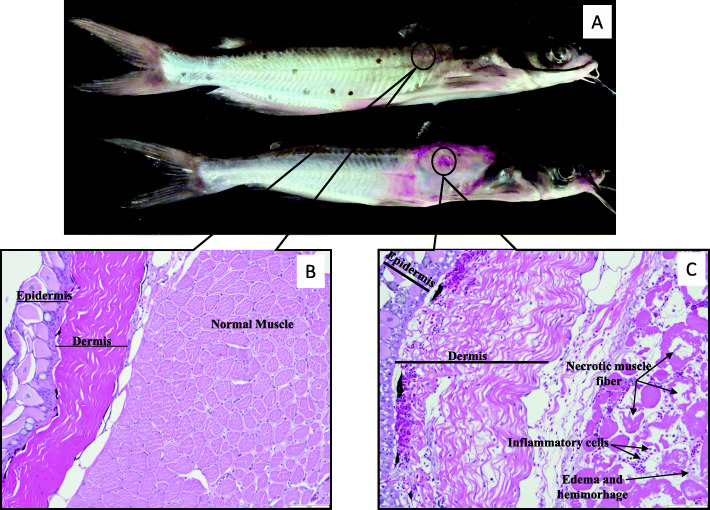
Functional proteolytic assays found significantly increased degradative activity in biofilm secretomes; in contrast, planktonic secretomes had significantly increased hemolytic activity, suggesting higher toxigenic potential. Intramuscular injection challenges in a channel catfish model showed that in vitro degradative activity translated into in vivo tissue destruction. Identification of secreted proteins by HPLC-MS/MS revealed the presence of many putative virulence proteins under both growth conditions. Biofilm grown vAh produced higher levels of proteolytic enzymes and adhesins, whereas planktonically grown cells secreted higher levels of toxins, porins, and fimbrial proteins.
This study is the first comparison of the secreted proteomes of vAh when grown in two distinct ecological niches. These data on the adaptive physiological response of vAh based on growth condition increase our understanding of how environmental niche partitioning could affect vAh pathogenicity and virulence. Increased secretion of colonization factors and degradative enzymes during biofilm growth and residency may increase bacterial attachment and host invasiveness, while increased secretion of hemolysins, porins, and other potential toxins under planktonic growth (or after host invasion) could result in increased host mortality. The results of this research underscore the need to use culture methods that more closely mimic natural ecological habitat growth to improve our understanding of vAh pathogenesis.
强毒嗜水气单胞菌(vAh)是一种新兴的淡水水产养殖病原体,每年都会导致美国阿拉巴马州的淡水鱼类生产系统损失超过 300 万磅的可销售斑点叉尾鮰和斑点叉尾鮰杂交种(I. punctatus,♀ x 蓝鲶,I. furcatus,♂)。vAh 分离株在性质上是克隆的,与鱼类的传统嗜水气单胞菌分离株在遗传上是不同的,而且毒力明显更强。即使毒力增加,也不能在水族箱中重现自然感染,这使得确定感染模式和观察到的破坏性死亡率背后的病理生理学变得困难。尽管环境适应与可塑性反应之间存在密切联系,但环境适应对 vAh 致病性和毒力的作用尚未得到探索。在这项研究中,比较了自由生活浮游细胞和生物膜内培养的 vAh 分泌蛋白,以阐明生物膜生长对毒力的作用。
功能蛋白水解测定发现生物膜分泌物中的降解活性显著增加;相比之下,浮游分泌物的溶血活性显著增加,表明其具有更高的产毒性。在斑点叉尾鮰模型中的肌肉内注射挑战表明,体外降解活性转化为体内组织破坏。HPLC-MS/MS 鉴定的分泌蛋白表明,在两种生长条件下都存在许多假定的毒力蛋白。生物膜生长的 vAh 产生更高水平的蛋白酶和粘附素,而浮游生长的细胞分泌更高水平的毒素、孔蛋白和菌毛蛋白。
这是首次比较 vAh 在两种不同生态位生长时分泌的蛋白质组。这些基于生长条件的 vAh 适应生理反应的数据增加了我们对环境生态位分隔如何影响 vAh 致病性和毒力的理解。生物膜生长和驻留过程中定植因子和降解酶的大量分泌可能会增加细菌附着和宿主入侵性,而浮游生长(或宿主入侵后)中溶血素、孔蛋白和其他潜在毒素的大量分泌可能导致宿主死亡率增加。这项研究的结果强调需要使用更能模拟自然生态栖息地生长的培养方法,以提高我们对 vAh 发病机制的理解。