Laboratory of Experimental Cardiology, University Medical Center Utrecht, Utrecht University, Heidelberglaan 100, 3584 CX, Utrecht, The Netherlands.
Department of Clinical Chemistry and Hematology, University Medical Center Utrecht, Utrecht University, Utrecht, The Netherlands.
BMC Med Imaging. 2021 Jan 6;21(1):5. doi: 10.1186/s12880-020-00535-7.
Coronary microvascular dysfunction (CMD) is an important underlying cause of angina pectoris. Currently, no diagnostic tool is available to directly visualize the coronary microvasculature. Invasive microvascular reactivity testing is the diagnostic standard for CMD, but several non-invasive imaging techniques are being evaluated. However, evidence on reported non-invasive parameters and cut-off values is limited. Thus, we aimed to provide an overview of reported non-invasive parameters and corresponding cut-off values for CMD.
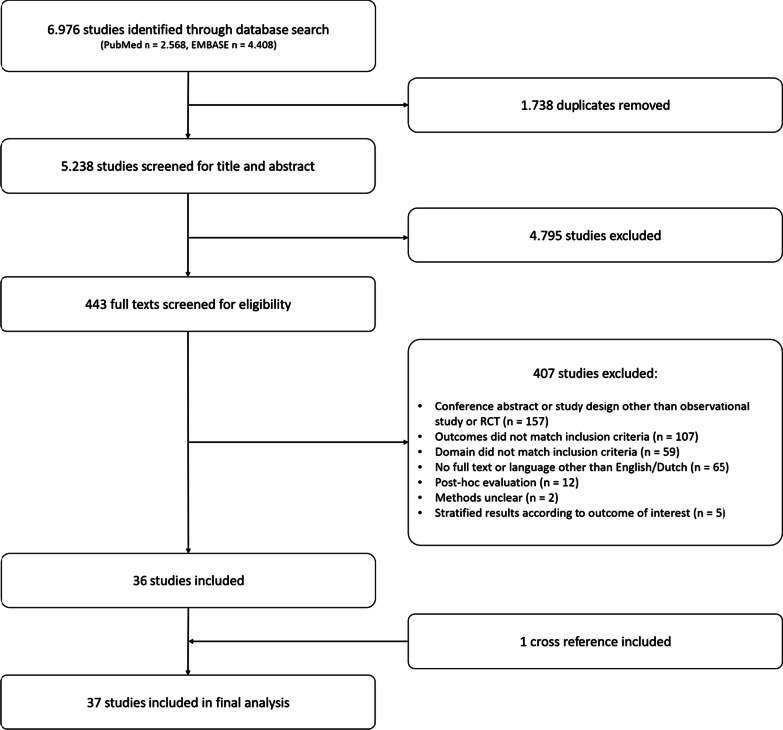
Pubmed and EMBASE databases were systematically searched for studies enrolling patients with angina pectoris without obstructed coronary arteries, investigating at least one non-invasive imaging technique to quantify CMD. Methodological quality assessment of included studies was performed using QUADAS-2.
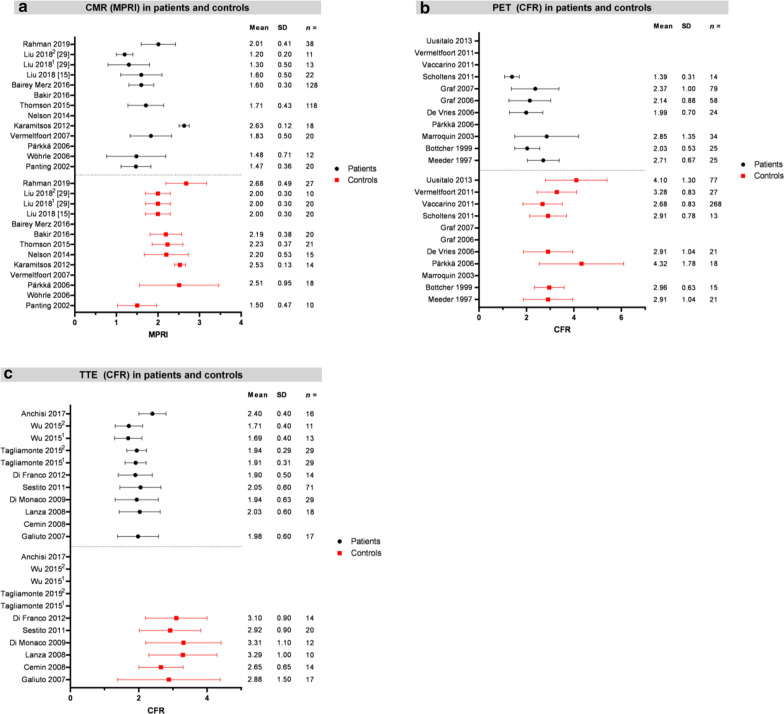
Thirty-seven studies were included. Ten cardiac magnetic resonance studies reported MPRI and nine positron emission tomography (PET) and transthoracic echocardiography (TTE) studies reported CFR. Mean MPRI ranged from 1.47 ± 0.36 to 2.01 ± 0.41 in patients and from 1.50 ± 0.47 to 2.68 ± 0.49 in controls without CMD. Reported mean CFR in PET and TTE ranged from 1.39 ± 0.31 to 2.85 ± 1.35 and 1.69 ± 0.40 to 2.40 ± 0.40 for patients, and 2.68 ± 0.83 to 4.32 ± 1.78 and 2.65 ± 0.65 to 3.31 ± 1.10 for controls, respectively.
This systematic review summarized current evidence on reported parameters and cut-off values to diagnose CMD for various non-invasive imaging modalities. In current clinical practice, CMD is generally diagnosed with a CFR less than 2.0. However, due to heterogeneity in methodology and reporting of outcome measures, outcomes could not be compared and no definite reference values could be provided.
冠状动脉微血管功能障碍(CMD)是心绞痛的一个重要潜在原因。目前,尚无直接观察冠状动脉微血管的诊断工具。血管内微血管反应性检测是 CMD 的诊断标准,但正在评估几种非侵入性成像技术。然而,关于报告的非侵入性参数和截断值的证据有限。因此,我们旨在提供 CMD 报告的非侵入性参数和相应截断值的概述。
系统地检索了 Pubmed 和 EMBASE 数据库,以纳入患有无阻塞性冠状动脉心绞痛的患者的研究,这些研究至少使用一种非侵入性成像技术来定量评估 CMD。使用 QUADAS-2 对纳入研究的方法学质量进行评估。
共纳入 37 项研究。10 项心脏磁共振研究报告了 MPRI,9 项正电子发射断层扫描(PET)和经胸超声心动图(TTE)研究报告了 CFR。CMD 患者的平均 MPRI 范围为 1.47±0.36 至 2.01±0.41,而无 CMD 患者的平均 MPRI 范围为 1.50±0.47 至 2.68±0.49。PET 和 TTE 报告的平均 CFR 范围分别为患者的 1.39±0.31 至 2.85±1.35 和 1.69±0.40 至 2.40±0.40,以及对照组的 2.68±0.83 至 4.32±1.78 和 2.65±0.65 至 3.31±1.10。
本系统评价总结了目前关于各种非侵入性成像方式诊断 CMD 的报告参数和截断值的证据。在当前的临床实践中,CMD 通常被诊断为 CFR 小于 2.0。然而,由于方法学和结果测量报告的异质性,无法进行结果比较,也无法提供明确的参考值。