• 文献检索
  • 文档翻译
  • 深度研究
  • 学术资讯
  • Suppr Zotero 插件Zotero 插件
  • 邀请有礼
  • 套餐&价格
  • 历史记录
应用&插件
Suppr Zotero 插件Zotero 插件浏览器插件Mac 客户端Windows 客户端微信小程序
定价
高级版会员购买积分包购买API积分包
服务
文献检索文档翻译深度研究API 文档MCP 服务
关于我们
关于 Suppr公司介绍联系我们用户协议隐私条款
关注我们

Suppr 超能文献

核心技术专利:CN118964589B侵权必究
粤ICP备2023148730 号-1Suppr @ 2026

文献检索

告别复杂PubMed语法,用中文像聊天一样搜索,搜遍4000万医学文献。AI智能推荐,让科研检索更轻松。

立即免费搜索

文件翻译

保留排版,准确专业,支持PDF/Word/PPT等文件格式,支持 12+语言互译。

免费翻译文档

深度研究

AI帮你快速写综述,25分钟生成高质量综述,智能提取关键信息,辅助科研写作。

立即免费体验

生物活性二元蛋白质二维材料的设计。

Design of biologically active binary protein 2D materials.

机构信息

Department of Biochemistry, University of Washington, Seattle, WA, USA.

Institute for Protein Design, University of Washington, Seattle, WA, USA.

出版信息

Nature. 2021 Jan;589(7842):468-473. doi: 10.1038/s41586-020-03120-8. Epub 2021 Jan 6.

DOI:10.1038/s41586-020-03120-8
PMID:33408408
原文链接:https://pmc.ncbi.nlm.nih.gov/articles/PMC7855610/
Abstract

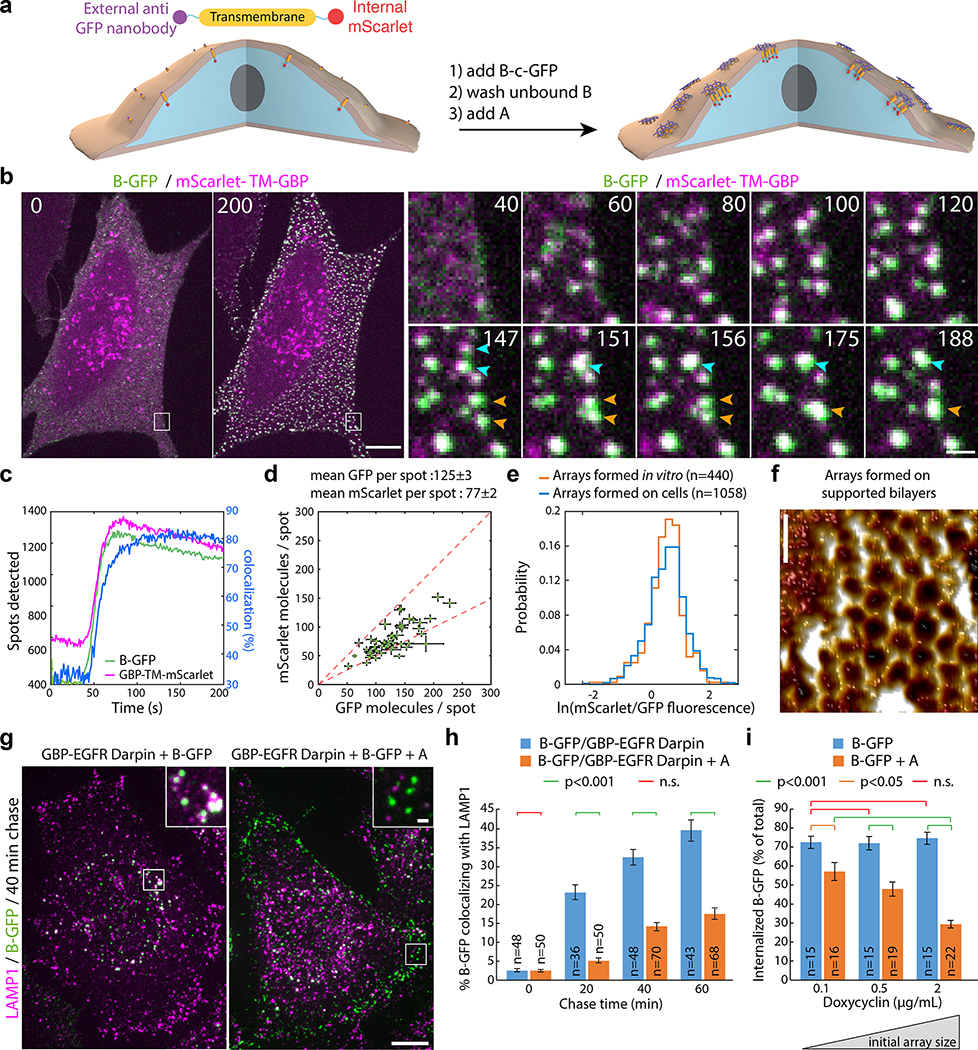
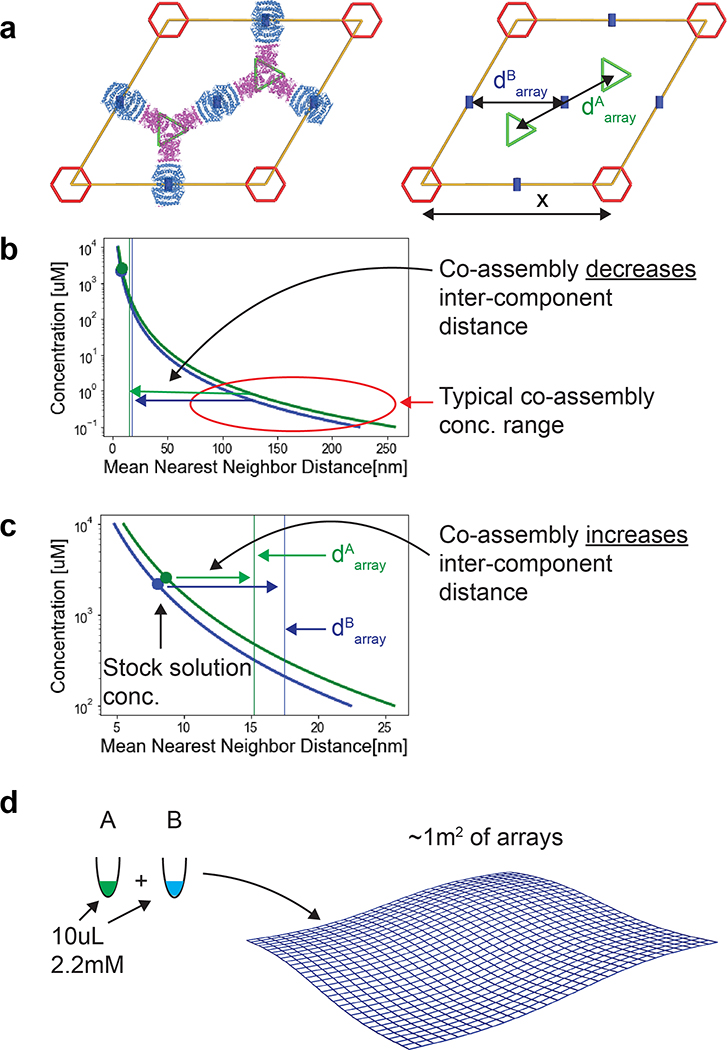
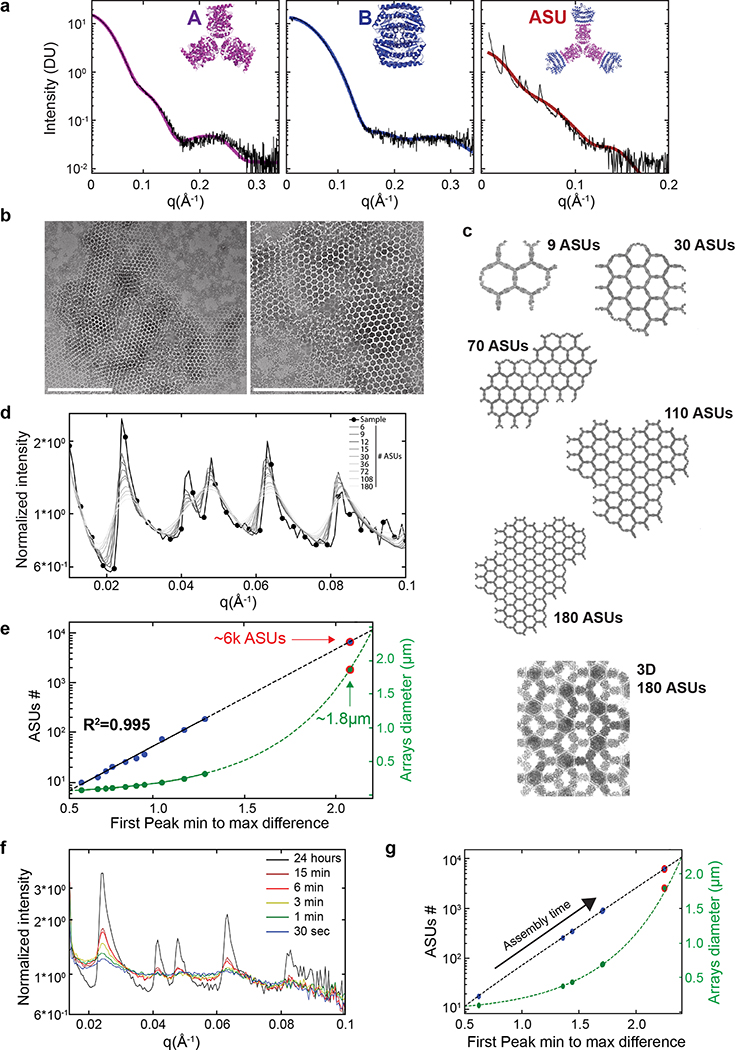
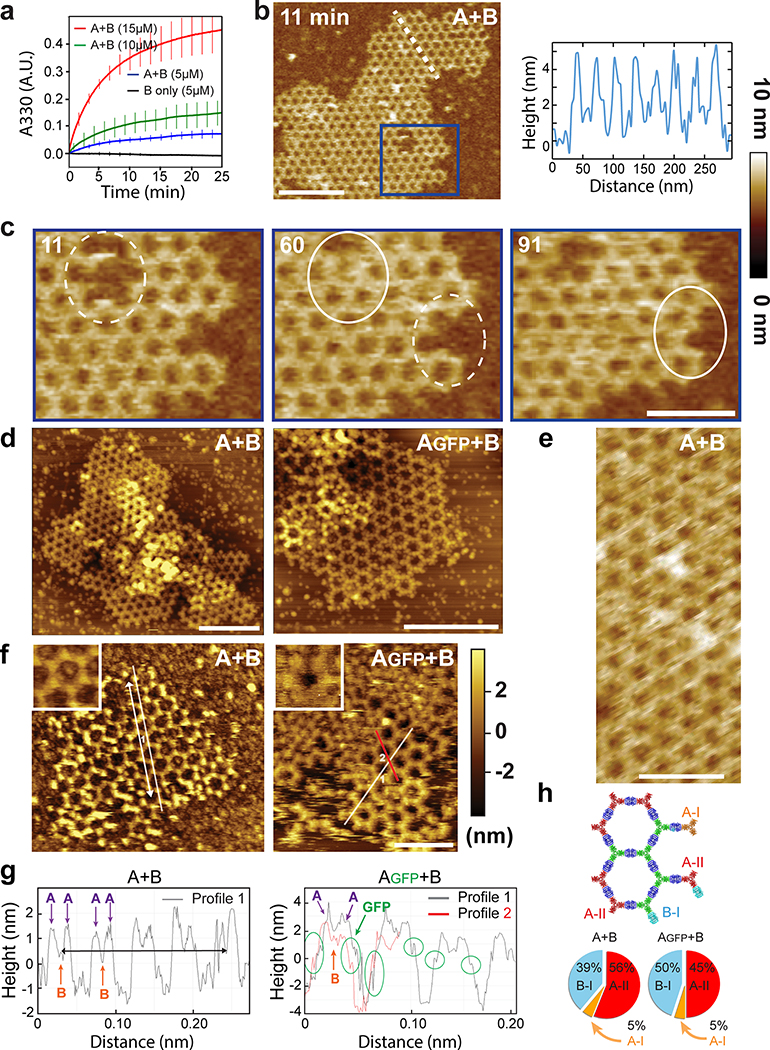
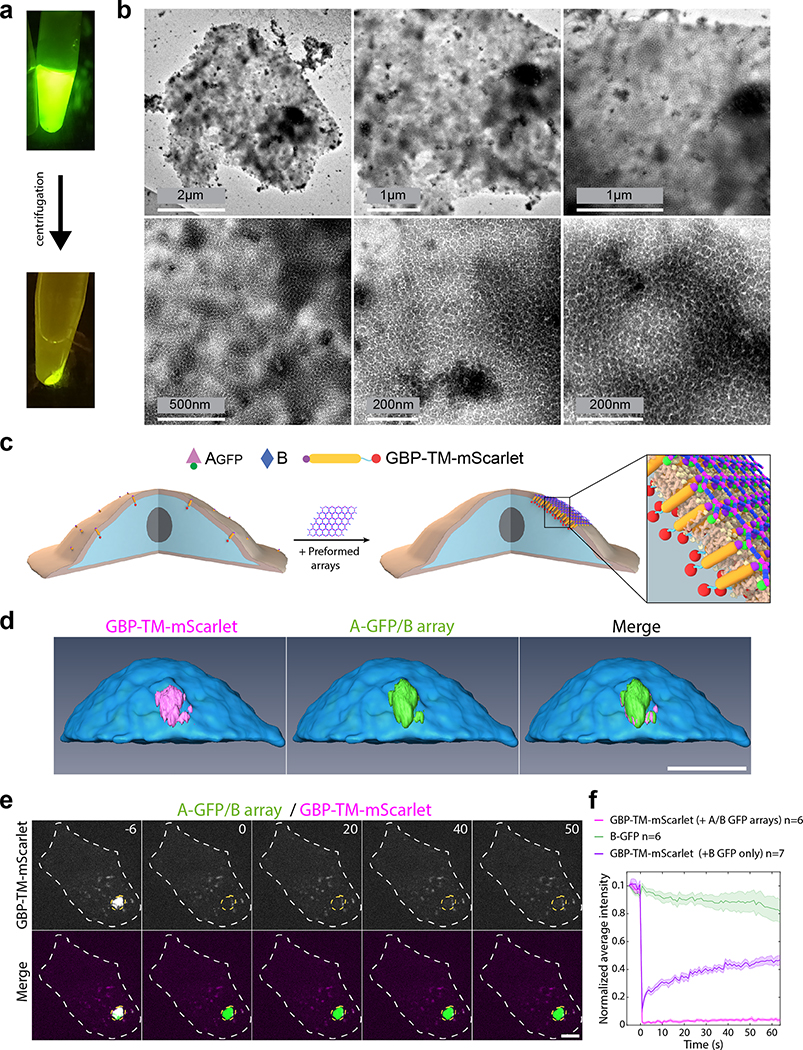
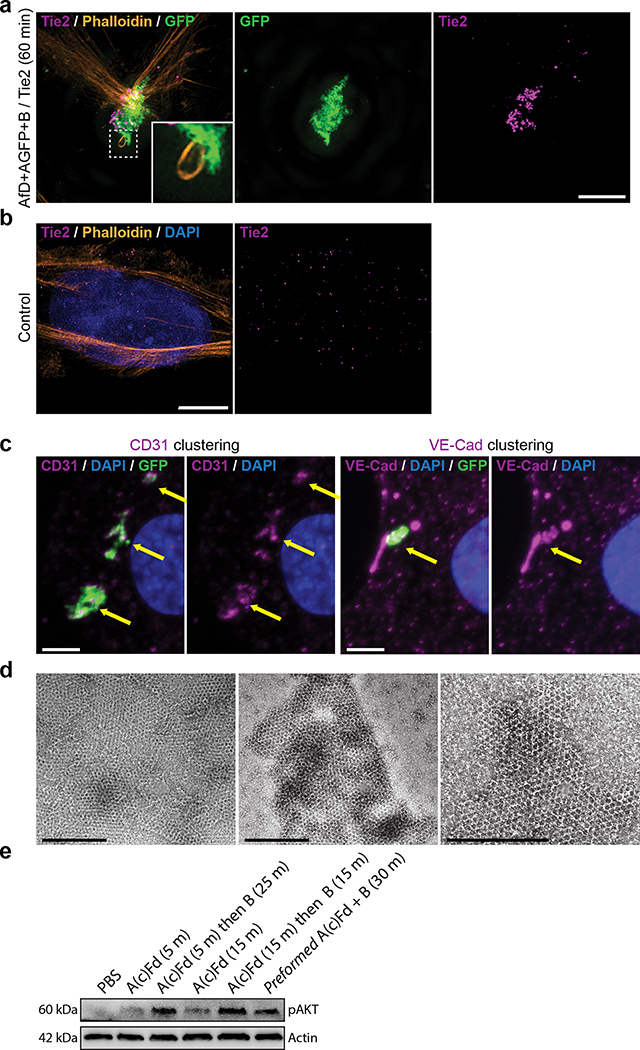
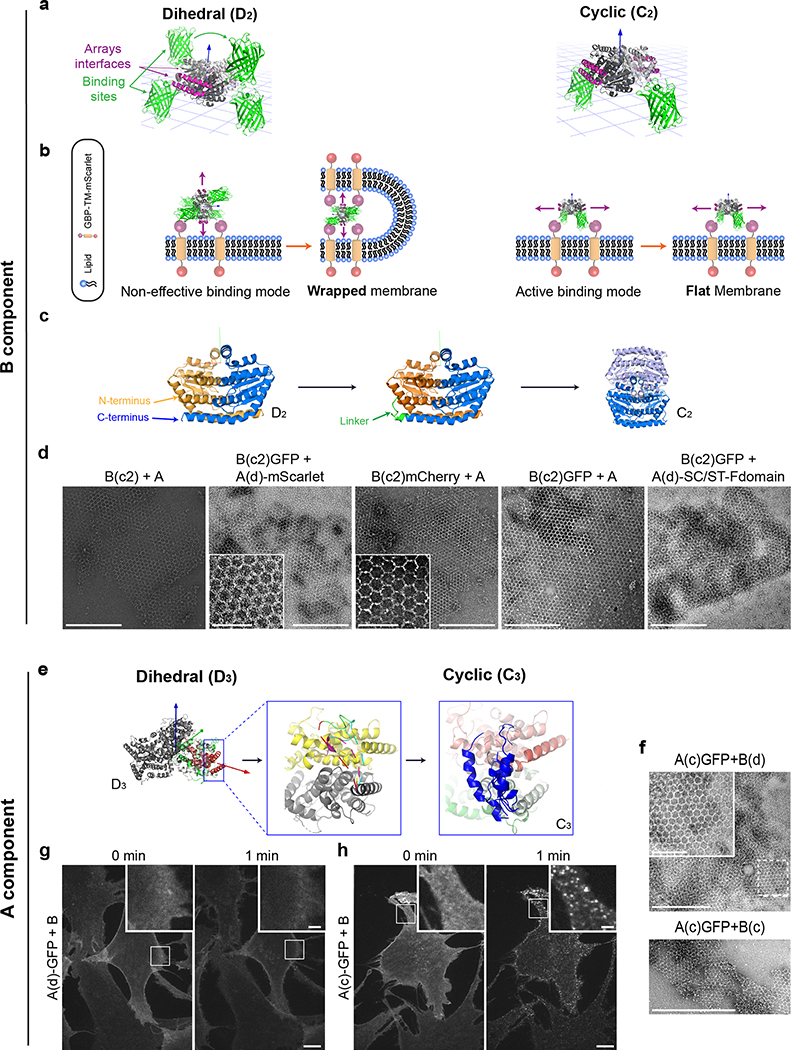
Ordered two-dimensional arrays such as S-layers and designed analogues have intrigued bioengineers, but with the exception of a single lattice formed with flexible linkers, they are constituted from just one protein component. Materials composed of two components have considerable potential advantages for modulating assembly dynamics and incorporating more complex functionality. Here we describe a computational method to generate co-assembling binary layers by designing rigid interfaces between pairs of dihedral protein building blocks, and use it to design a p6m lattice. The designed array components are soluble at millimolar concentrations, but when combined at nanomolar concentrations, they rapidly assemble into nearly crystalline micrometre-scale arrays nearly identical to the computational design model in vitro and in cells without the need for a two-dimensional support. Because the material is designed from the ground up, the components can be readily functionalized and their symmetry reconfigured, enabling formation of ligand arrays with distinguishable surfaces, which we demonstrate can drive extensive receptor clustering, downstream protein recruitment and signalling. Using atomic force microscopy on supported bilayers and quantitative microscopy on living cells, we show that arrays assembled on membranes have component stoichiometry and structure similar to arrays formed in vitro, and that our material can therefore impose order onto fundamentally disordered substrates such as cell membranes. In contrast to previously characterized cell surface receptor binding assemblies such as antibodies and nanocages, which are rapidly endocytosed, we find that large arrays assembled at the cell surface suppress endocytosis in a tunable manner, with potential therapeutic relevance for extending receptor engagement and immune evasion. Our work provides a foundation for a synthetic cell biology in which multi-protein macroscale materials are designed to modulate cell responses and reshape synthetic and living systems.

摘要

我们描述了一种通过在双螺旋蛋白构建模块之间设计刚性界面来生成共组装双层的计算方法,并利用它设计了 p6m 晶格。设计的阵列组件在毫摩尔浓度下是可溶的,但当在纳摩尔浓度下组合时,它们会迅速组装成几乎类似于体外和细胞中计算设计模型的近晶态微米级阵列,而无需二维支架。由于材料是从头开始设计的,因此可以很容易地对组件进行功能化和重新配置其对称性,从而形成具有可区分表面的配体阵列,我们证明了这些配体阵列可以驱动广泛的受体聚集、下游蛋白募集和信号转导。我们使用原子力显微镜在支持双层上进行研究,并在活细胞上进行定量显微镜检查,结果表明,在膜上组装的阵列具有类似于体外形成的阵列的组件化学计量和结构,并且我们的材料因此可以将有序结构强加于细胞膜等基本无序的基底上。与以前表征的细胞表面受体结合组装体(如抗体和纳米笼)不同,这些组装体很快被内吞,我们发现,在细胞表面组装的大阵列可以以可调节的方式抑制内吞作用,这对于延长受体结合和免疫逃逸具有潜在的治疗意义。我们的工作为合成细胞生物学提供了基础,在该生物学中,多蛋白宏观材料被设计用于调节细胞反应并重塑合成和生命系统。
https://cdn.ncbi.nlm.nih.gov/pmc/blobs/b703/7855610/fd9039f900ca/nihms-1644906-f0004.jpg
https://cdn.ncbi.nlm.nih.gov/pmc/blobs/b703/7855610/341d61772a87/nihms-1644906-f0005.jpg
https://cdn.ncbi.nlm.nih.gov/pmc/blobs/b703/7855610/660863ca720e/nihms-1644906-f0006.jpg
https://cdn.ncbi.nlm.nih.gov/pmc/blobs/b703/7855610/7a5dd93acc7c/nihms-1644906-f0007.jpg
https://cdn.ncbi.nlm.nih.gov/pmc/blobs/b703/7855610/0f111c89246b/nihms-1644906-f0008.jpg
https://cdn.ncbi.nlm.nih.gov/pmc/blobs/b703/7855610/6936dfa4ccfb/nihms-1644906-f0009.jpg
https://cdn.ncbi.nlm.nih.gov/pmc/blobs/b703/7855610/dde9afff61fe/nihms-1644906-f0010.jpg
https://cdn.ncbi.nlm.nih.gov/pmc/blobs/b703/7855610/6d42618101ef/nihms-1644906-f0011.jpg
https://cdn.ncbi.nlm.nih.gov/pmc/blobs/b703/7855610/004ce7770541/nihms-1644906-f0012.jpg
https://cdn.ncbi.nlm.nih.gov/pmc/blobs/b703/7855610/bbf9de9a9cb8/nihms-1644906-f0013.jpg
https://cdn.ncbi.nlm.nih.gov/pmc/blobs/b703/7855610/d5fc16fc8279/nihms-1644906-f0014.jpg
https://cdn.ncbi.nlm.nih.gov/pmc/blobs/b703/7855610/6bf4182e1e5b/nihms-1644906-f0015.jpg
https://cdn.ncbi.nlm.nih.gov/pmc/blobs/b703/7855610/bf36040495a5/nihms-1644906-f0001.jpg
https://cdn.ncbi.nlm.nih.gov/pmc/blobs/b703/7855610/f5a4971828b7/nihms-1644906-f0002.jpg
https://cdn.ncbi.nlm.nih.gov/pmc/blobs/b703/7855610/d093543a5535/nihms-1644906-f0003.jpg
https://cdn.ncbi.nlm.nih.gov/pmc/blobs/b703/7855610/fd9039f900ca/nihms-1644906-f0004.jpg
https://cdn.ncbi.nlm.nih.gov/pmc/blobs/b703/7855610/341d61772a87/nihms-1644906-f0005.jpg
https://cdn.ncbi.nlm.nih.gov/pmc/blobs/b703/7855610/660863ca720e/nihms-1644906-f0006.jpg
https://cdn.ncbi.nlm.nih.gov/pmc/blobs/b703/7855610/7a5dd93acc7c/nihms-1644906-f0007.jpg
https://cdn.ncbi.nlm.nih.gov/pmc/blobs/b703/7855610/0f111c89246b/nihms-1644906-f0008.jpg
https://cdn.ncbi.nlm.nih.gov/pmc/blobs/b703/7855610/6936dfa4ccfb/nihms-1644906-f0009.jpg
https://cdn.ncbi.nlm.nih.gov/pmc/blobs/b703/7855610/dde9afff61fe/nihms-1644906-f0010.jpg
https://cdn.ncbi.nlm.nih.gov/pmc/blobs/b703/7855610/6d42618101ef/nihms-1644906-f0011.jpg
https://cdn.ncbi.nlm.nih.gov/pmc/blobs/b703/7855610/004ce7770541/nihms-1644906-f0012.jpg
https://cdn.ncbi.nlm.nih.gov/pmc/blobs/b703/7855610/bbf9de9a9cb8/nihms-1644906-f0013.jpg
https://cdn.ncbi.nlm.nih.gov/pmc/blobs/b703/7855610/d5fc16fc8279/nihms-1644906-f0014.jpg
https://cdn.ncbi.nlm.nih.gov/pmc/blobs/b703/7855610/6bf4182e1e5b/nihms-1644906-f0015.jpg
https://cdn.ncbi.nlm.nih.gov/pmc/blobs/b703/7855610/bf36040495a5/nihms-1644906-f0001.jpg
https://cdn.ncbi.nlm.nih.gov/pmc/blobs/b703/7855610/f5a4971828b7/nihms-1644906-f0002.jpg
https://cdn.ncbi.nlm.nih.gov/pmc/blobs/b703/7855610/d093543a5535/nihms-1644906-f0003.jpg
https://cdn.ncbi.nlm.nih.gov/pmc/blobs/b703/7855610/fd9039f900ca/nihms-1644906-f0004.jpg

相似文献

1
Design of biologically active binary protein 2D materials.生物活性二元蛋白质二维材料的设计。
Nature. 2021 Jan;589(7842):468-473. doi: 10.1038/s41586-020-03120-8. Epub 2021 Jan 6.
2
Self-Assembling 2D Arrays with de Novo Protein Building Blocks.具有从头设计蛋白构建模块的自组装二维阵列。
J Am Chem Soc. 2019 Jun 5;141(22):8891-8895. doi: 10.1021/jacs.9b01978. Epub 2019 May 10.
3
Computational design of self-assembling protein nanomaterials with atomic level accuracy.原子级精度的自组装蛋白质纳米材料的计算设计。
Science. 2012 Jun 1;336(6085):1171-4. doi: 10.1126/science.1219364.
4
Self-Assembling Supramolecular Nanostructures Constructed from de Novo Extender Protein Nanobuilding Blocks.由从头合成的延伸蛋白纳米构建块构建的自组装超分子纳米结构。
ACS Synth Biol. 2018 May 18;7(5):1381-1394. doi: 10.1021/acssynbio.8b00007. Epub 2018 May 8.
5
Design, Synthesis, Assembly, and Engineering of Peptoid Nanosheets.类肽纳米片的设计、合成、组装与工程
Acc Chem Res. 2016 Mar 15;49(3):379-89. doi: 10.1021/acs.accounts.5b00439. Epub 2016 Jan 7.
6
Design of a Genetically Programmable and Customizable Protein Scaffolding System for the Hierarchical Assembly of Robust, Functional Macroscale Materials.用于稳健功能宏观材料的分级组装的可编程和可定制蛋白质支架系统的设计。
ACS Synth Biol. 2024 Nov 15;13(11):3724-3745. doi: 10.1021/acssynbio.4c00587. Epub 2024 Oct 31.
7
Design of ordered two-dimensional arrays mediated by noncovalent protein-protein interfaces.非共价蛋白-蛋白界面介导的有序二维阵列设计。
Science. 2015 Jun 19;348(6241):1365-8. doi: 10.1126/science.aaa9897.
8
S-layer-streptavidin fusion proteins as template for nanopatterned molecular arrays.作为纳米图案化分子阵列模板的S层-链霉亲和素融合蛋白。
Proc Natl Acad Sci U S A. 2002 Nov 12;99(23):14646-51. doi: 10.1073/pnas.232299399. Epub 2002 Nov 4.
9
Macromolecular crowding: chemistry and physics meet biology (Ascona, Switzerland, 10-14 June 2012).大分子拥挤现象:化学与物理邂逅生物学(瑞士阿斯科纳,2012年6月10日至14日)
Phys Biol. 2013 Aug;10(4):040301. doi: 10.1088/1478-3975/10/4/040301. Epub 2013 Aug 2.
10
Characterization of a bacterial self-assembly surface layer protein and its application as an electrical nanobiosensor.一种细菌自组装表面层蛋白的表征及其作为电纳米生物传感器的应用。
J Nanosci Nanotechnol. 2011 Jan;11(1):402-7. doi: 10.1166/jnn.2011.3264.

引用本文的文献

1
Bond-centric modular design of protein assemblies.蛋白质组装体的以键为中心的模块化设计。
Nat Mater. 2025 Jul 31. doi: 10.1038/s41563-025-02297-5.
2
Protein design of two-component tubular assemblies similar to cytoskeletons.类似于细胞骨架的双组分管状组件的蛋白质设计。
Nat Commun. 2025 Jul 22;16(1):6738. doi: 10.1038/s41467-025-62076-3.
3
Proofreading and single-molecule sensitivity in T cell receptor signaling by condensate nucleation.通过凝聚物成核实现T细胞受体信号传导中的校对和单分子敏感性

本文引用的文献

1
Endocytosis Inhibition in Humans to Improve Responses to ADCC-Mediating Antibodies.在人体中抑制内吞作用以提高 ADCC 介导的抗体的反应。
Cell. 2020 Mar 5;180(5):895-914.e27. doi: 10.1016/j.cell.2020.02.019.
2
A bacterial surface layer protein exploits multistep crystallization for rapid self-assembly.一种细菌表面层蛋白利用多步结晶实现快速自组装。
Proc Natl Acad Sci U S A. 2020 Jan 7;117(1):388-394. doi: 10.1073/pnas.1909798116. Epub 2019 Dec 17.
3
Self-Assembling 2D Arrays with de Novo Protein Building Blocks.具有从头设计蛋白构建模块的自组装二维阵列。
Proc Natl Acad Sci U S A. 2025 Jun 3;122(22):e2422787122. doi: 10.1073/pnas.2422787122. Epub 2025 May 30.
4
Precise Oligomer Organization Enhanced Electrostatic Interactions for Efficient Cell Membrane Binding.精确的寡聚体组装增强静电相互作用以实现高效的细胞膜结合。
Nano Lett. 2025 May 28;25(21):8488-8494. doi: 10.1021/acs.nanolett.5c00651. Epub 2025 May 16.
5
Tuning the Dimensionality of Protein-Peptide Coassemblies to Build 2D Conductive Nanomaterials.调整蛋白质-肽共组装体的维度以构建二维导电纳米材料。
ACS Nano. 2025 May 6;19(17):16500-16516. doi: 10.1021/acsnano.4c18613. Epub 2025 Apr 25.
6
Effect of Local Heterogeneities on Single-Layer DNA-Directed Protein Lattices Through Non-Averaged Single-Molecule 3D Structure Determination.通过非平均单分子三维结构测定研究局部异质性对单层DNA定向蛋白质晶格的影响。
Res Sq. 2025 Apr 4:rs.3.rs-6095207. doi: 10.21203/rs.3.rs-6095207/v1.
7
Assembly and Functionality of 2D Protein Arrays.二维蛋白质阵列的组装与功能
Adv Sci (Weinh). 2025 Apr;12(15):e2416485. doi: 10.1002/advs.202416485. Epub 2025 Mar 16.
8
Flexible interaction patches lead to building blocks with fluctuating valency.灵活的相互作用补丁会产生具有波动化合价的构建块。
Nat Chem. 2025 Mar;17(3):305-306. doi: 10.1038/s41557-025-01756-5.
9
Interface flexibility controls the nucleation and growth of supramolecular networks.界面灵活性控制超分子网络的成核与生长。
Nat Chem. 2025 Mar;17(3):325-333. doi: 10.1038/s41557-025-01741-y. Epub 2025 Feb 13.
10
Synthetic Engineering of Cortical Polarity During Mitosis Using Designed Proteins.使用设计蛋白在有丝分裂过程中对皮质极性进行人工合成工程化。
Methods Mol Biol. 2025;2872:247-255. doi: 10.1007/978-1-0716-4224-5_17.
J Am Chem Soc. 2019 Jun 5;141(22):8891-8895. doi: 10.1021/jacs.9b01978. Epub 2019 May 10.
4
The construction of supramolecular systems.超分子体系的构建。
Science. 2019 Mar 29;363(6434):1396-1397. doi: 10.1126/science.aav4677.
5
Induction of Potent Neutralizing Antibody Responses by a Designed Protein Nanoparticle Vaccine for Respiratory Syncytial Virus.设计的蛋白纳米颗粒疫苗诱导呼吸道合胞病毒产生强效中和抗体应答。
Cell. 2019 Mar 7;176(6):1420-1431.e17. doi: 10.1016/j.cell.2019.01.046.
6
LimeSeg: a coarse-grained lipid membrane simulation for 3D image segmentation. LimeSeg:用于 3D 图像分割的粗粒度脂质膜模拟。
BMC Bioinformatics. 2019 Jan 3;20(1):2. doi: 10.1186/s12859-018-2471-0.
7
Engineering the S-Layer of Caulobacter crescentus as a Foundation for Stable, High-Density, 2D Living Materials.改造新月柄杆菌的S层作为稳定、高密度二维生物材料的基础。
ACS Synth Biol. 2019 Jan 18;8(1):181-190. doi: 10.1021/acssynbio.8b00448. Epub 2019 Jan 7.
8
Engineering the entropy-driven free-energy landscape of a dynamic nanoporous protein assembly.工程化动态纳米多孔蛋白质组装体的熵驱动自由能景观。
Nat Chem. 2018 Jul;10(7):732-739. doi: 10.1038/s41557-018-0053-4. Epub 2018 Apr 30.
9
Engineered Living Materials: Prospects and Challenges for Using Biological Systems to Direct the Assembly of Smart Materials.工程化活体材料:利用生物系统指导智能材料组装的前景与挑战。
Adv Mater. 2018 May;30(19):e1704847. doi: 10.1002/adma.201704847. Epub 2018 Feb 12.
10
Evolution of a designed protein assembly encapsulating its own RNA genome.设计的蛋白质组装体的进化,该组装体封装其自身的 RNA 基因组。
Nature. 2017 Dec 21;552(7685):415-420. doi: 10.1038/nature25157. Epub 2017 Dec 13.