Mazzi Chiara, Massironi Gloria, Sanchez-Lopez Javier, De Togni Laura, Savazzi Silvia
Perception and Awareness (PandA) Lab, University of Verona, Verona, Italy.
Department of Neuroscience, Biomedicine and Movement Sciences, University of Verona, Verona, Italy.
Front Aging Neurosci. 2020 Dec 21;12:580609. doi: 10.3389/fnagi.2020.580609. eCollection 2020.
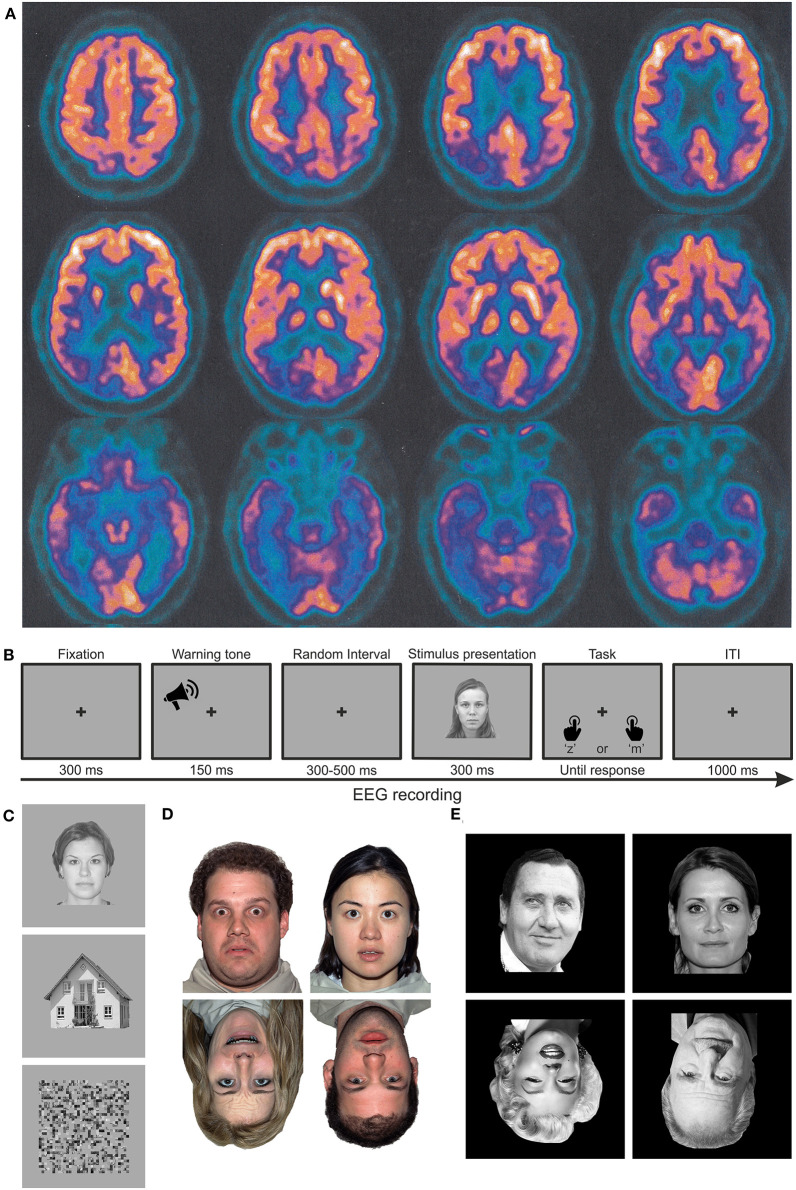
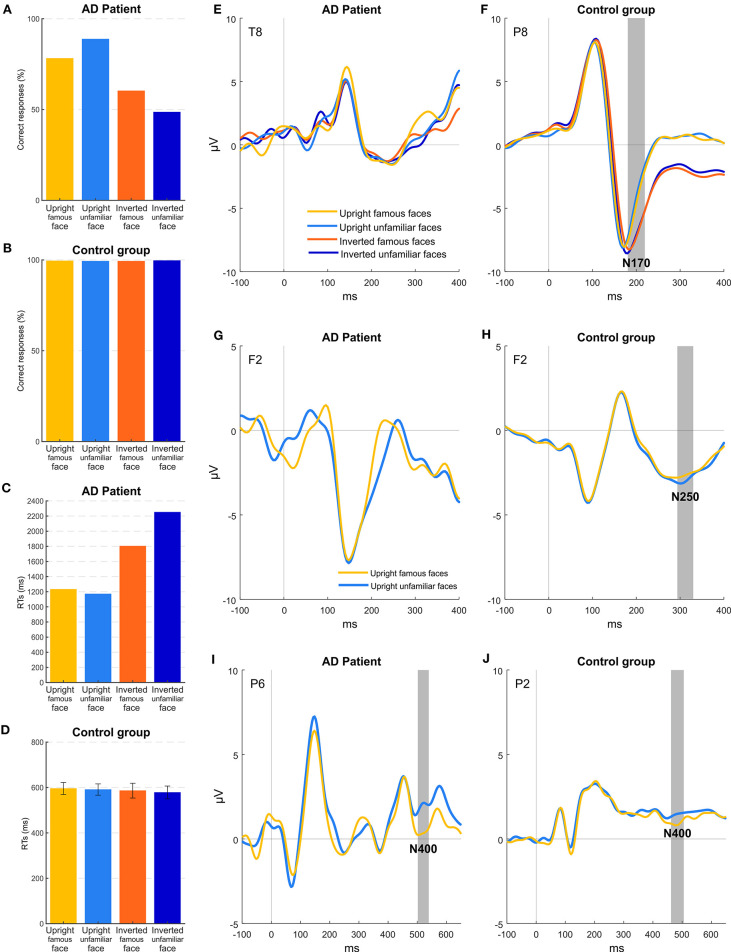
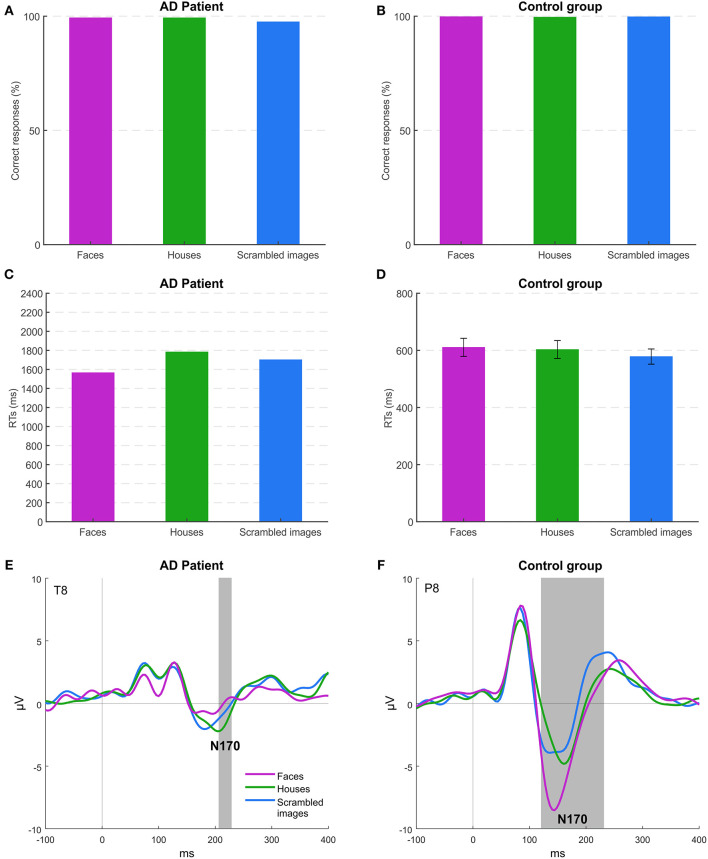
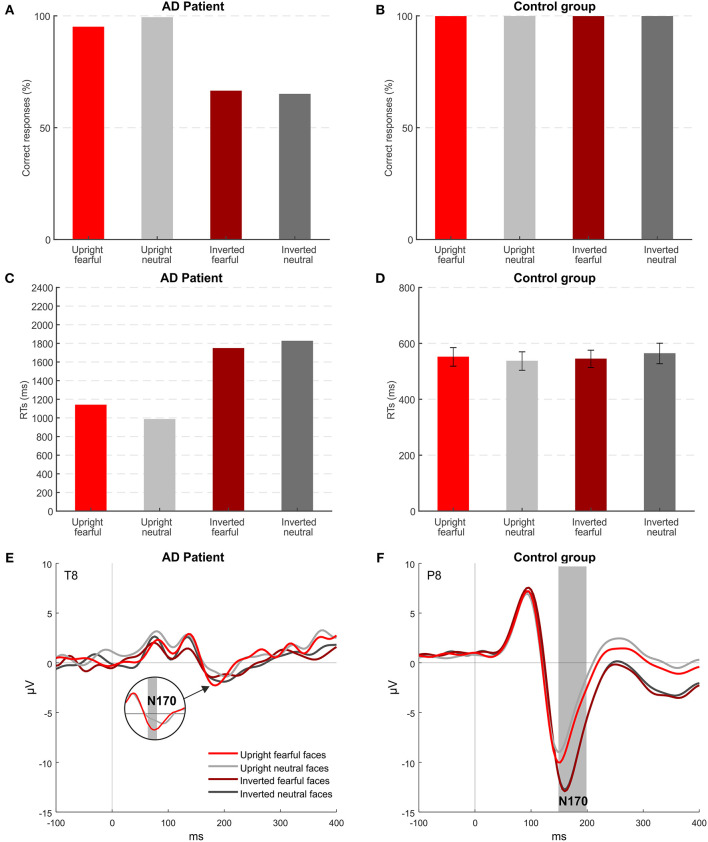
Face recognition deficits are frequently reported in Alzheimer's disease (AD) and often attributed to memory impairment. However, it has been hypothesized that failure in identifying familiar people could also be due to deficits in higher-level perceptual processes, since there is evidence showing a reduced inversion effect for faces but not for cars in AD. To address the involvement of these higher processes, we investigated event-related potential (ERP) neural correlates of faces in a patient with AD showing a face recognition deficit. Eight healthy participants were tested as a control group. Participants performed different tasks following the stimulus presentation. In experiment 1, they should indicate whether the stimulus was either a face or a house or a scrambled image. In experiments 2 and 3, they should discriminate between upright and inverted faces (in experiment 2, stimuli were faces with neutral or fearful expressions, while in experiment 3, stimuli were famous or unfamiliar faces). Electrophysiological results reveal that the typical face-specific modulation of the N170 component, which is thought to reflect the structural encoding of faces, was not present in patient MCG, despite being affected by the emotional content of the face implicitly processed by MCG. Conversely, the N400 component, which is thought to reflect the recruitment of the memory trace of the face identity, was found to be implicitly modulated in MCG. These results may identify a possible role for gnosic processes in face recognition deficits in AD and suggest the importance of adopting an integrated approach to the AD diagnosis while considering electrophysiological markers.
面部识别缺陷在阿尔茨海默病(AD)中经常被报道,并且通常归因于记忆障碍。然而,有人提出,无法识别熟悉的人也可能是由于高级感知过程存在缺陷,因为有证据表明AD患者对面部的倒置效应减弱,而对汽车则没有。为了探究这些高级过程的参与情况,我们研究了一名患有面部识别缺陷的AD患者面部的事件相关电位(ERP)神经关联。八名健康参与者作为对照组进行测试。参与者在刺激呈现后执行不同的任务。在实验1中,他们要指出刺激物是面部、房屋还是杂乱图像。在实验2和3中,他们要区分正立和倒置的面部(在实验2中,刺激物是带有中性或恐惧表情的面部,而在实验3中,刺激物是名人或不熟悉的面部)。电生理结果显示,尽管患者MCG对面部隐含处理的情感内容有反应,但被认为反映面部结构编码的N170成分典型的面部特异性调制在患者MCG中并不存在。相反,被认为反映面部身份记忆痕迹激活情况的N400成分在MCG中被发现有隐含调制。这些结果可能确定了认知过程在AD患者面部识别缺陷中的可能作用,并表明在考虑电生理标记物的同时采用综合方法进行AD诊断的重要性。