Dogan Sengul, Barua Prabal Datta, Baygin Mehmet, Tuncer Turker, Tan Ru-San, Ciaccio Edward J, Fujita Hamido, Devi Aruna, Acharya U Rajendra
Department of Digital Forensics Engineering, College of Technology, Firat University, Elazig, Turkey.
School of Business (Information System), University of Southern Queensland, Springfield, Australia.
Cogn Neurodyn. 2024 Oct;18(5):2503-2519. doi: 10.1007/s11571-024-10104-1. Epub 2024 Apr 3.
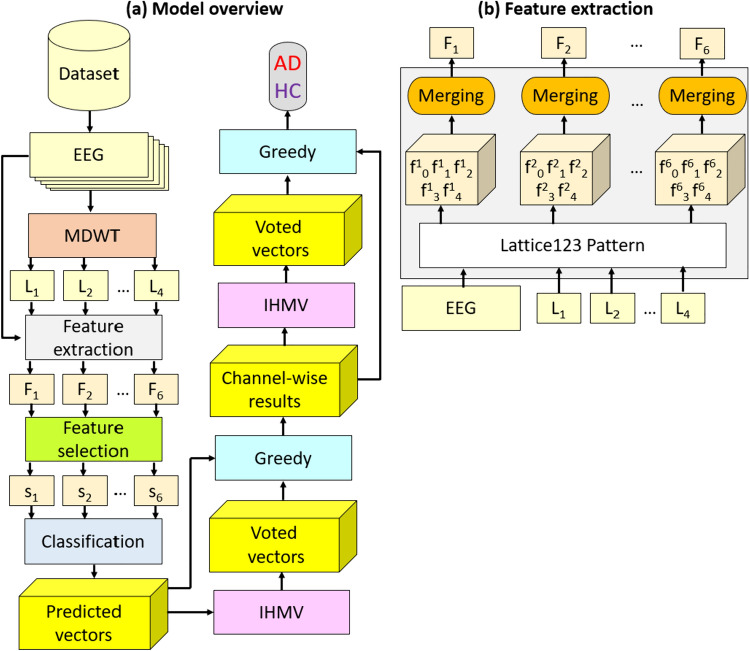
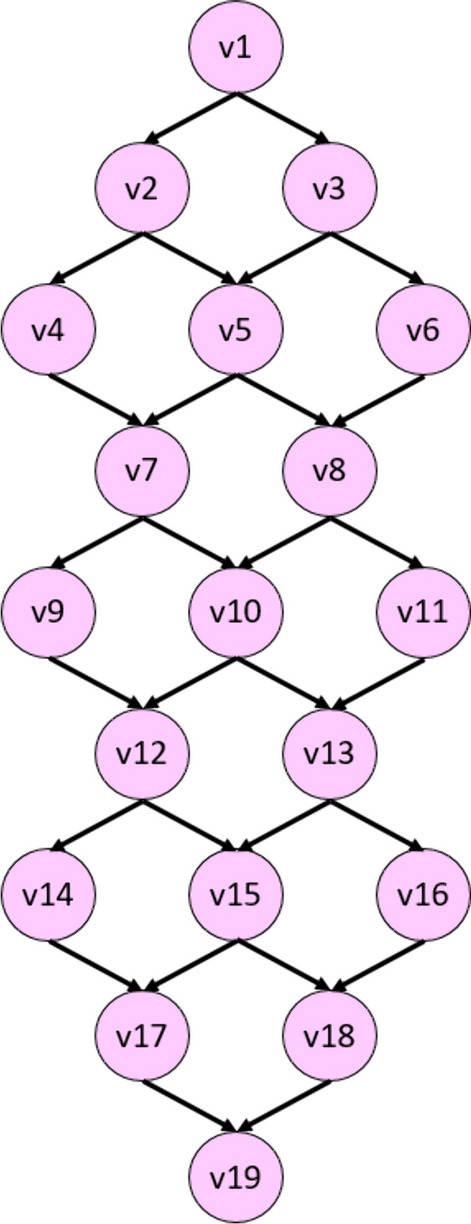
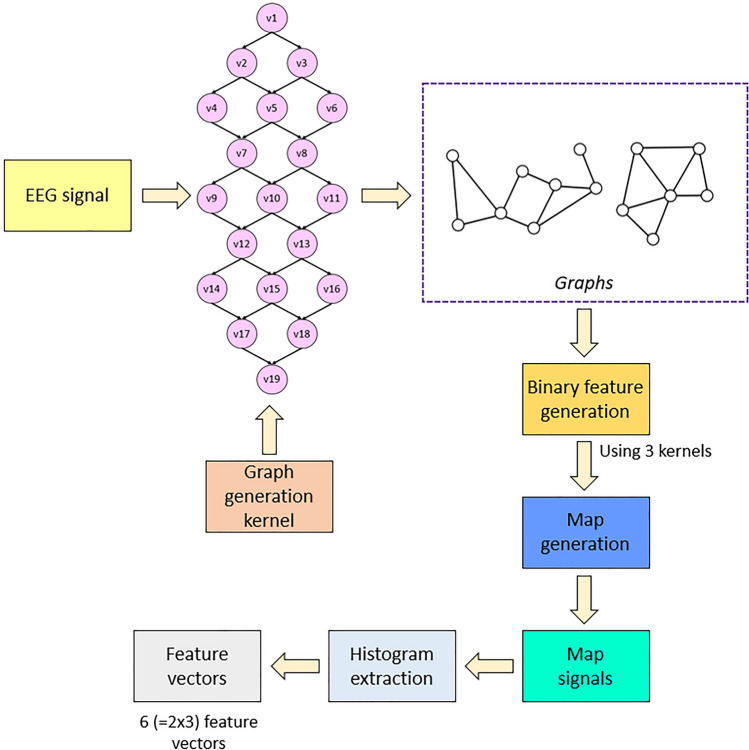
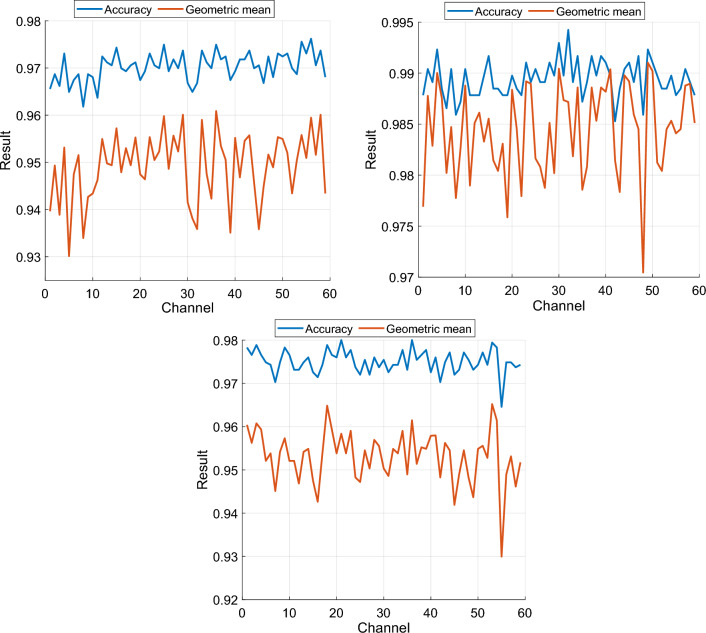
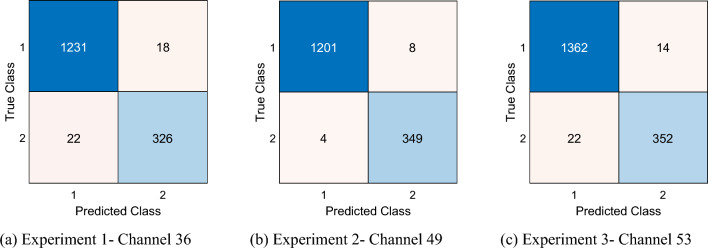
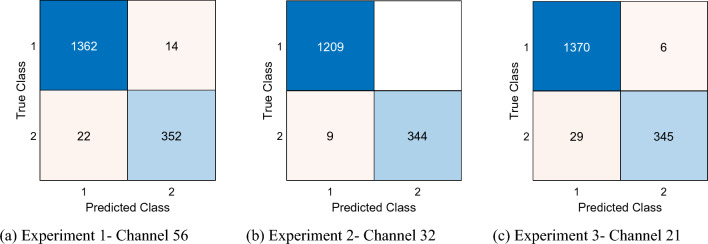
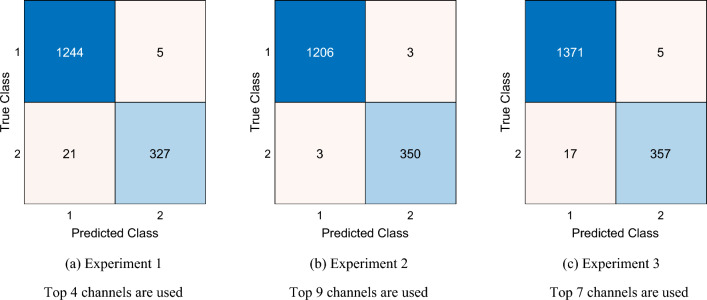
This paper presents an innovative feature engineering framework based on lattice structures for the automated identification of Alzheimer's disease (AD) using electroencephalogram (EEG) signals. Inspired by the Shannon information entropy theorem, we apply a probabilistic function to create the novel Lattice123 pattern, generating two directed graphs with minimum and maximum distance-based kernels. Using these graphs and three kernel functions (signum, upper ternary, and lower ternary), we generate six feature vectors for each input signal block to extract textural features. Multilevel discrete wavelet transform (MDWT) was used to generate low-level wavelet subbands. Our proposed model mirrors deep learning approaches, facilitating feature extraction in frequency and spatial domains at various levels. We used iterative neighborhood component analysis to select the most discriminative features from the extracted vectors. An iterative hard majority voting and a greedy algorithm were used to generate voted vectors to select the optimal channel-wise and overall results. Our proposed model yielded a classification accuracy of more than 98% and a geometric mean of more than 96%. Our proposed Lattice123 pattern, dynamic graph generation, and MDWT-based multilevel feature extraction can detect AD accurately as the proposed pattern can extract subtle changes from the EEG signal accurately. Our prototype is ready to be validated using a large and diverse database.
本文提出了一种基于格结构的创新特征工程框架,用于利用脑电图(EEG)信号自动识别阿尔茨海默病(AD)。受香农信息熵定理的启发,我们应用概率函数创建了新颖的Lattice123模式,生成了两个基于最小和最大距离核的有向图。利用这些图和三个核函数(符号函数、上三元函数和下三元函数),我们为每个输入信号块生成六个特征向量,以提取纹理特征。采用多级离散小波变换(MDWT)生成低级小波子带。我们提出的模型模仿深度学习方法,便于在不同级别上进行频率和空间域的特征提取。我们使用迭代邻域成分分析从提取的向量中选择最具判别力的特征。使用迭代硬多数投票和贪心算法生成投票向量,以选择最优的通道级和整体结果。我们提出的模型分类准确率超过98%,几何平均值超过96%。我们提出的Lattice123模式、动态图生成和基于MDWT的多级特征提取能够准确检测AD,因为所提出的模式能够准确地从EEG信号中提取细微变化。我们的原型已准备好使用大型多样的数据库进行验证。