Wang Jin, Liu Yi, Tang Bingqian, Dai Xiongze, Xie Lingling, Liu Feng, Zou Xuexiao
College of Horticulture, Nanjing Agricultural University, Nanjing, China.
Engineering Research Center for Horticultural Crop Germplasm Creation and New Variety Breeding, Ministry of Education, Changsha, China.
Front Genet. 2020 Dec 21;11:598183. doi: 10.3389/fgene.2020.598183. eCollection 2020.
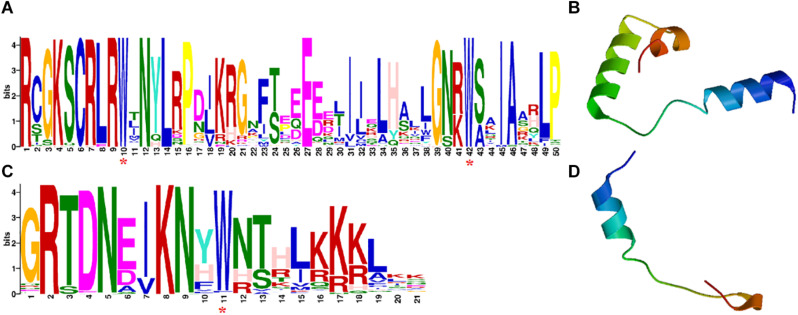
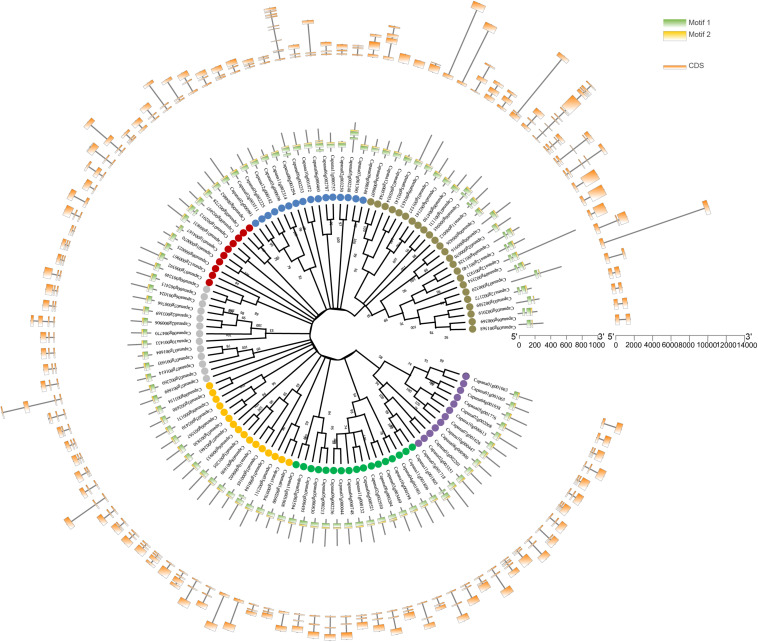
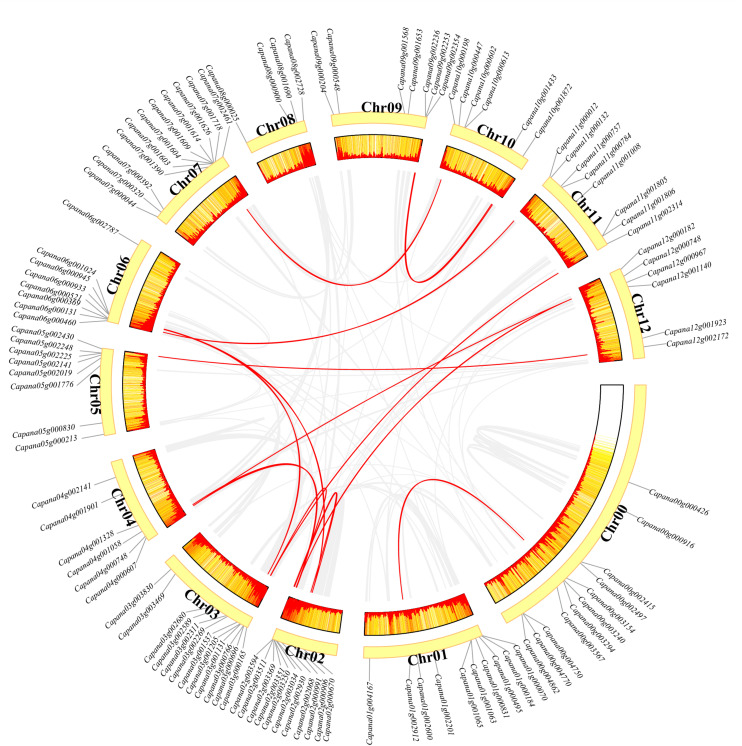
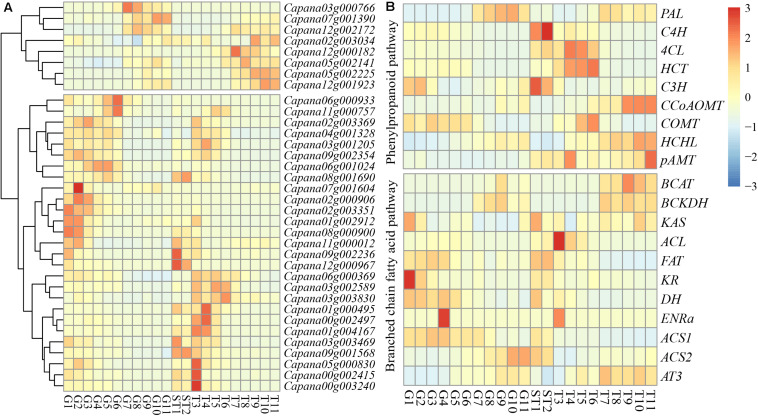
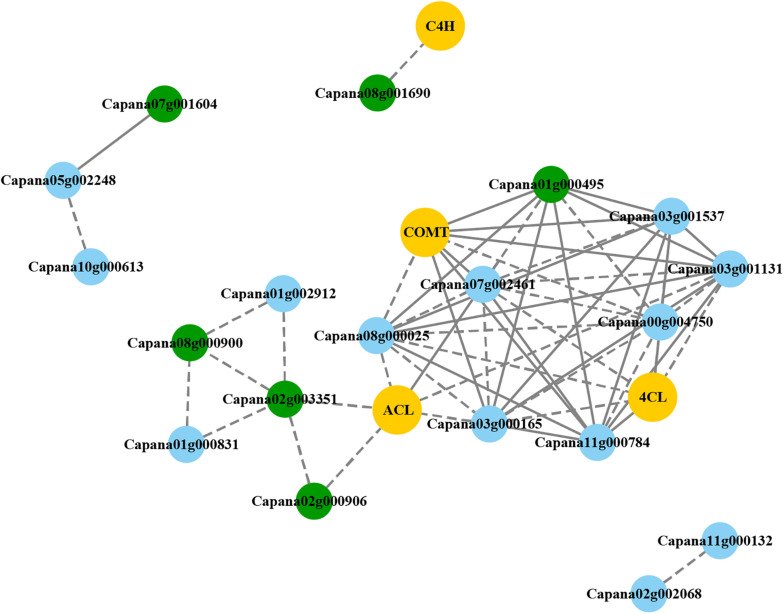
Capsaicinoids are naturally specialized metabolites in pepper and are the main reason that Capsicum fruits have a pungent smell. During the synthesis of capsaicin, MYB transcription factors play key regulatory roles. In particular, subfamily genes are the most important members of the MYB family and are critical candidate factors in capsaicinoid biosynthesis. The 108 genes in pepper were identified in this study and all are shown to have two highly conserved MYB binding domains. Phylogenetic and structural analyses clustered genes into seven groups. Interspecies collinearity analysis found that the family contains 16 duplicated gene pairs and the highest gene density is on chromosome 00 and 03. The expression levels of differentially expressed genes (DEGs) and capsaicinoid-biosynthetic genes (CBGs) in fruit development stages were obtained RNA-seq and quantitative polymerase chain reaction (qRT-PCR). Co-expression analyses reveal that highly expressed genes are co-expressed with CBGs during early stages of pericarp and placenta development processes. It is speculated that six candidate genes are involved in regulating the synthesis of capsaicin and dihydrocapsaicin. This study is the first systematic analysis of the gene family and provided references for studying their molecular functions. At the same time, these results also laid the foundation for further research on the capsaicin characteristics of genes in pepper.
辣椒素类物质是辣椒中天然的特殊代谢产物,也是辣椒果实具有刺鼻气味的主要原因。在辣椒素的合成过程中,MYB转录因子发挥着关键的调控作用。特别是,亚家族基因是MYB家族中最重要的成员,也是辣椒素生物合成的关键候选因子。本研究鉴定了辣椒中的108个基因,所有这些基因均显示具有两个高度保守的MYB结合结构域。系统发育和结构分析将这些基因聚类为七组。种间共线性分析发现,该家族包含16对重复基因对,基因密度最高的是在第00和03号染色体上。通过RNA测序和定量聚合酶链反应(qRT-PCR)获得了果实发育阶段差异表达基因(DEG)和辣椒素生物合成基因(CBG)的表达水平。共表达分析表明,在果皮和胎座发育过程的早期,高表达的这些基因与CBG共表达。推测有六个候选基因参与调控辣椒素和二氢辣椒素的合成。本研究是对该基因家族的首次系统分析,为研究其分子功能提供了参考。同时,这些结果也为进一步研究辣椒中这些基因的辣椒素特性奠定了基础。