Physical Sciences Platform, Sunnybrook Research Institute, Toronto, Ontario, Canada.
Institute of Biomedical Engineering, University of Toronto, Toronto, Ontario, Canada.
Theranostics. 2021 Jan 1;11(4):1655-1671. doi: 10.7150/thno.52710. eCollection 2021.
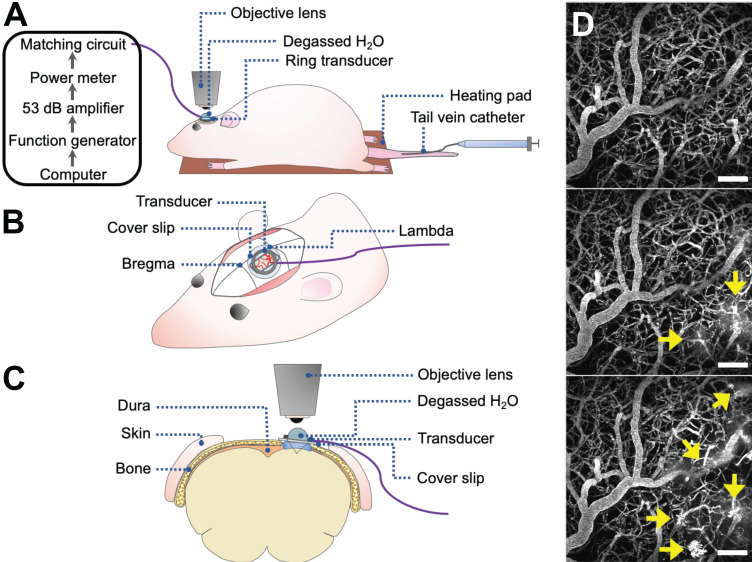
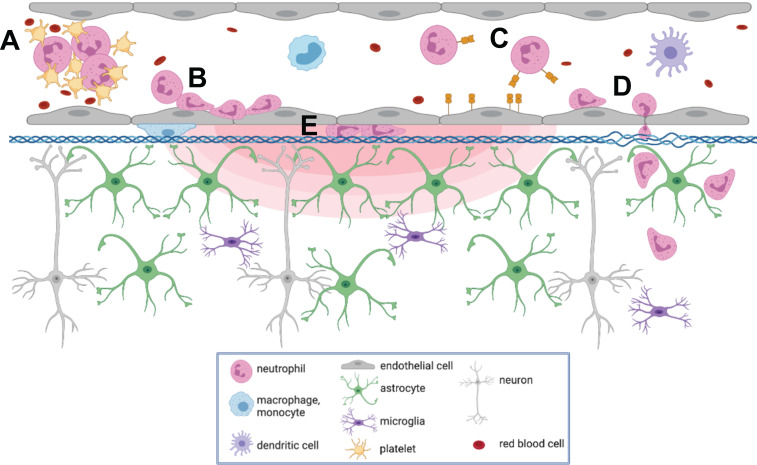
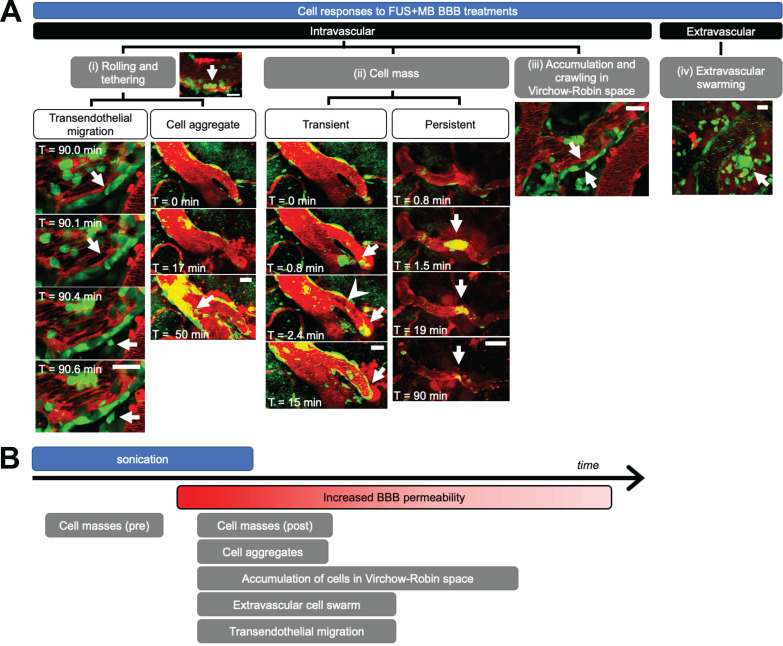
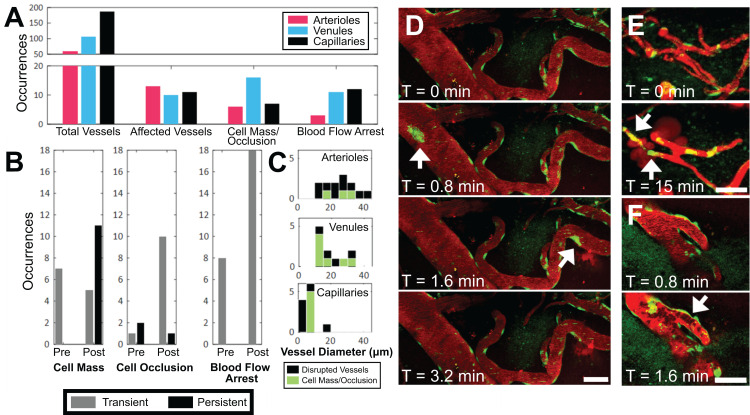
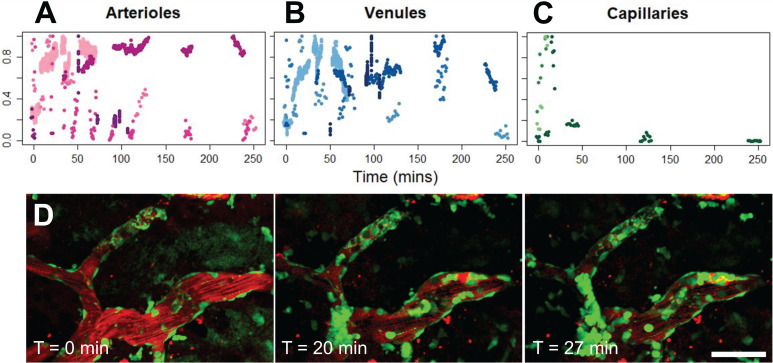
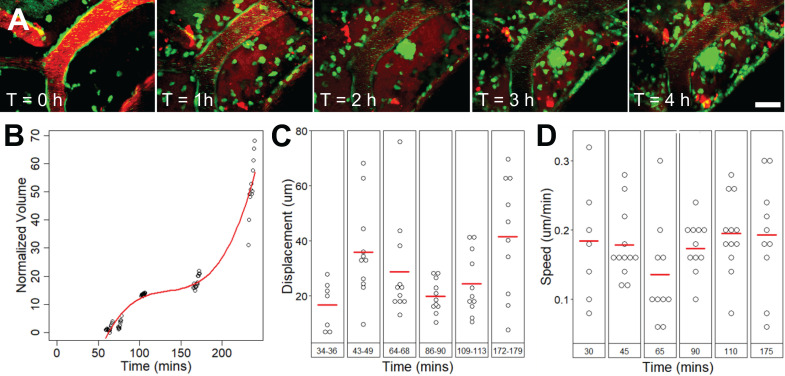
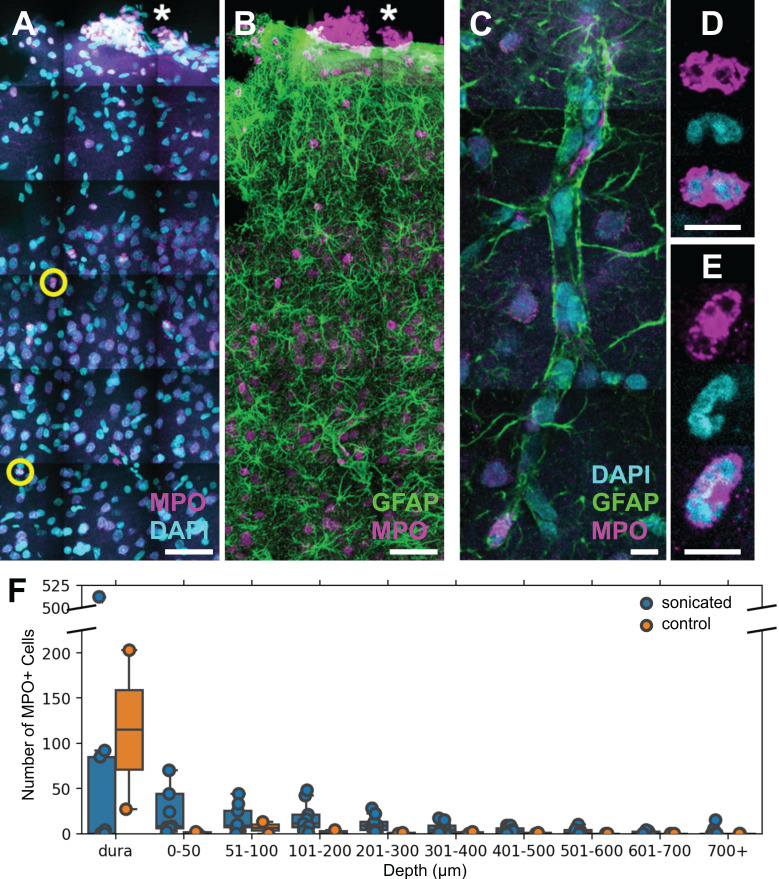
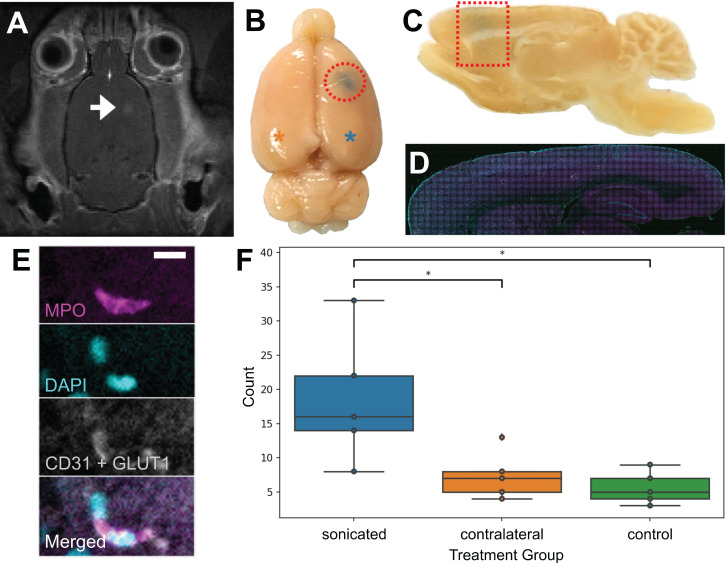
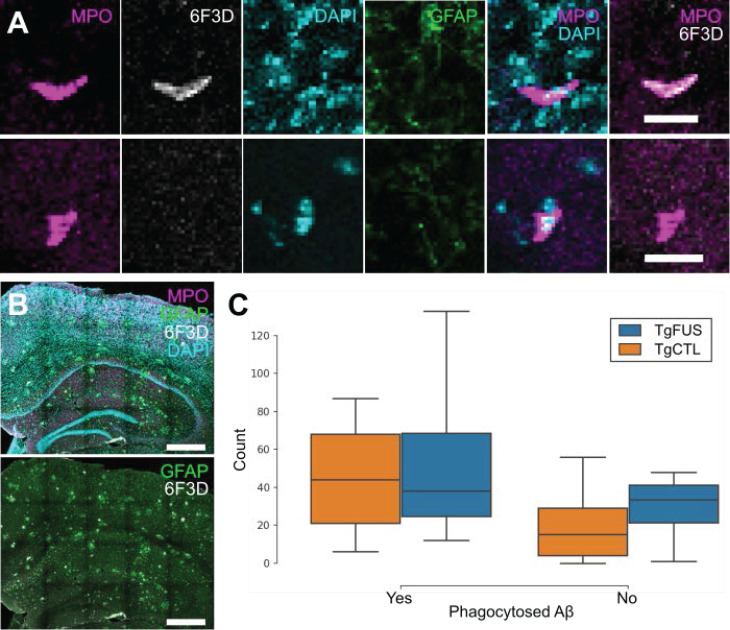
Delivery of therapeutic agents to the brain is limited by the presence of the blood-brain barrier (BBB). An emerging strategy to temporarily and locally increase the permeability of the BBB is the use of transcranial focused ultrasound (FUS) and systematically injected microbubbles (MBs). FUS+MB BBB treatments cause an acute inflammatory response, marked by a transient upregulation of pro-inflammatory genes; however, the cellular immune response remains unknown. FUS+MB BBB treatments were monitored in real-time using two-photon fluorescence microscopy and transgenic EGFP Wistar rats, which harbour several fluorescent cell types. Leukocyte identification and counts were confirmed using magnetic resonance imaging-guided FUS+MB BBB treatments. Participation of leukocytes in reducing β-amyloid pathology following repeated FUS+MB BBB treatments was investigated in the TgCRND8 mouse model of Alzheimer's disease. Intravascular leukocyte activity indicative of acute inflammation were identified, including transendothelial migration, formation of cell aggregates, and cell masses capable of perturbing blood flow. Leukocyte responses were only observed after the onset of sonication. Neutrophils were identified to be a key participating leukocyte. Significantly more neutrophils were detected in the sonicated hemisphere compared to the contralateral hemisphere, and to untreated controls. Three to five biweekly FUS+MB BBB treatments did not induce significantly more neutrophil recruitment, nor neutrophil phagocytosis of β-amyloid plaques, in TgCRND8 mice compared to untreated controls. This study provides evidence that the cellular aspect of the peripheral immune response triggered by FUS+MB BBB treatments begins immediately after sonication, and emphasizes the importance for further investigations to be conducted to understand leukocyte dynamics and cerebral blood flow responses to FUS+MB BBB treatments.
将治疗剂递送到大脑受到血脑屏障(BBB)的限制。一种新出现的策略是使用经颅聚焦超声(FUS)和系统注射微泡(MB)来暂时和局部增加 BBB 的通透性。FUS+MB BBB 治疗会引起急性炎症反应,表现为促炎基因的短暂上调;然而,细胞免疫反应仍不清楚。FUS+MB BBB 治疗使用双光子荧光显微镜和携带多种荧光细胞类型的 EGFP Wistar 转基因大鼠进行实时监测。使用磁共振成像引导的 FUS+MB BBB 治疗来确认白细胞的鉴定和计数。在阿尔茨海默病的 TgCRND8 小鼠模型中,研究了重复 FUS+MB BBB 治疗后白细胞参与减少β-淀粉样蛋白病理学的情况。鉴定出提示急性炎症的血管内白细胞活性,包括跨内皮迁移、细胞聚集形成和能够扰乱血流的细胞团块。仅在超声开始后才观察到白细胞反应。鉴定出中性粒细胞是关键的参与白细胞。与对侧半球和未处理的对照相比,在被超声处理的半球中检测到更多的中性粒细胞。与未处理的对照相比,在 TgCRND8 小鼠中,三到五次每周 FUS+MB BBB 治疗并未导致明显更多的中性粒细胞募集,也未导致中性粒细胞吞噬β-淀粉样斑块。这项研究提供了证据,表明 FUS+MB BBB 治疗引发的外周免疫反应的细胞方面在超声后立即开始,并强调需要进一步研究以了解白细胞动力学和 FUS+MB BBB 治疗对脑血流的反应。