Nakaji Konosuke
Internal Medicine: Gastroenterology, Endoscopy Center, Aishinkai Nakae Hospital, Wakayama-Shi, JPN.
Cureus. 2020 Dec 31;12(12):e12393. doi: 10.7759/cureus.12393.
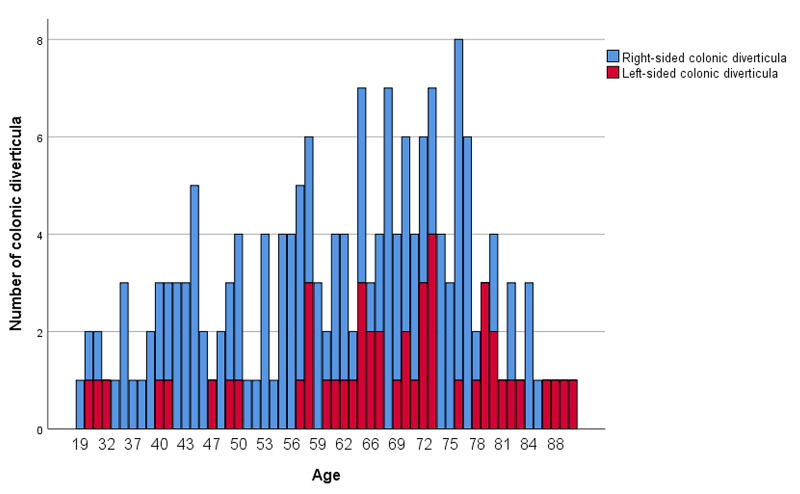
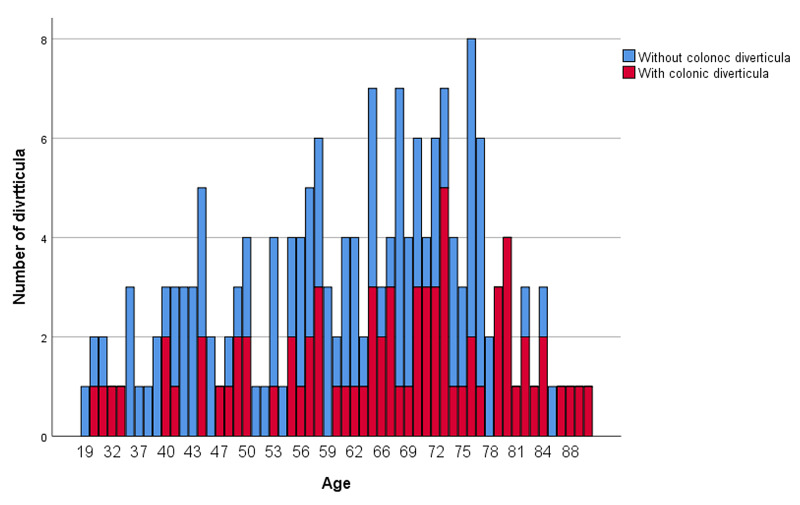
Objective The assessment of colonic diverticula with colon capsule endoscopy (CCE) in a Japanese population provided unclear results. In this study, we retrospectively reviewed a cohort of Japanese patients who had undergone CCE to assess its safety and usefulness in the diagnosis of colonic diverticula. Methods In this study, 175 consecutive Japanese patients who had their entire colon observed via CCE from November 2013 to July 2018 were included. Patients were retrospectively stratified according to age, gender, colonic segment, and symptoms involvement. A multivariable regression analysis was performed to investigate the presence of any correlation among variables. The safety of CCE was assessed in terms of the incidence of adverse events (AEs). Results Colonic diverticula were observed in 42.3% of all cases; of those; 36.5% were right-sided, 31.1% were left-sided, and 32.4% were bilateral. Moreover, one to two colonic diverticula were observed in 35.1%, while three or more diverticula were seen in 64.9%. Multivariable analysis showed that age (≥70 years) was positively associated with colonic diverticula, while male gender and the presence of colonic polyps were negatively associated with colonic diverticula. No correlation was found between colonic diverticula and symptoms. There was no significant difference between groups with and without colonic diverticula in the incidence of AEs. AEs were mild in severity, with no severe AE-related bowel preparation and capsule ingestion reported. Conclusion CCE was well-tolerated by the participants, and the incidence of colonic diverticula was 42.3%, with one to two and three or more diverticula being found in 35.1% and 64.9%, respectively. There was little difference in the frequency of colonic diverticula formation on the right side, left side, and on both sides. Age was a positive association factor, while male gender and the presence of colorectal polyps were negative association factors. No correlation was found between diverticula and symptoms.
目的 在日本人群中,用结肠胶囊内镜(CCE)评估结肠憩室的结果尚不明确。在本研究中,我们回顾性分析了一组接受CCE检查的日本患者,以评估其在结肠憩室诊断中的安全性和实用性。方法 本研究纳入了2013年11月至2018年7月期间通过CCE对整个结肠进行观察的175例连续日本患者。根据年龄、性别、结肠段和症状累及情况对患者进行回顾性分层。进行多变量回归分析以研究变量之间是否存在任何相关性。根据不良事件(AE)的发生率评估CCE的安全性。结果 在所有病例中,42.3%观察到结肠憩室;其中,36.5%为右侧,31.1%为左侧,32.4%为双侧。此外,35.1%观察到一至两个结肠憩室,64.9%观察到三个或更多憩室。多变量分析显示,年龄(≥70岁)与结肠憩室呈正相关,而男性性别和结肠息肉的存在与结肠憩室呈负相关。结肠憩室与症状之间未发现相关性。有结肠憩室组和无结肠憩室组在AE发生率上无显著差异。AE严重程度较轻,未报告与严重AE相关的肠道准备和胶囊摄入情况。结论 参与者对CCE耐受性良好,结肠憩室的发生率为42.3%,一至两个和三个或更多憩室的发现率分别为35.1%和64.9%。右侧、左侧和双侧结肠憩室形成的频率差异不大。年龄是正相关因素,而男性性别和结直肠息肉的存在是负相关因素。憩室与症状之间未发现相关性。