Department of Neurology, The First Affiliated Hospital, Sun Yat-sen University, No. 58 Zhongshan Road 2, Guangzhou, 510080, GD, China.
National Key Clinical Department and Key Discipline of Neurology, Guangdong Provincial Key Laboratory of Diagnosis and Treatment of Major Neurological Diseases, No. 58 Zhongshan Road 2, Guangzhou, GD, 510080, China.
Stem Cell Res Ther. 2021 Jan 7;12(1):12. doi: 10.1186/s13287-020-02065-z.
Dystrophinopathy, a common neuromuscular disorder caused by the absence of dystrophin, currently lacks effective treatments. Systemic transplantation of adipose-derived stem cells (ADSCs) is a promising treatment approach, but its low efficacy remains a challenge. Chemokine system-mediated stem cell homing plays a critical role in systemic transplantation. Here, we investigated whether overexpression of a specific chemokine receptor could improve muscle homing and therapeutic effects of ADSC systemic transplantation in dystrophic mice.
We analysed multiple microarray datasets from the Gene Expression Omnibus to identify a candidate chemokine receptor and then evaluated the protein expression of target ligands in different tissues and organs of dystrophic mice. The candidate chemokine receptor was overexpressed using the lentiviral system in mouse ADSCs, which were used for systemic transplantation into the dystrophic mice, followed by evaluation of motor function, stem cell muscle homing, dystrophin expression, and muscle pathology.
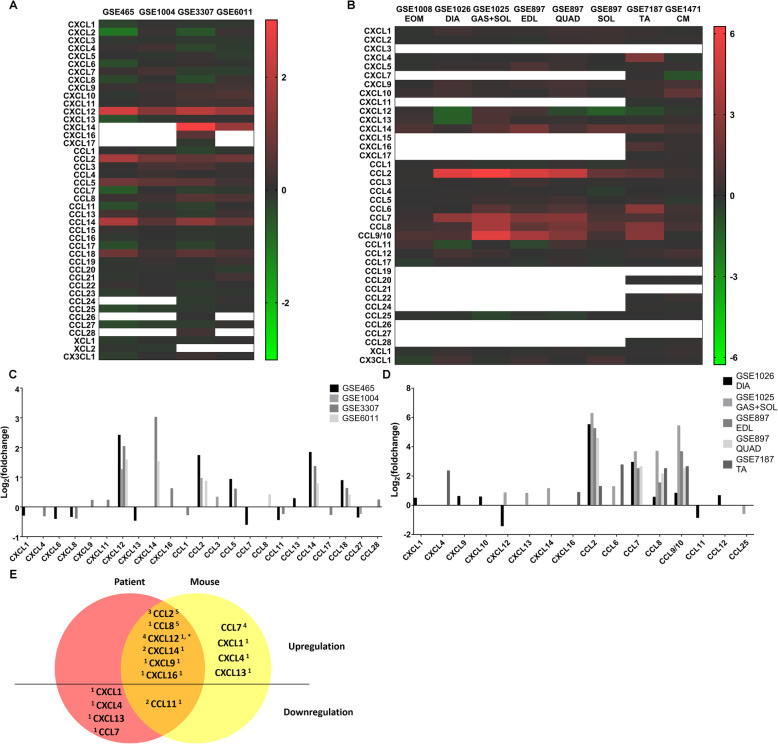
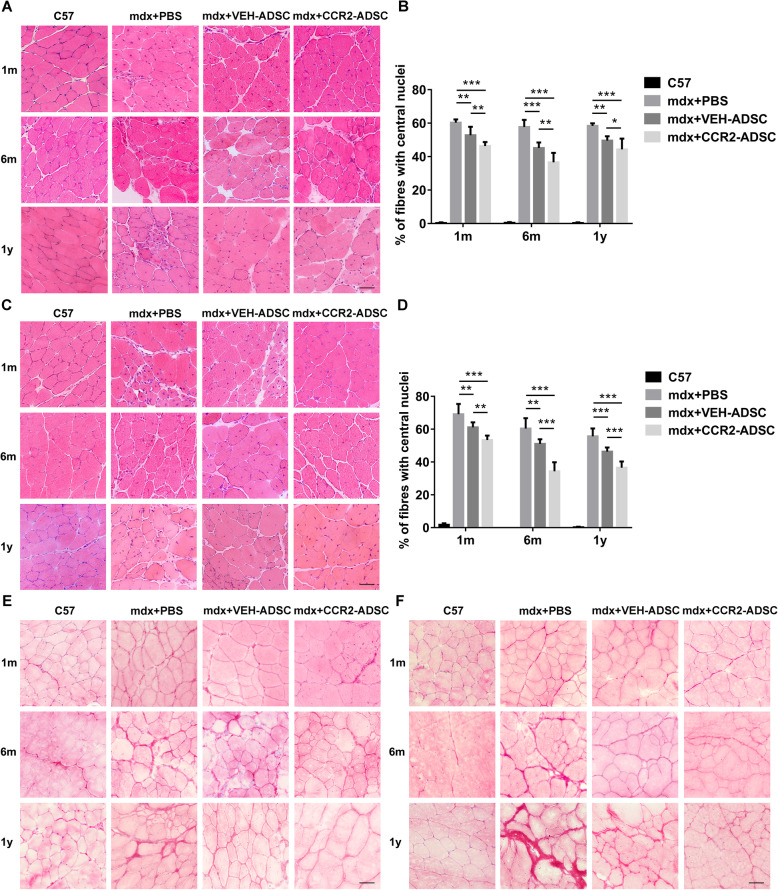
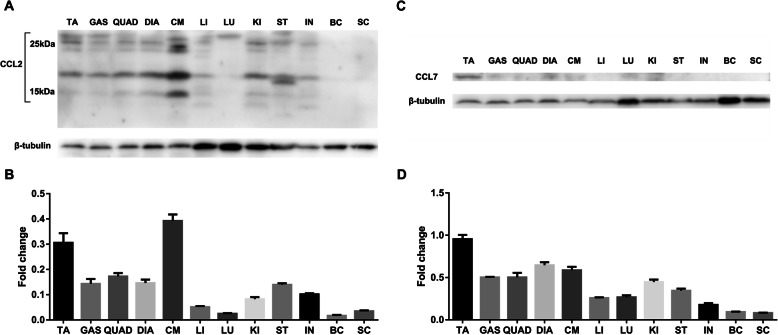
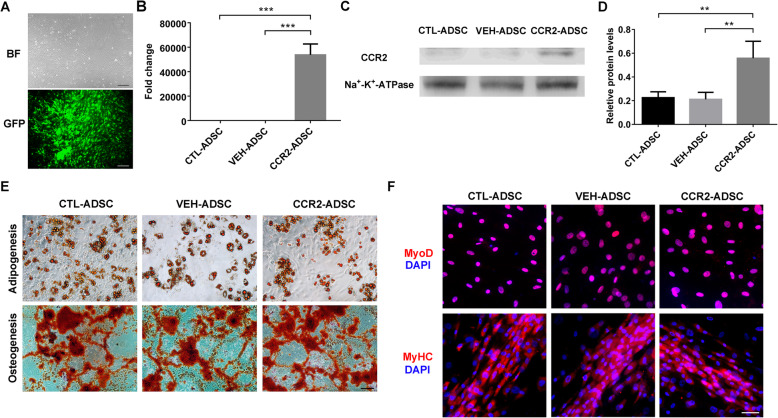
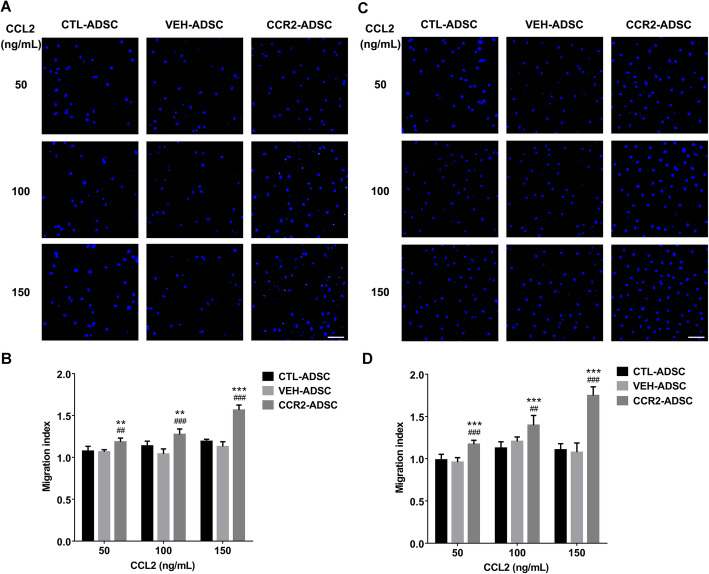
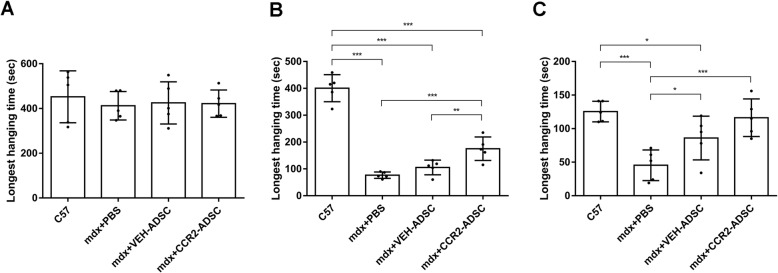
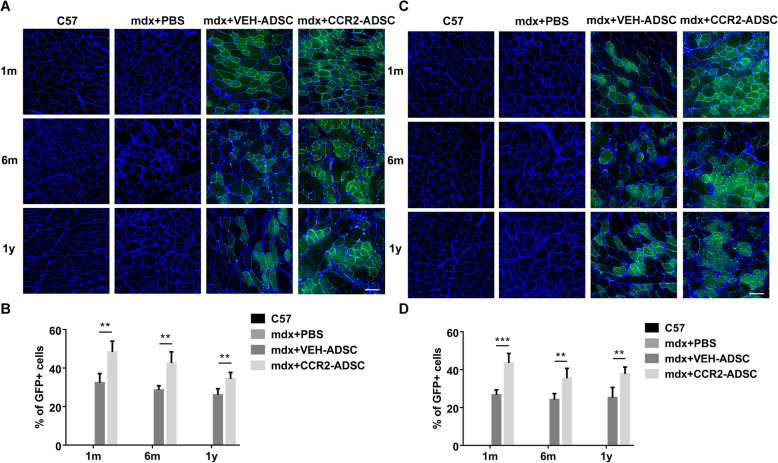
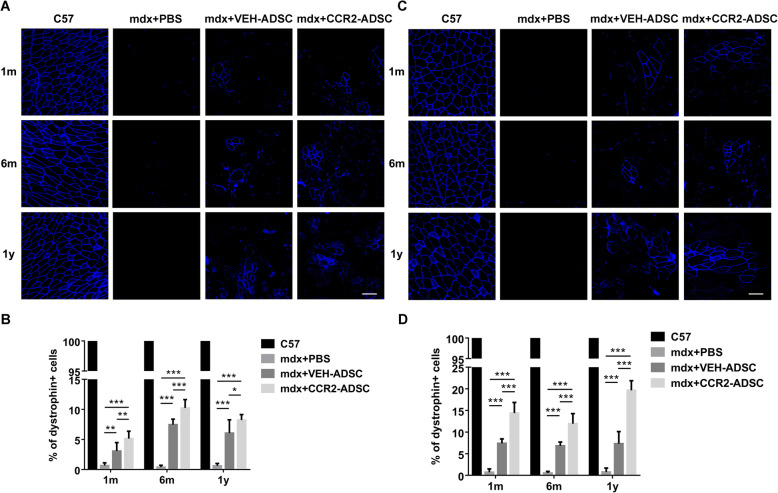
Chemokine-profile analysis identified C-C chemokine receptor (CCR)2 as the potential target for improving ADSC homing. We found that the levels of its ligands C-C chemokine ligand (CCL)2 and CCL7 were higher in muscles than in other tissues and organs of dystrophic mice. Additionally, CCR2 overexpression improved ADSC migration ability and maintained their multilineage-differentiation potentials. Compared with control ADSCs, transplantation of those overexpressing CCR2 displayed better muscle homing and further improved motor function, dystrophin expression, and muscle pathology in dystrophic mice.
These results demonstrated that CCR2 improved ADSC muscle homing and therapeutic effects following systemic transplantation in dystrophic mice.
肌营养不良症是一种常见的神经肌肉疾病,由肌营养不良蛋白缺失引起,目前缺乏有效的治疗方法。脂肪来源的干细胞(ADSCs)的系统移植是一种很有前途的治疗方法,但疗效低仍是一个挑战。趋化因子系统介导的干细胞归巢在系统移植中起着关键作用。在这里,我们研究了过表达特定趋化因子受体是否可以改善肌营养不良小鼠 ADCS 系统移植的肌肉归巢和治疗效果。
我们分析了基因表达综合数据库中的多个微阵列数据集,以确定候选趋化因子受体,然后评估了目标配体在不同组织和器官中的表达。使用慢病毒系统过表达候选趋化因子受体,将其用于 ADCS 的系统移植到肌营养不良小鼠中,然后评估运动功能、干细胞肌肉归巢、肌营养不良蛋白表达和肌肉病理学。
趋化因子谱分析确定 C-C 趋化因子受体(CCR)2 是改善 ADCS 归巢的潜在靶标。我们发现,其配体 C-C 趋化因子配体(CCL)2 和 CCL7 的水平在肌肉中高于其他组织和器官中的水平。此外,CCR2 的过表达提高了 ADCS 的迁移能力,并保持了它们的多能分化潜能。与对照 ADCS 相比,过表达 CCR2 的移植细胞具有更好的肌肉归巢能力,并进一步改善了肌营养不良小鼠的运动功能、肌营养不良蛋白表达和肌肉病理学。
这些结果表明,CCR2 改善了肌营养不良小鼠 ADCS 系统移植后的肌肉归巢和治疗效果。