Hussain Tarique, Tan Bie, Murtaza Ghulam, Metwally Elsayed, Yang Huansheng, Kalhoro Muhammad Saleem, Kalhoro Dildar Hussain, Chughtai Muhammad Ismail, Yin Yulong
College of Animal Science and Technology, Hunan Agricultural University, Changsha, China.
Institute of Subtropical Agriculture, Chinese Academy of Sciences, Changsha, China.
Front Pharmacol. 2020 Dec 22;11:586979. doi: 10.3389/fphar.2020.586979. eCollection 2020.
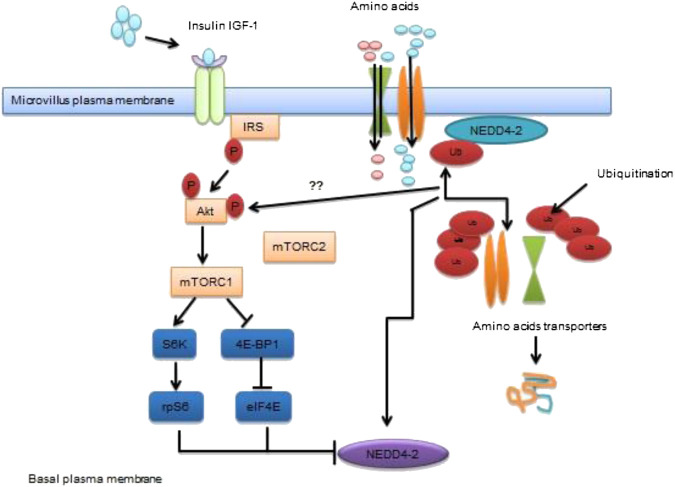
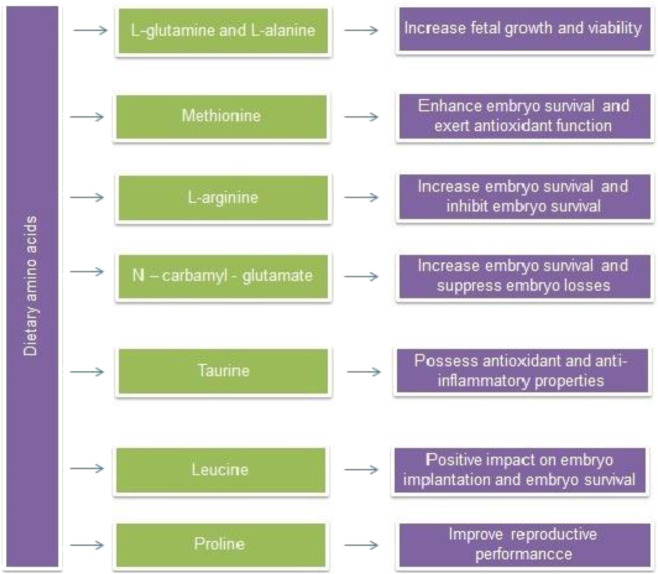
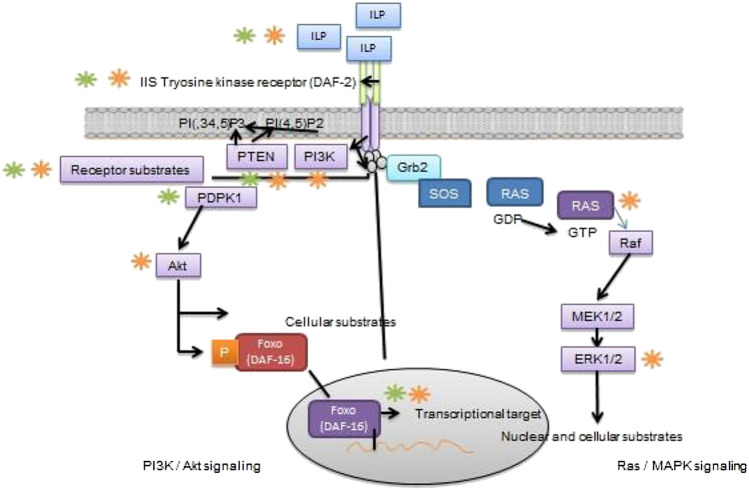
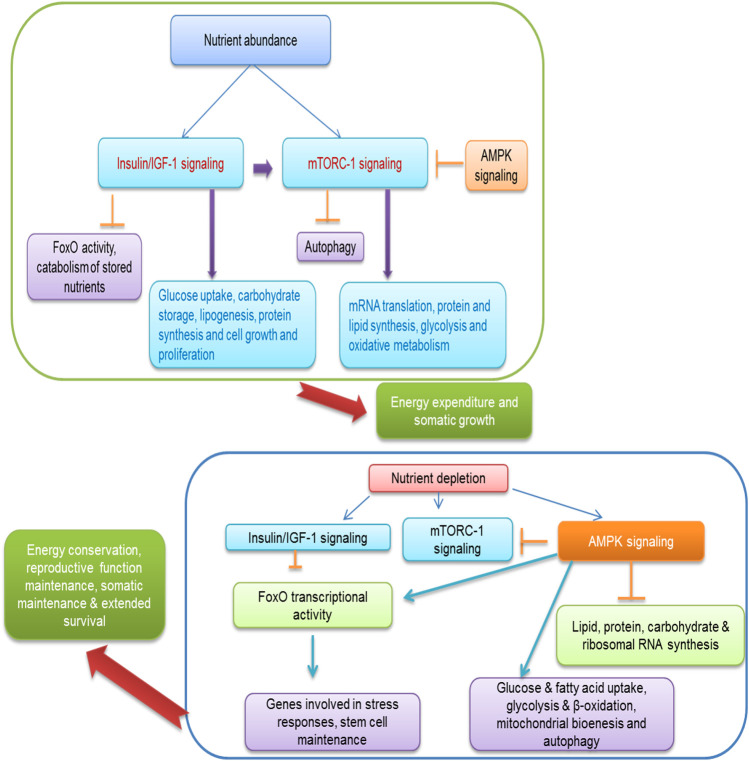
Defective implantation is related to pregnancy-associated disorders such as spontaneous miscarriage, intrauterine fetal growth restriction and others. Several factors proclaimed to be involved such as physiological, nutritional, environmental and managemental that leads to cause oxidative stress. Overloading of free radicals promotes oxidative stress, and the internal body system could not combat its ability to encounter the damaging effects and subsequently leading to pregnancy-related disorders. During pregnancy, essential amino acids display important role for optimum fetal growth and other necessary functions for continuing fruitful pregnancy. In this context, dietary amino acids have received much attention regarding the nutritional concerns during pregnancy. Arginine, glutamine, tryptophan and taurine play a crucial role in fetal growth, development and survival while ornithine and proline are important players for the regulation of gene expression, protein synthesis and angiogenesis. Moreover, amino acids also stimulate the mammalian target of rapamycin (mTOR) signaling pathway which plays a central role in the synthesis of proteins in placenta, uterus and fetus. This review article explores the significances of dietary amino acids in pregnancy development, regulation of nutrient-sensing pathways such as mTOR, peroxisome proliferator-activated receptors (PPARs), insulin/insulin-like growth factor signaling pathway (IIS) and 5' adenosine monophosphate-activated protein kinase (AMPK) which exhibit important role in reproduction and its related problems. In addition, the antioxidant function of dietary amino acids against oxidative stress triggering pregnancy disorders and their possible outcomes will also be enlightened. Dietary supplementation of amino acids during pregnancy could help mitigate reproductive disorders and thereby improving fertility in animals as well as humans.
着床缺陷与妊娠相关疾病有关,如自然流产、宫内胎儿生长受限等。有多种因素被认为与之相关,包括生理、营养、环境和管理等因素,这些因素会导致氧化应激。自由基过载会促进氧化应激,而体内系统无法对抗其产生的破坏作用,进而导致与妊娠相关的疾病。在孕期,必需氨基酸对胎儿的最佳生长以及维持妊娠顺利进行的其他必要功能发挥着重要作用。在此背景下,膳食氨基酸在孕期营养方面备受关注。精氨酸、谷氨酰胺、色氨酸和牛磺酸在胎儿生长、发育和存活中起着关键作用,而鸟氨酸和脯氨酸在基因表达调控、蛋白质合成和血管生成中发挥着重要作用。此外,氨基酸还能刺激雷帕霉素靶蛋白(mTOR)信号通路,该通路在胎盘、子宫和胎儿的蛋白质合成中起核心作用。这篇综述文章探讨了膳食氨基酸在妊娠发育中的意义,以及对营养感应通路的调节作用,如mTOR、过氧化物酶体增殖物激活受体(PPARs)、胰岛素/胰岛素样生长因子信号通路(IIS)和5'腺苷单磷酸激活蛋白激酶(AMPK),这些通路在生殖及其相关问题中发挥着重要作用。此外,还将阐述膳食氨基酸针对引发妊娠疾病的氧化应激的抗氧化功能及其可能的结果。孕期补充膳食氨基酸有助于减轻生殖疾病,从而提高动物和人类的生育能力。