Al Doghaither Huda, Elmorsy Ekramy, Al-Ghafari Ayat, Ghulam Jihan
Department of Biochemistry, Faculty of Science, King Abdulaziz University, Jeddah, Saudi Arabia.
Department of Forensic Medicine and Clinical Toxicology, Faculty of Medicine, Mansoura University, Mansoura, Egypt.
Saudi J Biol Sci. 2021 Jan;28(1):651-663. doi: 10.1016/j.sjbs.2020.10.056. Epub 2020 Nov 4.
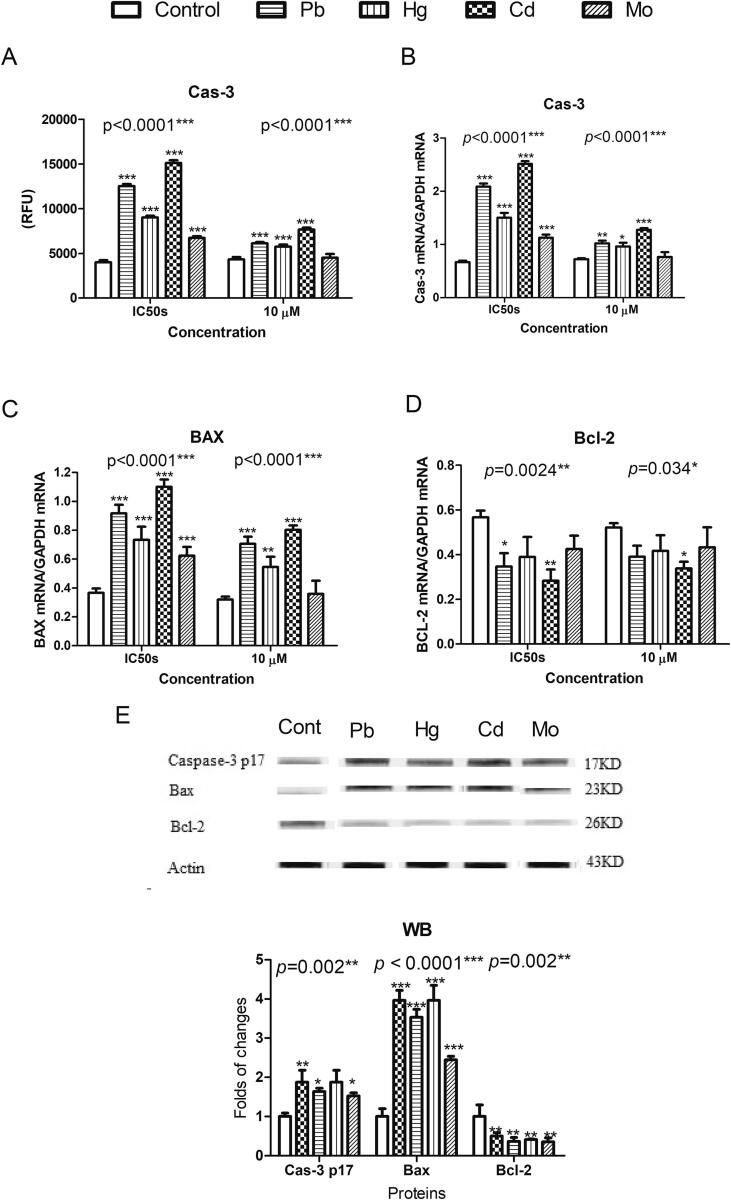
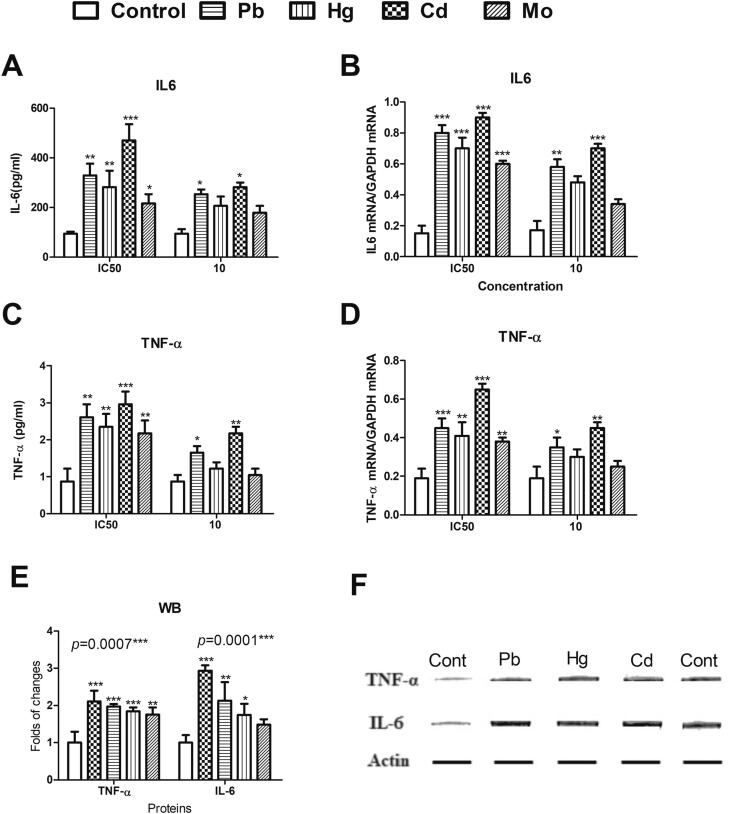
The diabetogenic effects of metals including lead (Pb), mercury (Hg), cadmium (Cd), and molybdenum (Mo) have been reported with poorly identified underlying mechanisms. The current study assessed the effect of metals on the roles of oxidative stress, apoptosis, and inflammation in beta pancreatic cells isolated from CD-1 mice, via different biochemical assays. Data showed that the tested metals were cytotoxic to the isolated cells with impaired glucose stimulated insulin secretion (GSIS). This was associated with increased reactive oxygen species (ROS) production, lipid peroxidation, antioxidant enzymes activities, active proapoptotic caspase-3 (cas-3), inflammatory cytokines interleukin-6 (IL-6) and tumor necrosis factor-alpha (TNF-α) levels in the intoxicated cells. Furthermore, antioxidant-reduced glutathione (GSH-R), cas-3 inhibitor z-VAD-FMK, IL-6 inhibitor bazedoxifene (BZ), and TNF-α inhibitor etanercept (ET) were found to significantly decrease metal-induced cytotoxicity with improved GSIS in metals' intoxicated cells. In conclusion, oxidative stress, apoptosis, and inflammation can play roles in metals-induced diabetogenic effect.
包括铅(Pb)、汞(Hg)、镉(Cd)和钼(Mo)在内的金属的致糖尿病作用已有报道,但其潜在机制尚不明确。本研究通过不同的生化分析方法,评估了金属对从CD-1小鼠分离的胰腺β细胞中氧化应激、细胞凋亡和炎症作用的影响。数据显示,所测试的金属对分离的细胞具有细胞毒性,且葡萄糖刺激的胰岛素分泌(GSIS)受损。这与中毒细胞中活性氧(ROS)生成增加、脂质过氧化、抗氧化酶活性、活性促凋亡半胱天冬酶-3(cas-3)、炎性细胞因子白细胞介素-6(IL-6)和肿瘤坏死因子-α(TNF-α)水平升高有关。此外,发现抗氧化剂还原型谷胱甘肽(GSH-R)、cas-3抑制剂z-VAD-FMK、IL-6抑制剂巴多昔芬(BZ)和TNF-α抑制剂依那西普(ET)可显著降低金属诱导的细胞毒性,并改善金属中毒细胞的GSIS。总之,氧化应激、细胞凋亡和炎症可能在金属诱导的致糖尿病作用中发挥作用。