Department of Mass Communication, Covenant University, Ota, Nigeria.
Centre for Global Health, Usher Institute, University of Edinburgh, Edinburgh, UK.
ScientificWorldJournal. 2020 Dec 23;2020:4969687. doi: 10.1155/2020/4969687. eCollection 2020.
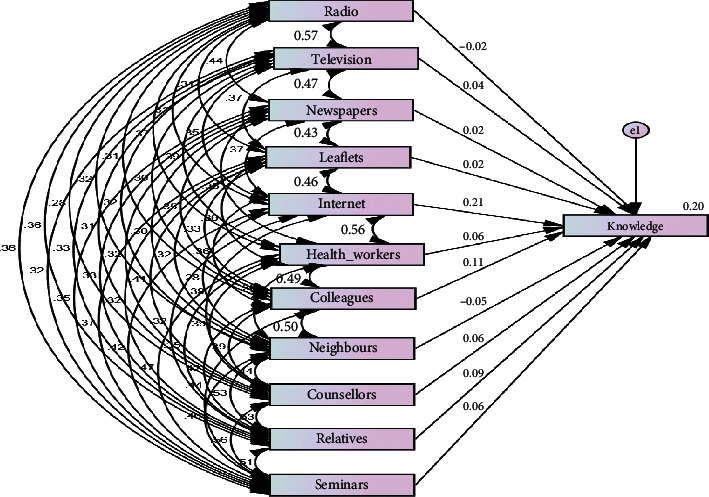
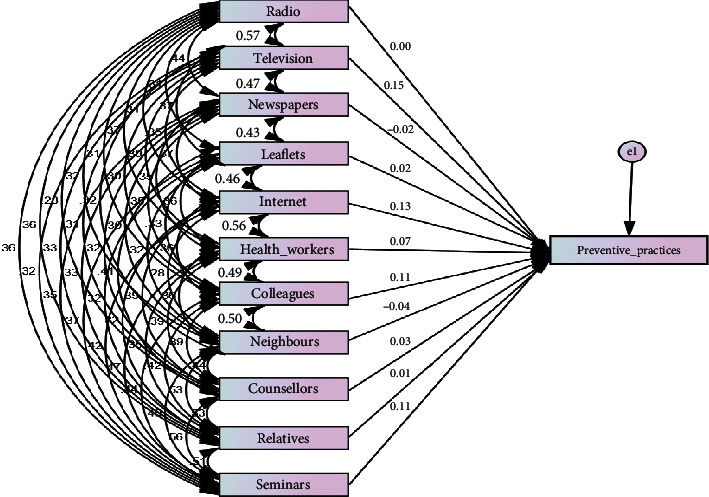
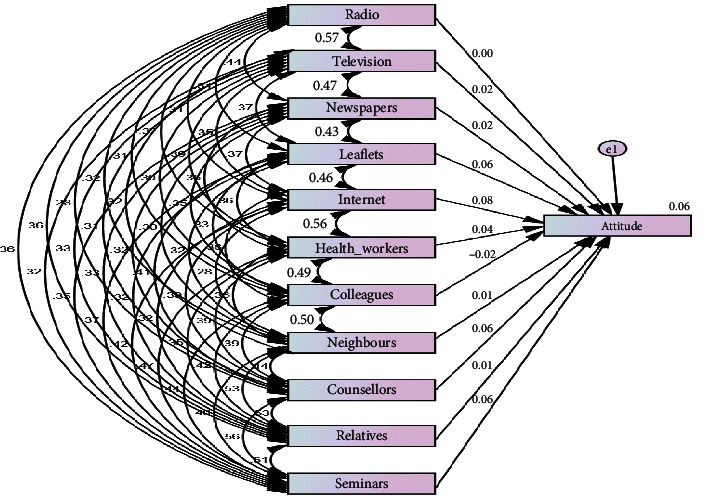
Responding to the international call for strategic information to understand viral hepatitis, this study investigated the health communication practice on hepatitis B virus in Southwest Nigeria. Existing studies on HBV in Nigeria have primarily concentrated on health practitioners and their patients while neglecting detailed empirical data on semiurban and urban demographic information. This study examines health communication channels as predictors of knowledge, attitude, and behavioural practices with an emphasis on three Southwest states (Lagos, Oyo, and Ogun) in Nigeria that have the highest prevalence rate of HBV. Data were gathered through a survey from a total of 600 respondents of Southwest Nigeria randomly selected through the multistage sampling technique. The hypotheses were tested with the use of multiple regression. The result reveals that health communication channels for hepatitis B virus management had a significant influence on knowledge ( = 12.708, Df = 581, < 0.05, Sig. at 0.000), attitude ( = 3.430, Df = 581, < 0.05, Sig. at 0.000), and preventive practices ( = 11.075, Df = 581, < 0.05, Sig. at 0.000) of residents of Southwest Nigeria, respectively. The study concludes that health communication channels such as the television, Internet, radio, newspaper, and health workers positively influence the behavioural practices of residents of Southwest Nigeria. The study recommends the development of a nationwide communication system on HBV targeted at putting an end to the disease in line with the 2030 global elimination objective of Sustainable Development Goal 3.
响应国际上对了解病毒性肝炎的战略信息的呼吁,本研究调查了尼日利亚西南部乙型肝炎病毒的健康传播实践。尼日利亚关于乙型肝炎的现有研究主要集中在卫生工作者及其患者身上,而忽略了关于半城市和城市人口统计信息的详细实证数据。本研究考察了健康传播渠道作为知识、态度和行为实践的预测因素,重点研究了尼日利亚三个西南部州(拉各斯、奥约和奥贡),这些州的乙型肝炎病毒感染率最高。数据通过对随机抽取的尼日利亚西南部共 600 名受访者的调查收集,采用多阶段抽样技术。使用多元回归检验了假设。结果表明,乙型肝炎病毒管理的健康传播渠道对知识( = 12.708,Df = 581, < 0.05,Sig. at 0.000)、态度( = 3.430,Df = 581, < 0.05,Sig. at 0.000)和预防实践( = 11.075,Df = 581, < 0.05,Sig. at 0.000)均有显著影响。该研究得出结论,电视、互联网、广播、报纸和卫生工作者等健康传播渠道均对尼日利亚西南部居民的行为实践产生积极影响。该研究建议建立一个全国性的乙型肝炎病毒传播系统,以符合可持续发展目标 3 中 2030 年全球消除疾病的目标。