Zhang Ruiyang, Zhang Junpeng, Dang Wanyi, Irwin David M, Wang Zhe, Zhang Shuyi
Institute of Equine Sciences, College of Animal Science and Veterinary Medicine, Shenyang Agricultural University, Shenyang, China.
Department of Laboratory Medicine and Pathobiology, University of Toronto, Toronto, ON, Canada.
Front Microbiol. 2020 Dec 4;11:596882. doi: 10.3389/fmicb.2020.596882. eCollection 2020.
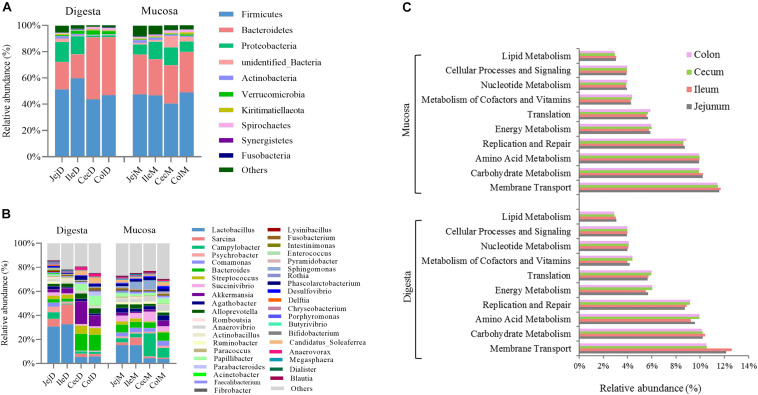
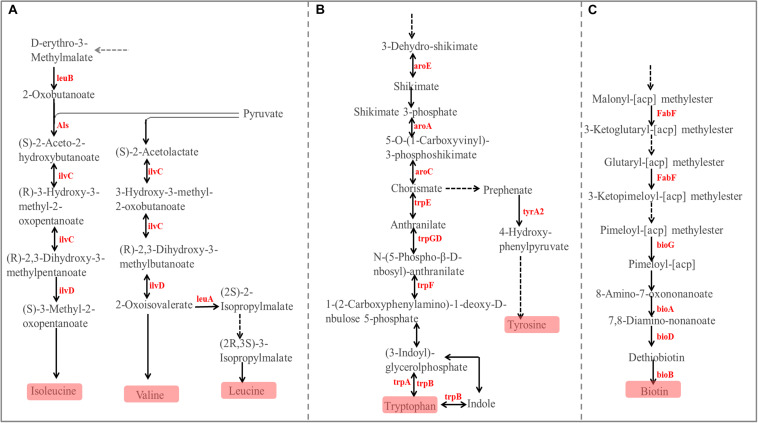
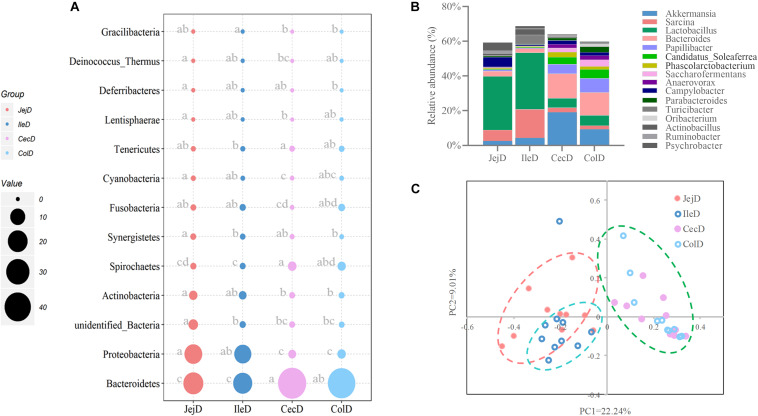
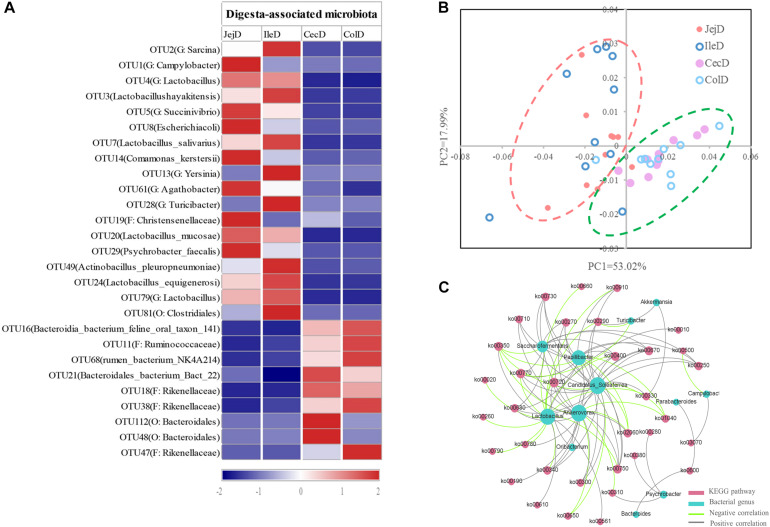
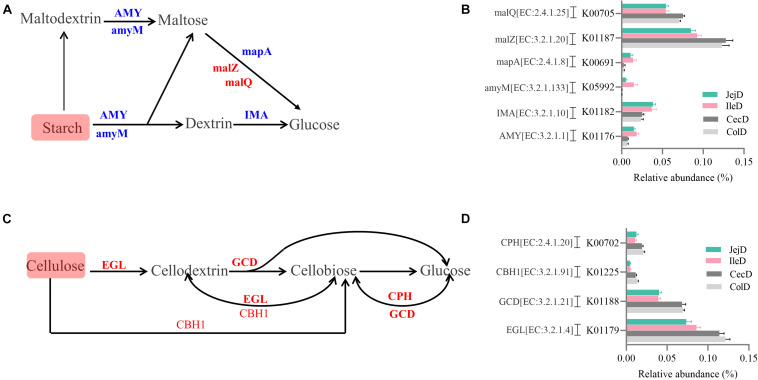
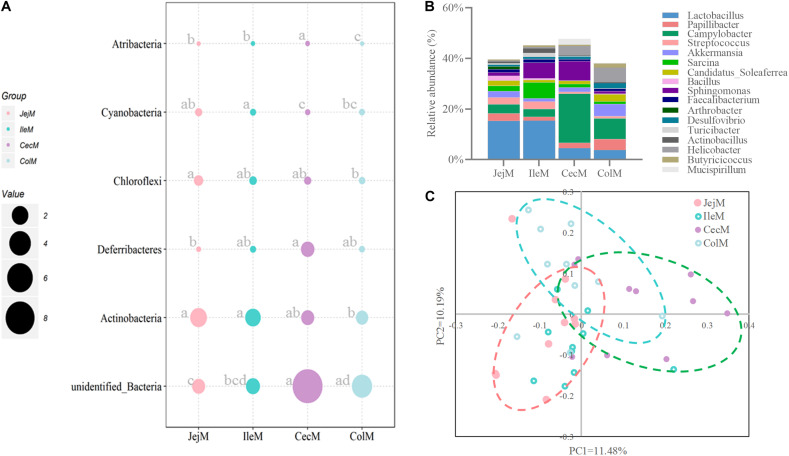
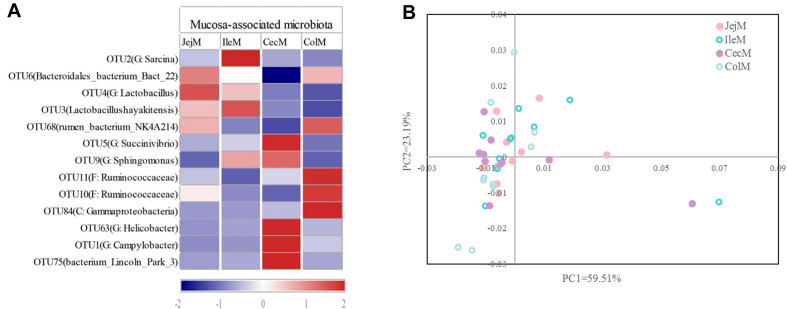
The intestinal microbial composition and metabolic functions under normal physiological conditions in the donkey are crucial for health and production performance. However, compared with other animal species, limited information is currently available regarding the intestinal microbiota of donkeys. In the present study, we characterized the biogeography and potential functions of the intestinal digesta- and mucosa-associated microbiota of different segments of the intestine (jejunum, ileum, cecum, and colon) in the donkey, focusing on the differences in the microbial communities between the small and large intestine. Our results show that, Firmicutes and Bacteroidetes dominate in both the digesta- and mucosa-associated microbiota in different intestinal locations of the donkey. Starch-degrading and acid-producing (butyrate and lactate) microbiota, such as and , were more enriched in the small intestine, while the fiber- and mucin-degrading bacteria, such as , were more enriched in the large intestine. Furthermore, metabolic functions in membrane transport and lipid metabolism were more enriched in the small intestine, while functions for energy metabolism, metabolism of cofactors and vitamins, amino acid metabolism were more enriched in the large intestine. In addition, the microbial composition and functions in the digesta-associated microbiota among intestinal locations differed greatly, while the mucosal differences were smaller, suggesting a more stable and consistent role in the different intestinal locations. This study provides us with new information on the microbial differences between the small and large intestines of the donkey and the synergistic effects of the intestinal microbiota with host functions, which may improve our understanding the evolution of the equine digestive system and contribute to the healthy and efficient breeding of donkeys.
正常生理条件下驴的肠道微生物组成和代谢功能对其健康和生产性能至关重要。然而,与其他动物物种相比,目前关于驴肠道微生物群的信息有限。在本研究中,我们对驴肠道不同节段(空肠、回肠、盲肠和结肠)的食糜和黏膜相关微生物群的生物地理学和潜在功能进行了表征,重点关注小肠和大肠微生物群落的差异。我们的结果表明,厚壁菌门和拟杆菌门在驴不同肠道部位的食糜和黏膜相关微生物群中均占主导地位。淀粉降解和产酸(丁酸和乳酸)微生物群,如 和 ,在小肠中更为丰富,而纤维和黏蛋白降解细菌,如 ,在大肠中更为丰富。此外,膜转运和脂质代谢的代谢功能在小肠中更为丰富,而能量代谢、辅因子和维生素代谢、氨基酸代谢的功能在大肠中更为丰富。此外,不同肠道部位食糜相关微生物群的微生物组成和功能差异很大,而黏膜差异较小,这表明在不同肠道部位具有更稳定和一致的作用。本研究为我们提供了关于驴小肠和大肠微生物差异以及肠道微生物群与宿主功能协同作用的新信息,这可能会增进我们对马属动物消化系统进化的理解,并有助于驴的健康高效养殖。