Takahashi-Nakaguchi Azusa, Shishido Erika, Yahara Misa, Urayama Syun-Ichi, Ninomiya Akihiro, Chiba Yuto, Sakai Kanae, Hagiwara Daisuke, Chibana Hiroji, Moriyama Hiromitsu, Gonoi Tohru
Medical Mycology Research Center, Chiba University, Chiba, Japan.
Faculty of Life and Environmental Sciences, University of Tsukuba, Tsukuba, Japan.
Front Microbiol. 2020 Dec 11;11:607795. doi: 10.3389/fmicb.2020.607795. eCollection 2020.
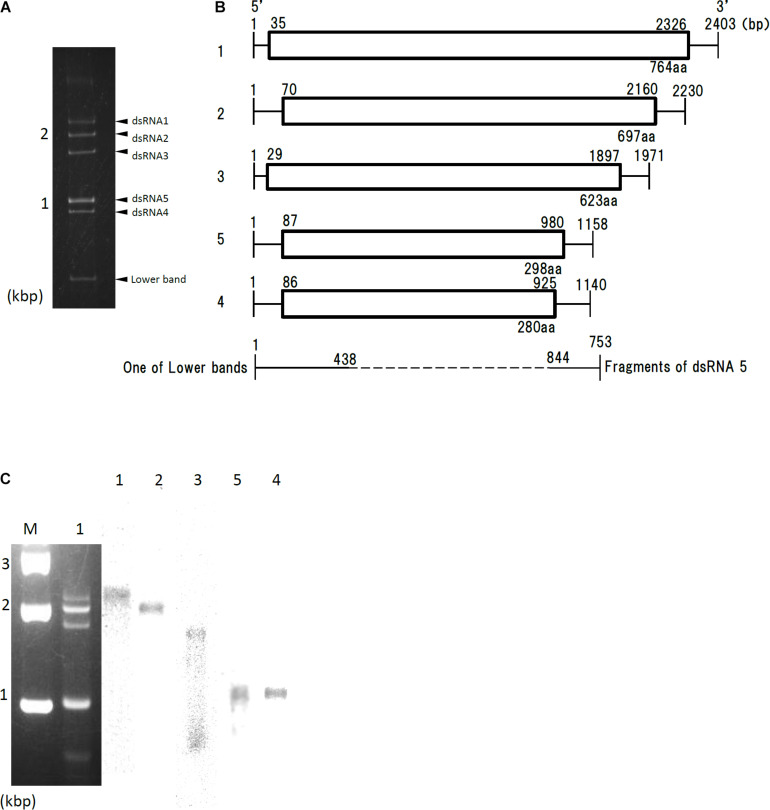
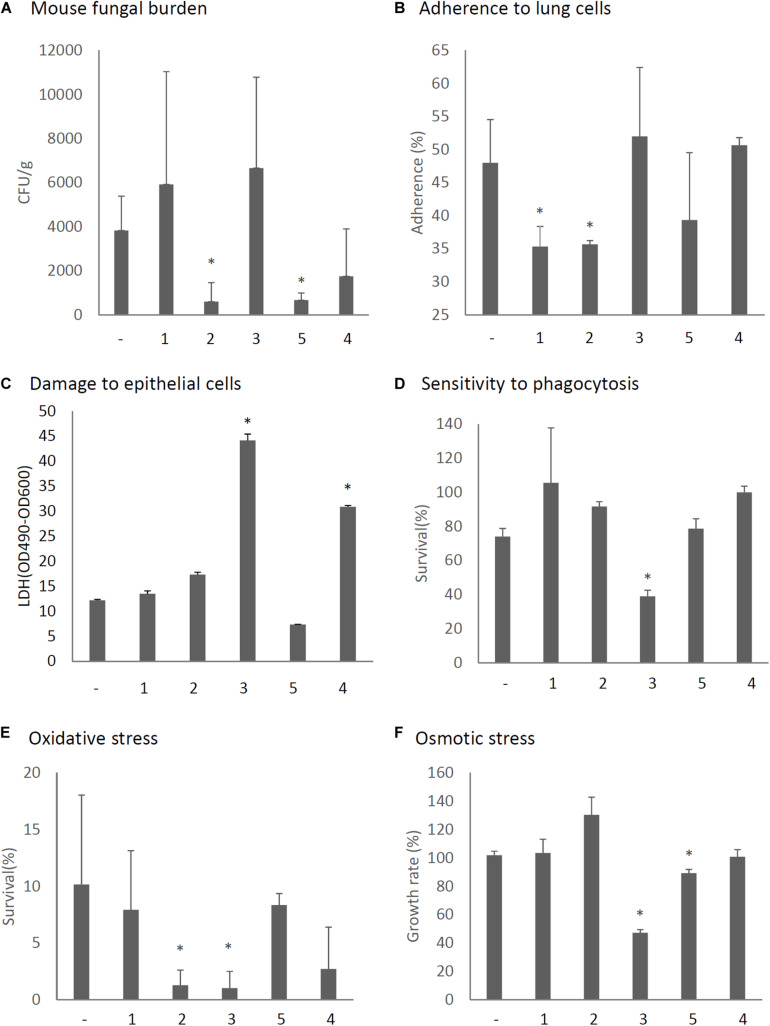
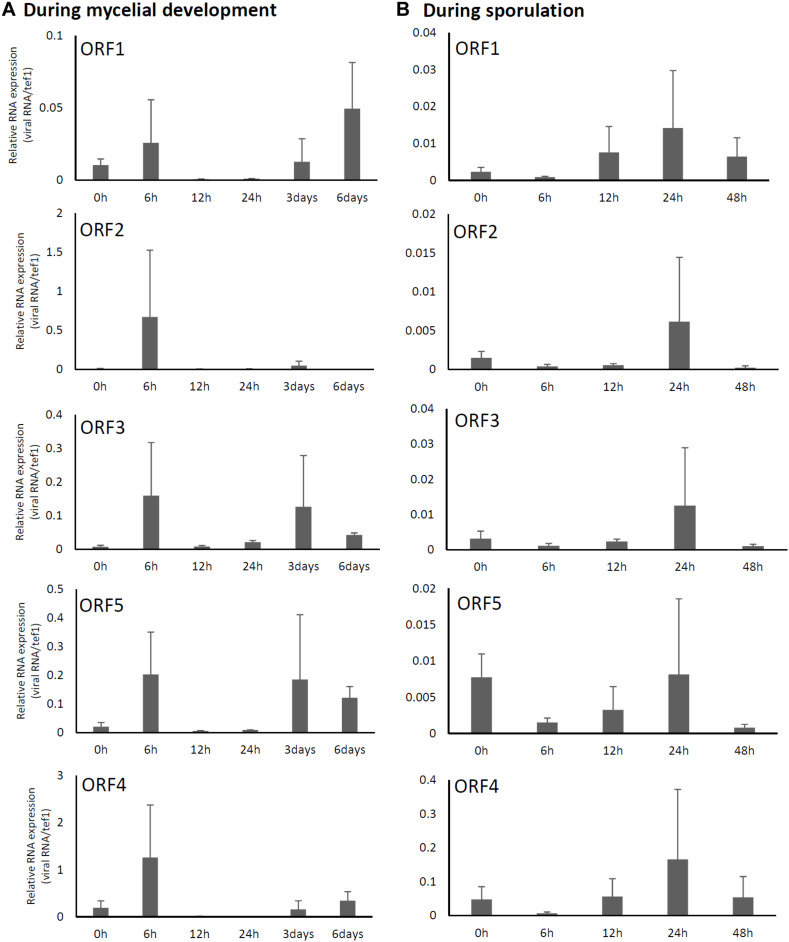
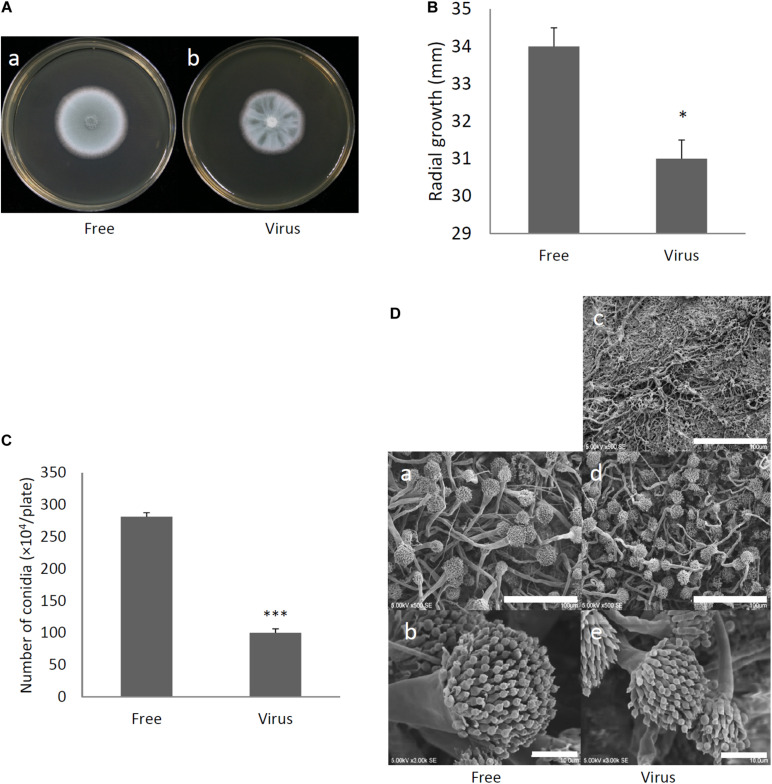
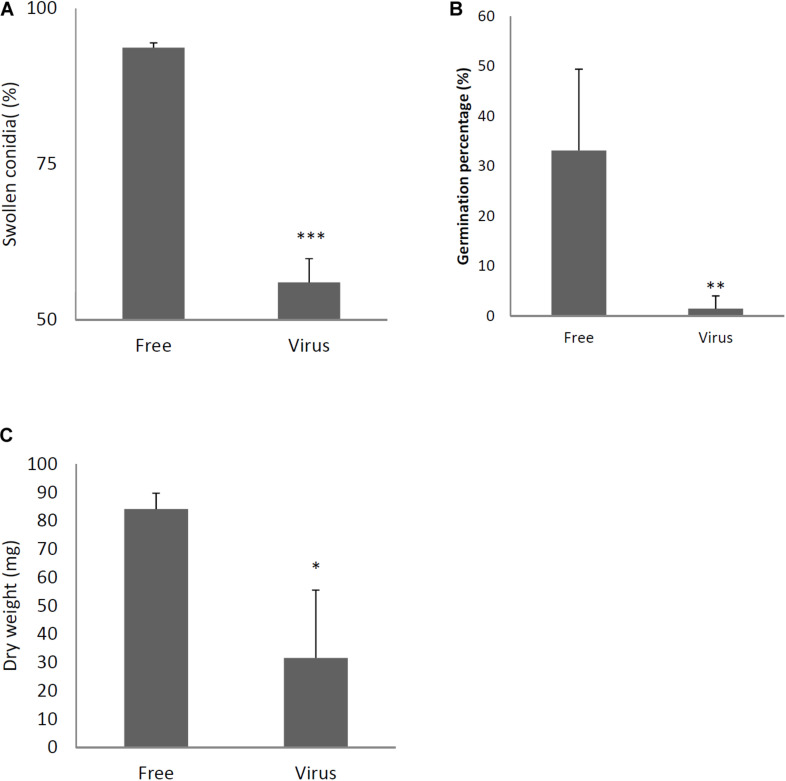
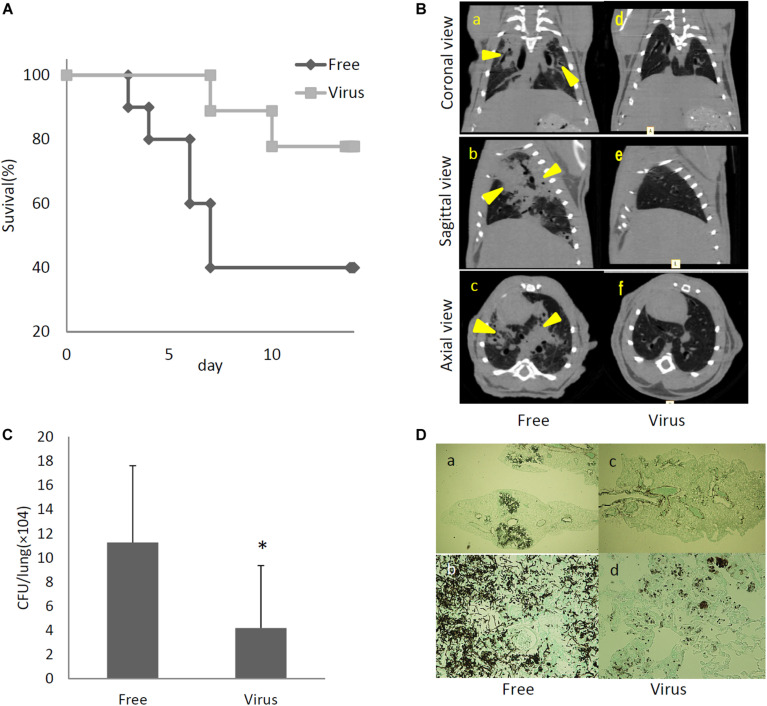
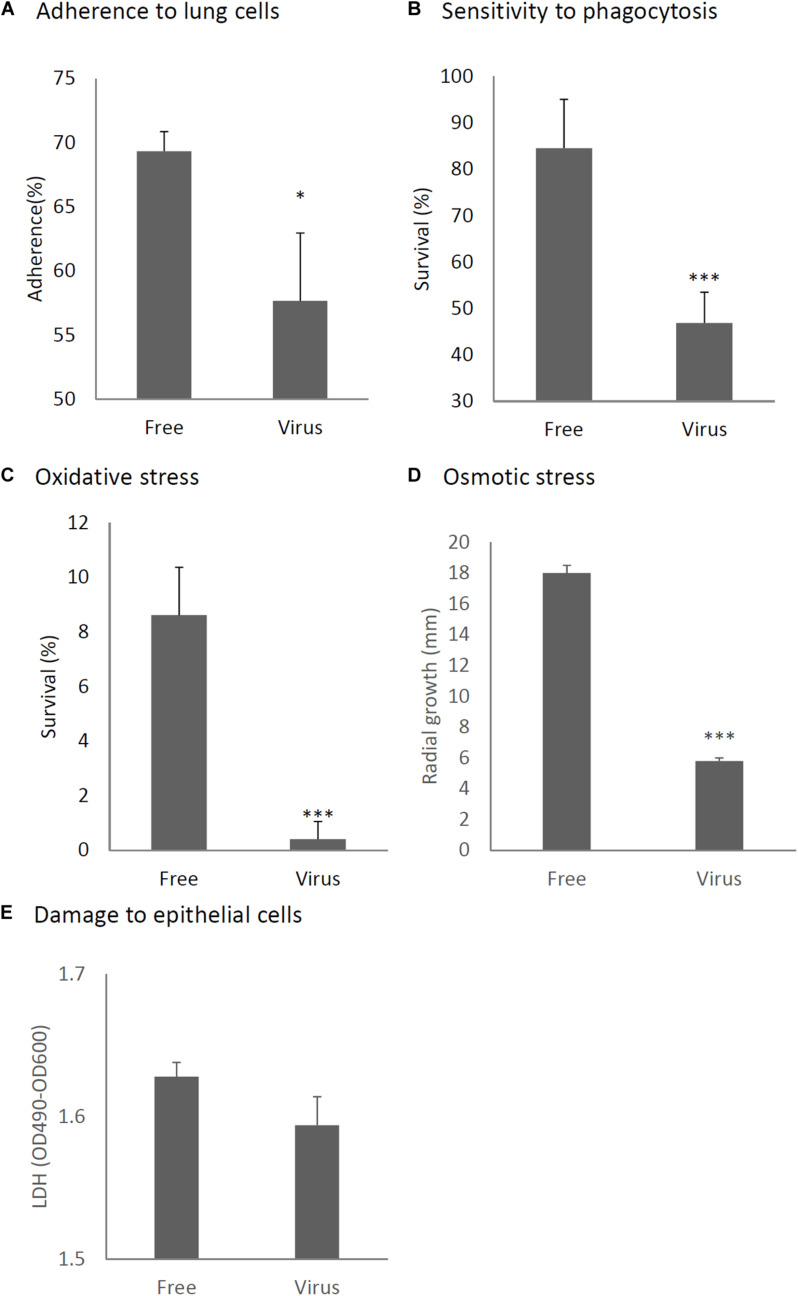
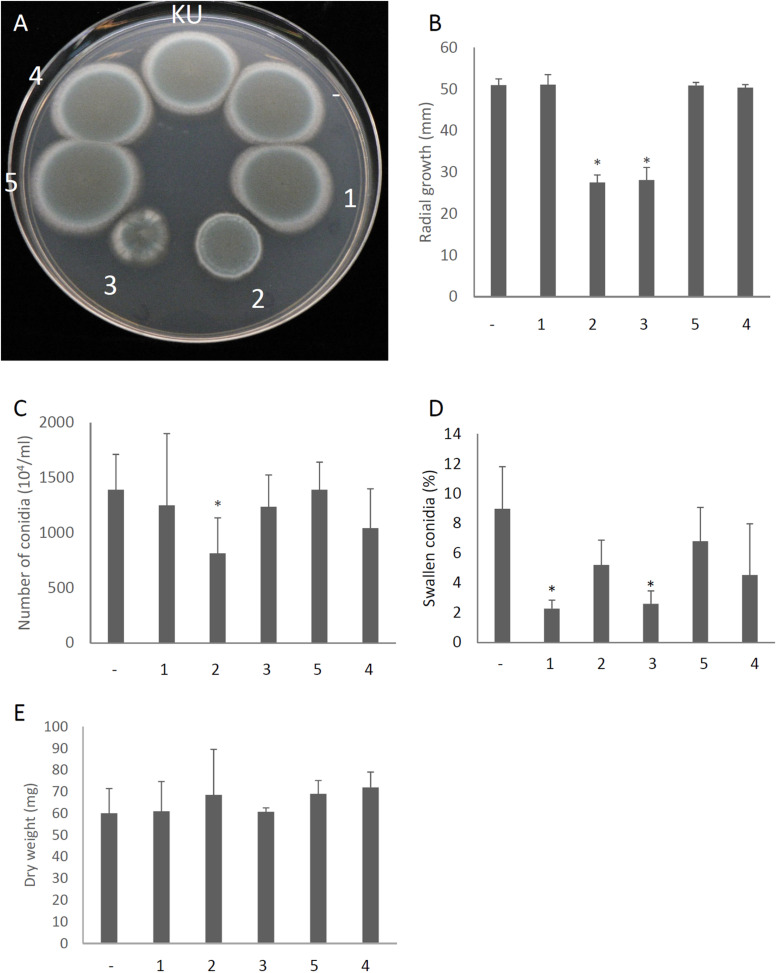
The filamentous fungal pathogen is one of the most common causal agents of invasive fungal infection in humans; the infection is associated with an alarmingly high mortality rate. In this study, we investigated whether a mycovirus, named AfuPmV-1M, can reduce the virulence of in a mouse infection model. AfuPmV-1M has high sequence similarity to AfuPmV-1, one of the polymycovirus that is a capsidless four-segment double-stranded RNA (dsRNA) virus, previously isolated from the genome reference strain of , Af293. However, we found the isolate had an additional fifth dsRNA segment, referred to as open reading frame 5 (ORF5), which has not been reported in AfuPmV-1. We then established isogenic lines of virus-infected and virus-free strains. Mycovirus infection had apparent influences on fungal phenotypes, with the virus-infected strain producing a reduced mycelial mass and reduced conidial number in comparison with these features of the virus-free strain. Also, resting conidia of the infected strain showed reduced adherence to pulmonary epithelial cells and reduced tolerance to macrophage phagocytosis. In an immunosuppressed mouse infection model, the virus-infected strain showed reduced mortality in comparison with mortality due to the virus-free strain. RNA sequencing and high-performance liquid chromatography (HPLC) analysis showed that the virus suppressed the expression of genes for gliotoxin synthesis and its production at the mycelial stage. Conversely, the virus enhanced gene expression and biosynthesis of fumagillin. Viral RNA expression was enhanced during conidial maturation, conidial germination, and the mycelial stage. We presume that the RNA or translation products of the virus affected fungal phenotypes, including spore formation and toxin synthesis. To identify the mycovirus genes responsible for attenuation of fungal virulence, each viral ORF was ectopically expressed in the virus-free KU strain. We found that the expression of ORF2 and ORF5 reduced fungal virulence in the mouse model. In addition, ORF3 affected the stress tolerance of host in culture. We hypothesize that the respective viral genes work cooperatively to suppress the pathogenicity of the fungal host.
丝状真菌病原体是人类侵袭性真菌感染最常见的病原体之一;这种感染与高得惊人的死亡率相关。在本研究中,我们调查了一种名为AfuPmV - 1M的真菌病毒是否能在小鼠感染模型中降低[病原体名称未给出]的毒力。AfuPmV - 1M与AfuPmV - 1具有高度的序列相似性,AfuPmV - 1是一种多节段病毒,是一种无衣壳的四段双链RNA(dsRNA)病毒,先前从[病原体名称未给出]的基因组参考菌株Af293中分离得到。然而,我们发现该分离株有一个额外的第五个dsRNA片段,称为开放阅读框5(ORF5),这在AfuPmV - 1中尚未见报道。然后我们建立了病毒感染和无病毒的[菌株名称未给出]菌株的同基因系。真菌病毒感染对真菌表型有明显影响,与无病毒菌株相比,病毒感染菌株产生的菌丝体质量减少,分生孢子数量减少。此外,感染菌株的静止分生孢子对肺上皮细胞的黏附减少,对巨噬细胞吞噬的耐受性降低。在免疫抑制小鼠感染模型中,与无病毒菌株导致的死亡率相比,病毒感染菌株的死亡率降低。RNA测序和高效液相色谱(HPLC)分析表明,该病毒在菌丝体阶段抑制了Gliotoxin合成相关基因的表达及其产生。相反,该病毒增强了烟曲霉毒素的基因表达和生物合成。在分生孢子成熟、分生孢子萌发和菌丝体阶段,病毒RNA表达增强。我们推测该病毒的RNA或翻译产物影响了真菌表型,包括孢子形成和毒素合成。为了鉴定负责真菌毒力减弱的真菌病毒基因,每个病毒ORF在无病毒的KU菌株中异位表达。我们发现在小鼠模型中,ORF2和ORF5的表达降低了真菌毒力。此外,ORF3影响宿主[菌株名称未给出]在培养中的应激耐受性。我们假设各个病毒基因协同作用以抑制真菌宿主的致病性。