Gao Yuqian, Fillmore Thomas L, Munoz Nathalie, Bentley Gayle J, Johnson Christopher W, Kim Joonhoon, Meadows Jamie A, Zucker Jeremy D, Burnet Meagan C, Lipton Anna K, Bilbao Aivett, Orton Daniel J, Kim Young-Mo, Moore Ronald J, Robinson Errol W, Baker Scott E, Webb-Robertson Bobbie-Jo M, Guss Adam M, Gladden John M, Beckham Gregg T, Magnuson Jon K, Burnum-Johnson Kristin E
Department of Energy, Agile BioFoundry, Emeryville, CA, United States.
Pacific Northwest National Laboratory, Richland, WA, United States.
Front Bioeng Biotechnol. 2020 Dec 2;8:603488. doi: 10.3389/fbioe.2020.603488. eCollection 2020.
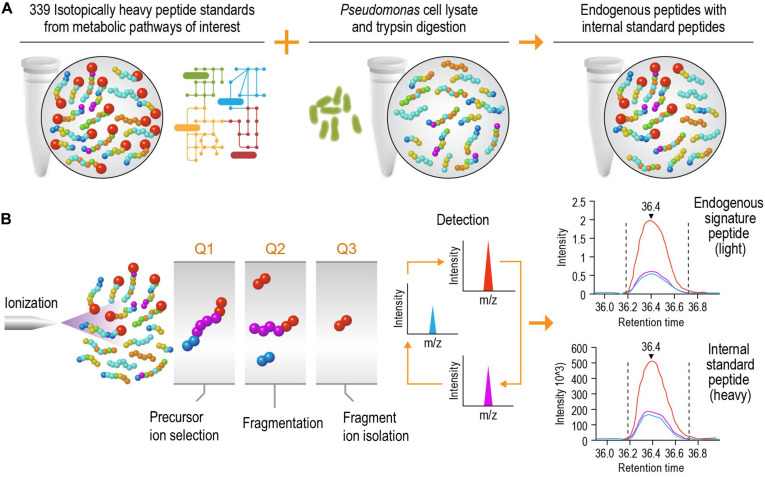
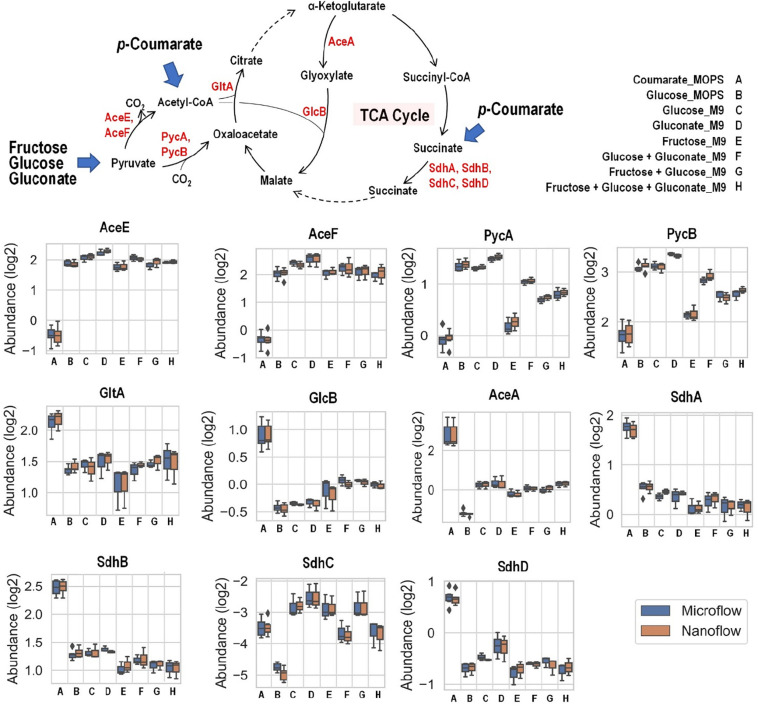
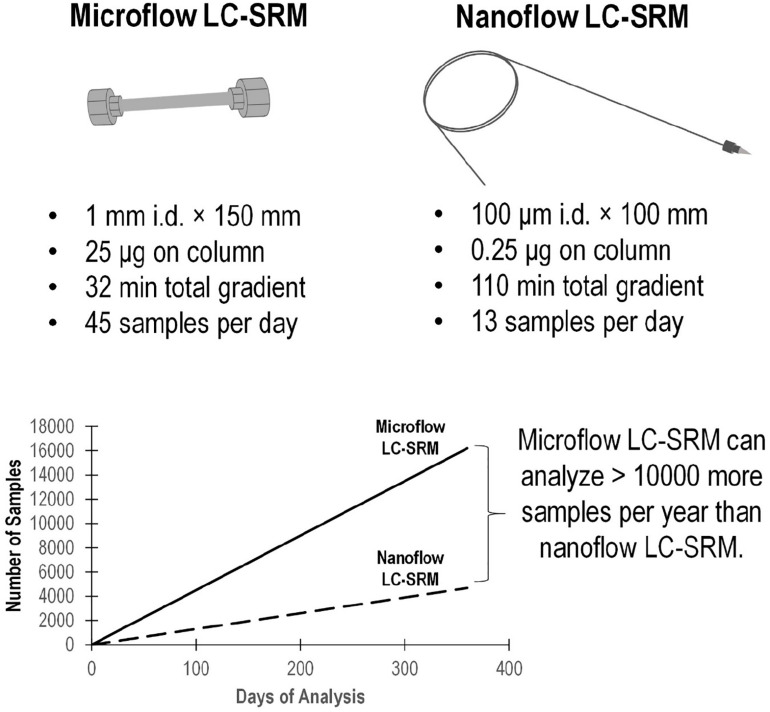
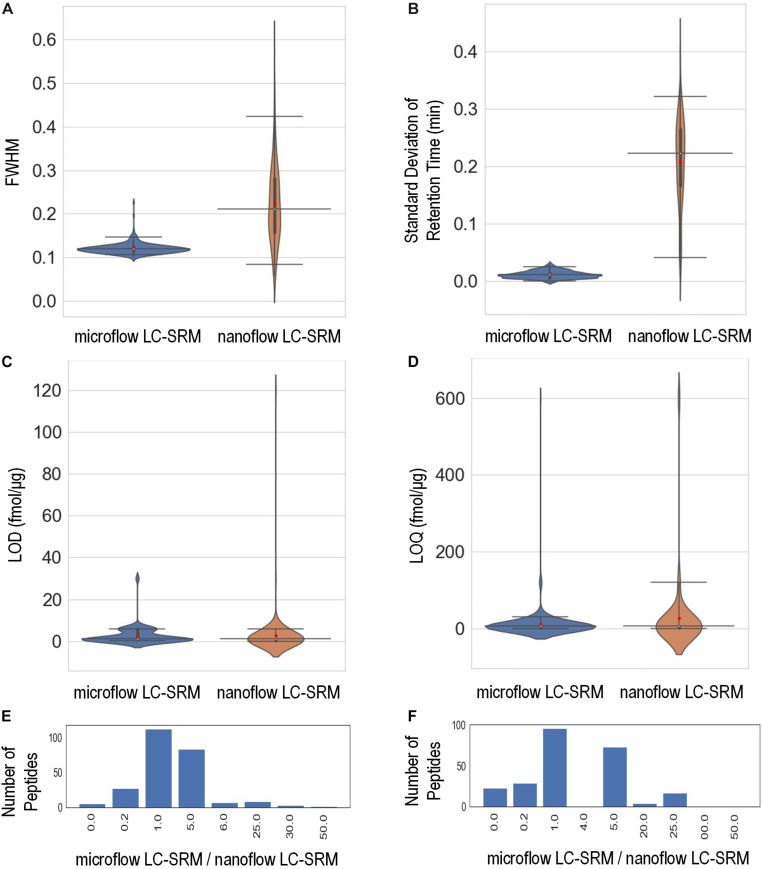
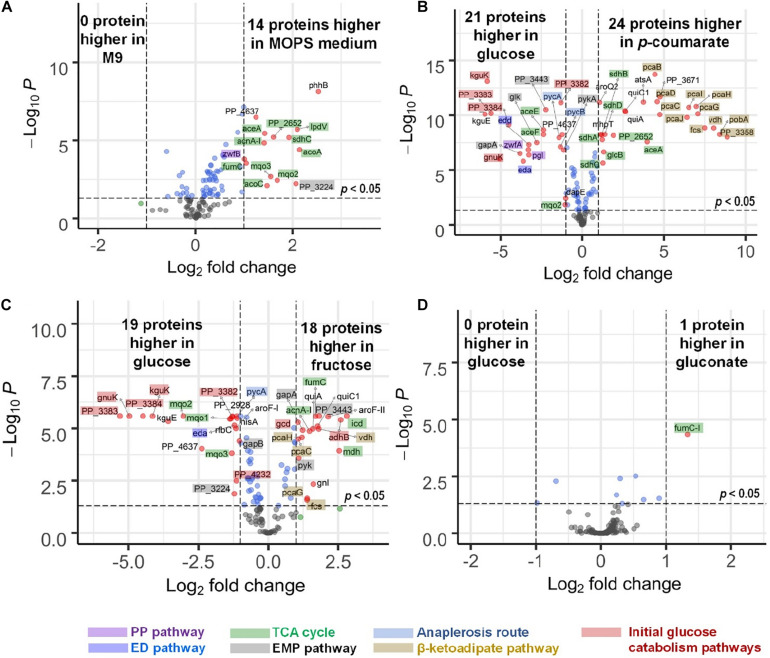
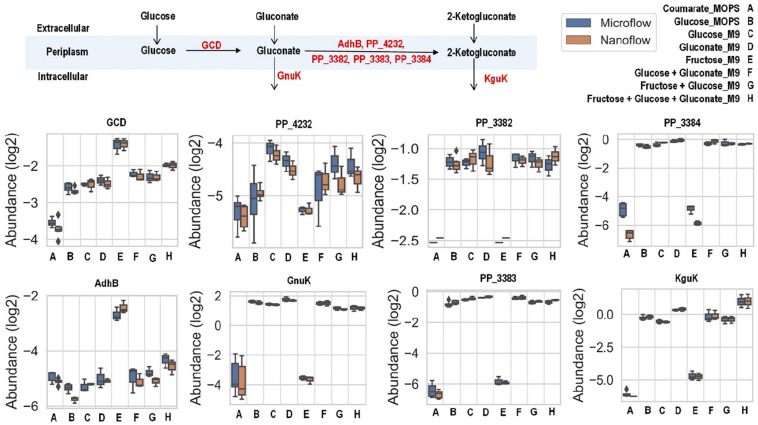
Targeted proteomics is a mass spectrometry-based protein quantification technique with high sensitivity, accuracy, and reproducibility. As a key component in the multi-omics toolbox of systems biology, targeted liquid chromatography-selected reaction monitoring (LC-SRM) measurements are critical for enzyme and pathway identification and design in metabolic engineering. To fulfill the increasing need for analyzing large sample sets with faster turnaround time in systems biology, high-throughput LC-SRM is greatly needed. Even though nanoflow LC-SRM has better sensitivity, it lacks the speed offered by microflow LC-SRM. Recent advancements in mass spectrometry instrumentation significantly enhance the scan speed and sensitivity of LC-SRM, thereby creating opportunities for applying the high speed of microflow LC-SRM without losing peptide multiplexing power or sacrificing sensitivity. Here, we studied the performance of microflow LC-SRM relative to nanoflow LC-SRM by monitoring 339 peptides representing 132 enzymes in KT2440 grown on various carbon sources. The results from the two LC-SRM platforms are highly correlated. In addition, the response curve study of 248 peptides demonstrates that microflow LC-SRM has comparable sensitivity for the majority of detected peptides and better mass spectrometry signal and chromatography stability than nanoflow LC-SRM.
靶向蛋白质组学是一种基于质谱的蛋白质定量技术,具有高灵敏度、准确性和可重复性。作为系统生物学多组学工具箱中的关键组成部分,靶向液相色谱-选择反应监测(LC-SRM)测量对于代谢工程中的酶和途径鉴定及设计至关重要。为满足系统生物学中对更快周转时间分析大量样本集的日益增长的需求,高通量LC-SRM非常必要。尽管纳流LC-SRM具有更好的灵敏度,但它缺乏微流LC-SRM所提供的速度。质谱仪器的最新进展显著提高了LC-SRM的扫描速度和灵敏度,从而为应用微流LC-SRM的高速性能创造了机会,同时又不损失肽段多路复用能力或牺牲灵敏度。在此,我们通过监测在各种碳源上生长的KT2440中代表132种酶的339个肽段,研究了微流LC-SRM相对于纳流LC-SRM的性能。两个LC-SRM平台的结果高度相关。此外,对248个肽段的响应曲线研究表明,微流LC-SRM对大多数检测到的肽段具有可比的灵敏度,并且比纳流LC-SRM具有更好的质谱信号和色谱稳定性。