Paiva Lisete, Lima Elisabete, Motta Madalena, Marcone Massimo, Baptista José
Gorreana Tea Plantation, Gorreana, 9625-304 Maia, São Miguel, Azores, Portugal.
Department of Physics, Chemistry and Engineering (DCFQE) and Biotechnology Centre of Azores (CBA), University of Azores, 9500-321 Ponta Delgada, São Miguel, Azores, Portugal.
Curr Res Food Sci. 2020 Aug 15;3:227-234. doi: 10.1016/j.crfs.2020.07.004. eCollection 2020 Nov.
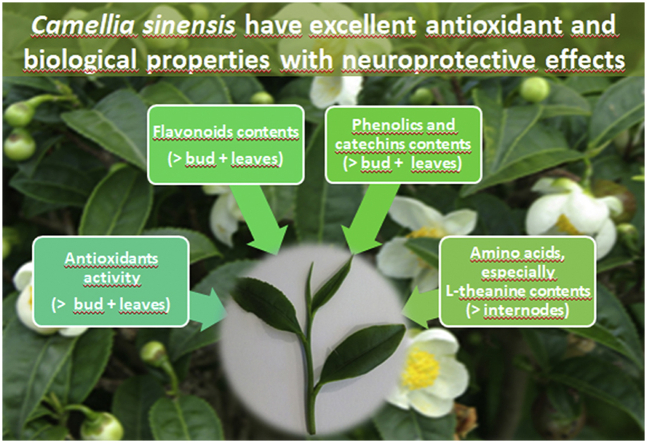
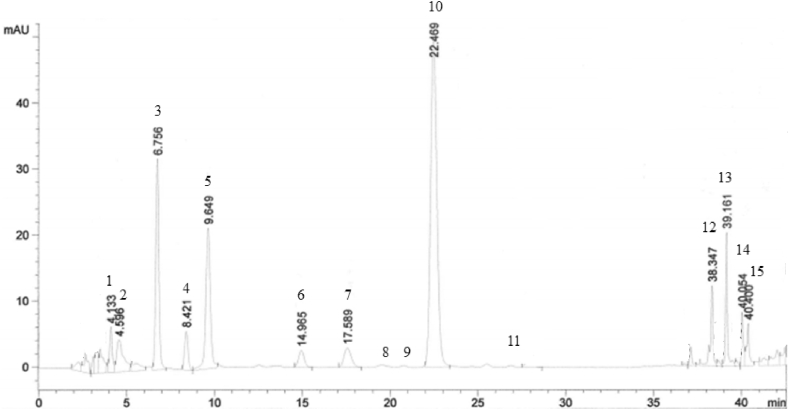
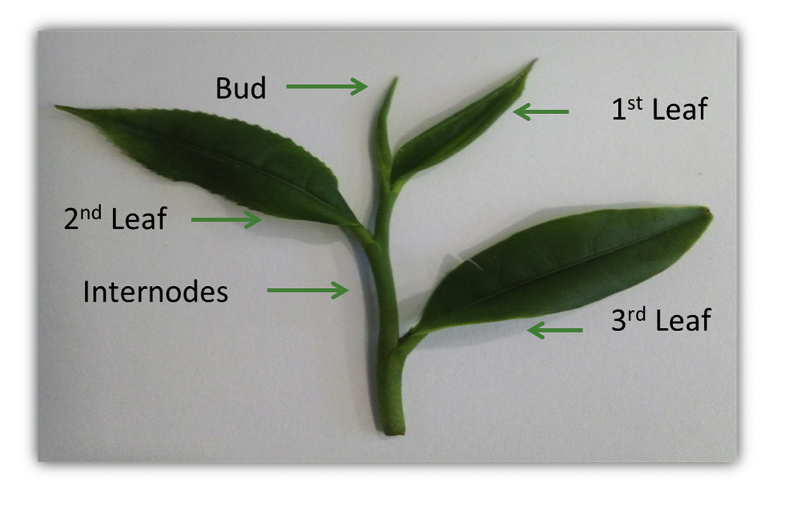
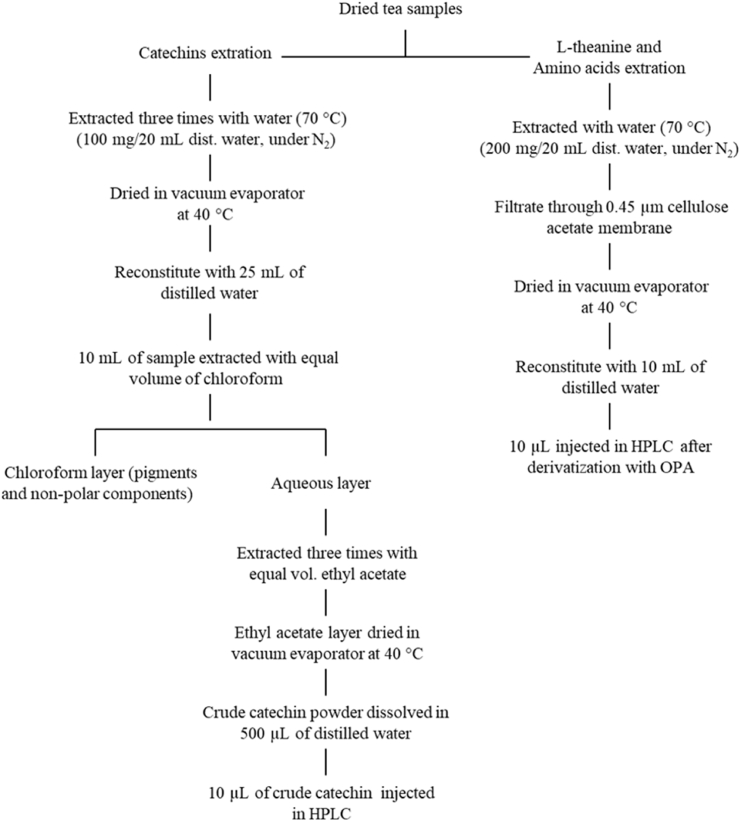
During tea processing, manufacturers usually remove the internodes, which are classified as waste. This study presents the first determination of plant part contribution, particularly internodes, to green tea quality, in order to find the best blend to maximize impact on human health. Catechins, caffeine and free amino acid (FAA) profiles were determined by RP-HPLC/DAD, total phenolics (TPC) and total flavonoids (TFC) by Folin-Ciocalteu and colorimetric methodologies, respectively, and antioxidant activities by free radical-scavenging activity (FRSA), ferric-reducing antioxidant power (FRAP) and ferrous ion-chelating (FIC) methods. Individual esterified catechins content decreased as follows: epicatechin-3-gallate > epigallocatechin-3-gallate ≫ gallocatecin-3-gallate, and epicatechin derivatives content ranged from 63.91 to 91.22% of total catechins. Caffeine content was higher in internodes. L-theanine, histidine, asparagine, phenylalanine, glutamic acid and methionine were the major FAAs, and internodes contained the highest amounts of L-theanine and histidine (17 and 13.73 mg/g of sample, respectively). TPC ranged from 201.51 to 265.48 mg gallic acid equivalents/g dry extract (DE) and TFC ranged from 23.84 to 72.02 mg rutin equivalents/g DE. Internodes presented the lowest FRSA (EC = 6.10-13.50 μg/mL), FRAP (EC = 5.70-11.40 μg/mL) and FIC activity (36.96-79.21%). Bud presented the highest FRSA and FRAP, and bud+1st+2leaves + internodes the highest FIC activity. The results revealed the potential contribution of the internodes to green tea quality and, consequently, to human health.
在茶叶加工过程中,制造商通常会去除被归类为废料的节间。本研究首次确定了植物各部分,特别是节间对绿茶品质的贡献,以便找到最佳混合比例,以最大程度地影响人体健康。分别采用反相高效液相色谱/二极管阵列检测法(RP-HPLC/DAD)测定儿茶素、咖啡因和游离氨基酸(FAA)的含量,采用福林-酚法和比色法分别测定总酚(TPC)和总黄酮(TFC)的含量,并采用自由基清除活性(FRSA)、铁还原抗氧化能力(FRAP)和亚铁离子螯合(FIC)法测定抗氧化活性。各酯化儿茶素含量下降顺序如下:表儿茶素-3-没食子酸酯>表没食子儿茶素-3-没食子酸酯≫ 没食子儿茶素-3-没食子酸酯,表儿茶素衍生物含量占总儿茶素的63.91%至91.22%。节间中的咖啡因含量较高。L-茶氨酸、组氨酸、天冬酰胺、苯丙氨酸、谷氨酸和蛋氨酸是主要的游离氨基酸,节间中L-茶氨酸和组氨酸含量最高(分别为17和13.73mg/g样品)。总酚含量范围为201.51至265.48mg没食子酸当量/g干提取物(DE),总黄酮含量范围为23.84至72.02mg芦丁当量/g DE。节间的自由基清除活性(EC=6.10-13.50μg/mL)、铁还原抗氧化能力(EC=5.70-11.40μg/mL)和亚铁离子螯合活性(36.96-79.21%)最低。芽的自由基清除活性和铁还原抗氧化能力最高,芽+第一叶+第二叶+节间的亚铁离子螯合活性最高。结果揭示了节间对绿茶品质以及对人体健康的潜在贡献。