Feng Jingnan, Wang Li, Chen Yijun, Wang Peiyu, Zhang Hanrui, He Xiangming
Department of Applied Physics and Applied Mathematics, Columbia University, New York, NY, 10027, USA.
Institute of Nuclear and New Energy Technology, Tsinghua University, Beijing, 100084, China.
Nano Converg. 2021 Jan 10;8(1):2. doi: 10.1186/s40580-020-00252-5.
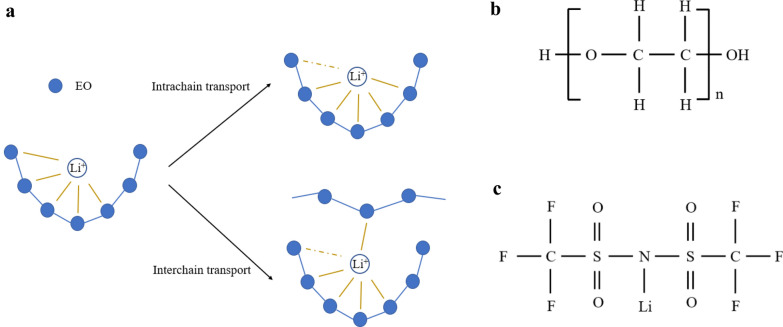
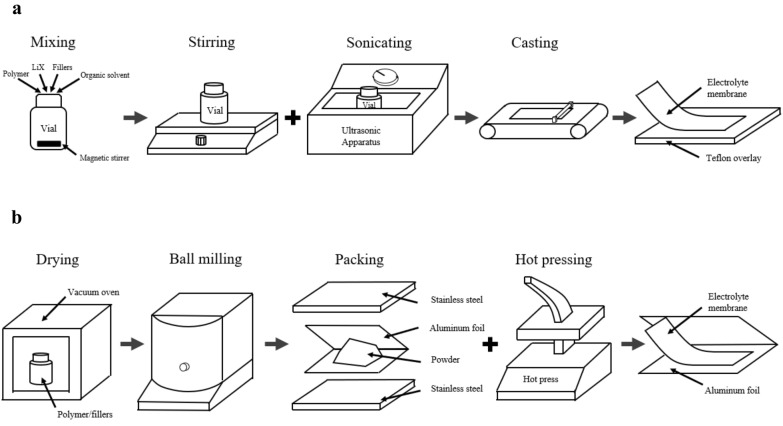
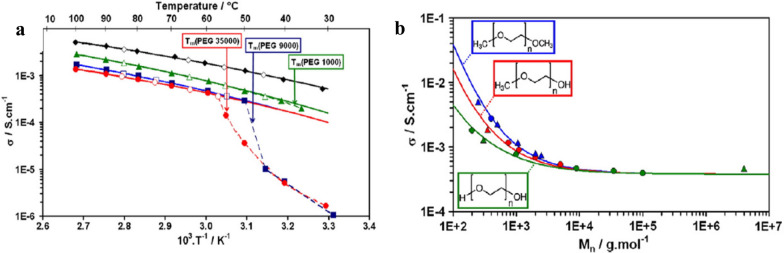
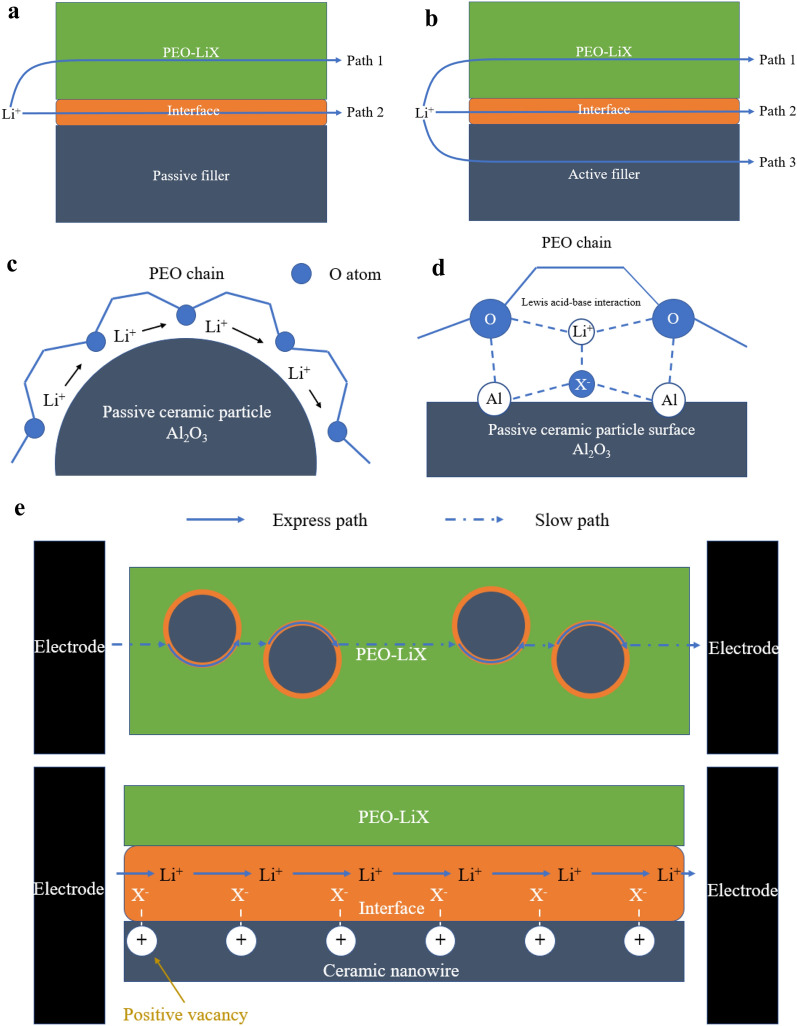
Compared with traditional lead-acid batteries, nickel-cadmium batteries and nickel-hydrogen batteries, lithium-ion batteries (LIBs) are much more environmentally friendly and much higher energy density. Besides, LIBs own the characteristics of no memory effect, high charging and discharging rate, long cycle life and high energy conversion rate. Therefore, LIBs have been widely considered as the most promising power source for mobile devices. Commonly used LIBs contain carbonate based liquid electrolytes. Such electrolytes own high ionic conductivity and excellent wetting ability. However, the use of highly flammable and volatile organic solvents in them may lead to problems like leakage, thermo runaway and parasitic interface reactions, which limit their application. Solid polymer electrolytes (SPEs) can solve these problems, while they also bring new challenges such as poor interfacial contact with electrodes and low ionic conductivity at room temperature. Many approaches have been tried to solve these problems. This article is divided into three parts to introduce polyethylene oxide (PEO) based polymer-ceramic hybrid solid electrolyte, which is one of the most efficient way to improve the performance of SPEs. The first part focuses on polymer-lithium salt (LiX) matrices, including their ionic conduction mechanism and impact factors for their ionic conductivity. In the second part, the influence of both active and passive ceramic fillers on SPEs are reviewed. In the third part, composite SPEs' preparation methods, including solvent casting and thermocompression, are introduced and compared. Finally, we propose five key points on how to make composite SPEs with high ionic conductivity for reference.
与传统的铅酸电池、镍镉电池和镍氢电池相比,锂离子电池对环境更加友好,能量密度也更高。此外,锂离子电池具有无记忆效应、充放电速率高、循环寿命长和能量转换率高的特点。因此,锂离子电池被广泛认为是移动设备最有前途的电源。常用的锂离子电池包含碳酸盐基液体电解质。这种电解质具有高离子电导率和优异的润湿性。然而,其中使用的高度易燃和易挥发的有机溶剂可能会导致泄漏、热失控和寄生界面反应等问题,这限制了它们的应用。固体聚合物电解质(SPEs)可以解决这些问题,但它们也带来了新的挑战,如与电极的界面接触不良以及室温下离子电导率低。人们已经尝试了许多方法来解决这些问题。本文分为三个部分介绍聚环氧乙烷(PEO)基聚合物-陶瓷混合固体电解质,这是提高固体聚合物电解质性能最有效的方法之一。第一部分重点介绍聚合物-锂盐(LiX)基体,包括它们的离子传导机制及其离子电导率的影响因素。第二部分综述了活性和非活性陶瓷填料对固体聚合物电解质的影响。第三部分介绍并比较了复合固体聚合物电解质的制备方法,包括溶液浇铸和热压。最后,我们提出了关于如何制备具有高离子电导率的复合固体聚合物电解质的五个要点以供参考。