Elizabeth Garrett Anderson Institute for Women's Health, University College London, London, UK.
Department of Development and Regeneration, Cluster Woman and Child, Biomedical Sciences, KU Leuven, Leuven, Belgium.
Prenat Diagn. 2021 Feb;41(3):283-300. doi: 10.1002/pd.5887. Epub 2021 Jan 11.
We performed a systematic review to summarize the efficacy and safety of in utero stem cells application in preclinical models with myelomeningocele (MMC).
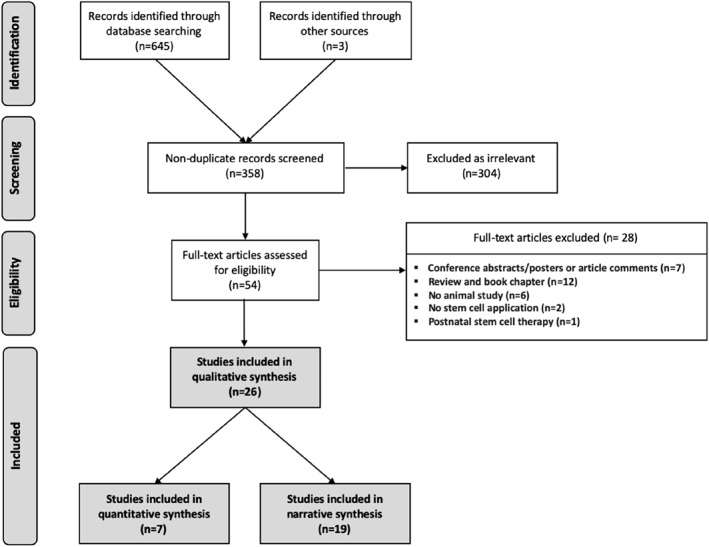
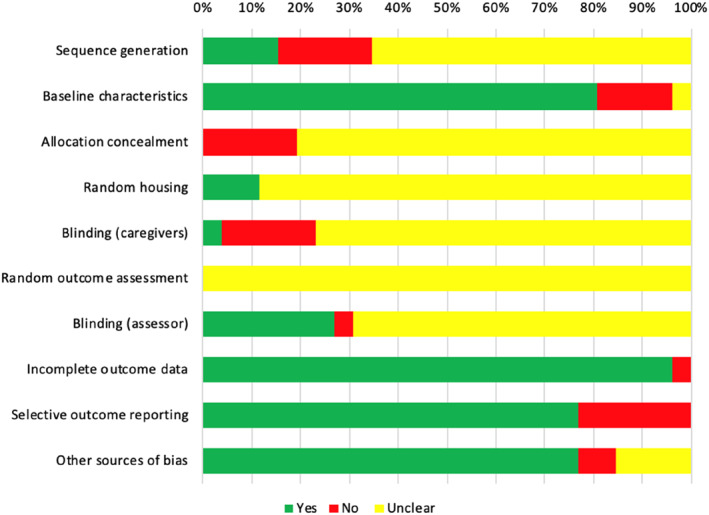
The study was registered with PROSPERO (CRD42019160399). We searched MEDLINE, Embase, Web of Science, Scopus and CENTRAL for publications articles on stem cell therapy in animal fetuses with MMC until May 2020. Publication quality was assessed by the SYRCLE's tool. Meta-analyses were pooled if studies were done in the same animal model providing similar type of stem cell used and outcome measurements. Narrative synthesis was performed for studies that could not be pooled.
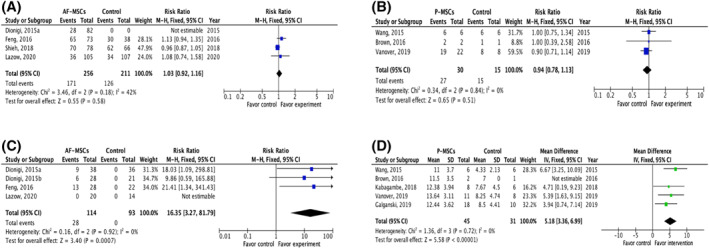
Nineteen and seven studies were included in narrative and quantitative syntheses, respectively. Most used mesenchymal stem cells (MSCs) and primarily involved ovine and rodent models. Both intra-amniotic injection of allogeneic amniotic fluid (AF)-MSCs in rat MMC model and the application of human placental (P)-MSCs to the spinal cord during fetal surgery in MMC ovine model did not compromise fetal survival rates at term (rat model, relative risk [RR] 1.03, 95% CI 0.92-1.16; ovine model, RR 0.94, 95% CI 0.78-1.13). A single intra-amniotic injection of allogeneic AF-MSCs into rat MMC model was associated with a higher rate of complete defect coverage compared to saline injection (RR 16.35, 95% CI 3.27-81.79). The incorporation of human P-MSCs as a therapeutic adjunct to fetal surgery in the ovine MMC model significantly improved sheep locomotor rating scale after birth (mean difference 5.18, 95% CI 3.36-6.99).
Stem cell application during prenatal period in preclinical animal models is safe and effective.
我们进行了一项系统评价,总结了在脊髓脊膜膨出(MMC)的临床前模型中应用胎儿干细胞的疗效和安全性。
本研究已在 PROSPERO(CRD42019160399)上注册。我们检索了 MEDLINE、Embase、Web of Science、Scopus 和 CENTRAL 中截至 2020 年 5 月关于 MMC 动物胎儿干细胞治疗的出版物。使用 SYRCLE 工具评估研究质量。如果研究在相同的动物模型中进行,使用了类似类型的干细胞和相同的结局测量方法,则进行荟萃分析。对于无法进行荟萃分析的研究,进行了叙述性综合分析。
分别有 19 项和 7 项研究纳入了叙述性和定量综合分析。大多数研究使用间充质干细胞(MSCs),主要涉及绵羊和啮齿动物模型。在大鼠 MMC 模型中,向羊膜腔中注射同种异体羊水来源的 MSCs,以及在 MMC 绵羊模型中胎儿手术期间将人胎盘来源的 MSCs 应用于脊髓,均不影响胎仔的存活率(大鼠模型,相对风险 [RR] 1.03,95%CI 0.92-1.16;绵羊模型,RR 0.94,95%CI 0.78-1.13)。在大鼠 MMC 模型中,单次向羊膜腔中注射同种异体羊水来源的 MSCs 与盐水注射相比,完全覆盖缺陷的比例更高(RR 16.35,95%CI 3.27-81.79)。在绵羊 MMC 模型中,将人胎盘来源的 MSCs 作为胎儿手术的治疗辅助手段,可显著改善出生后绵羊运动评分(平均差值 5.18,95%CI 3.36-6.99)。
在临床前动物模型中,产前应用干细胞是安全有效的。