Department of Gastroenterology, Hepatology and Nutrition, Shanghai Children's Hospital, Shanghai Jiao Tong University , Shanghai, China.
Institue of Pediatric Infection, Immunity and Critical Care Medicine, Shanghai Children's Hospital, Shanghai Jiao Tong University School of Medicine , Shanghai, China.
Gut Microbes. 2021 Jan-Dec;13(1):1-18. doi: 10.1080/19490976.2020.1865708.
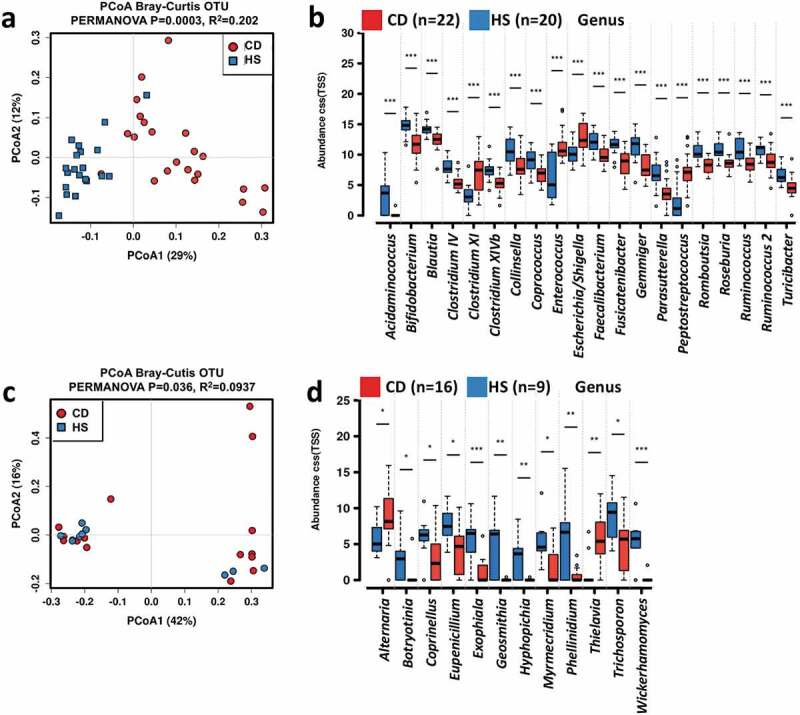
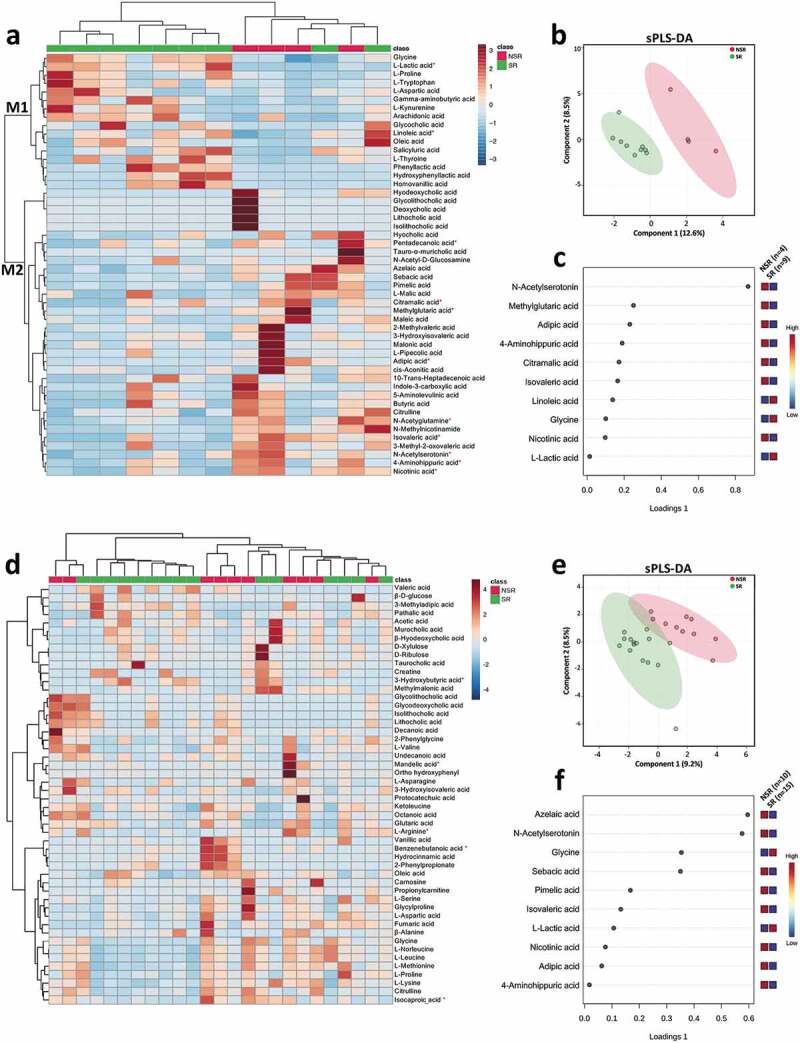
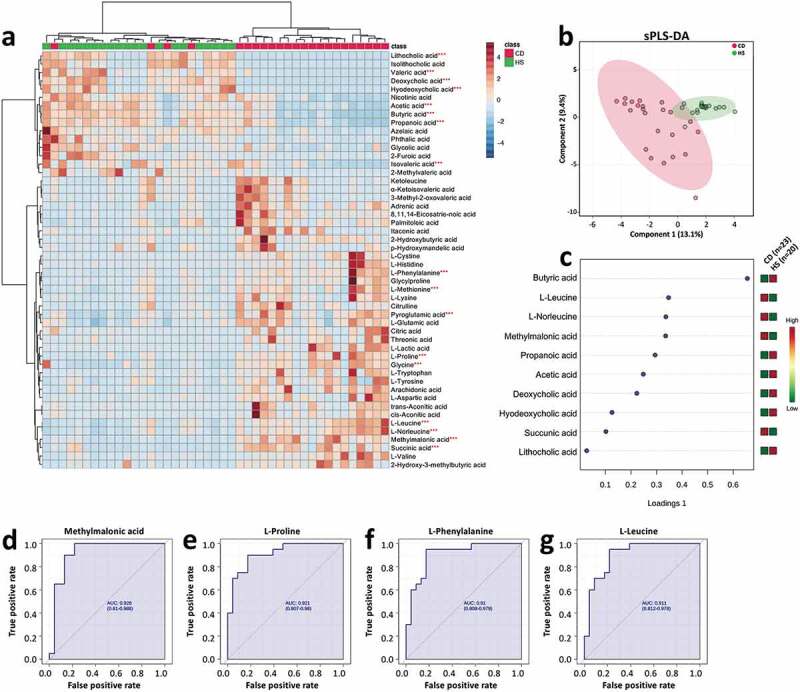
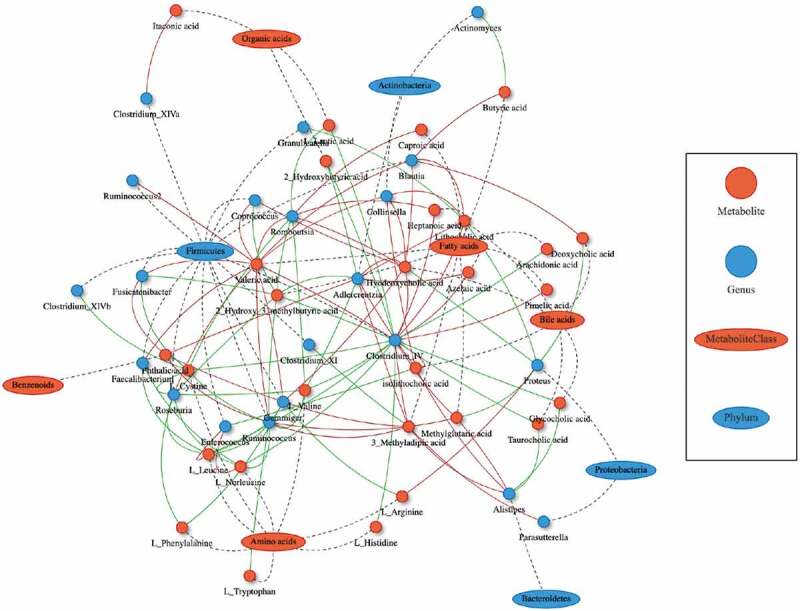
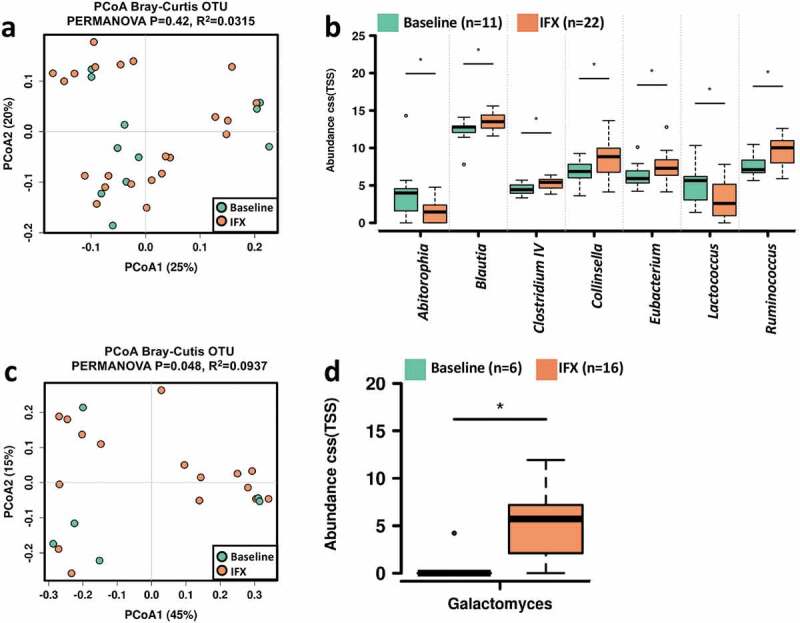
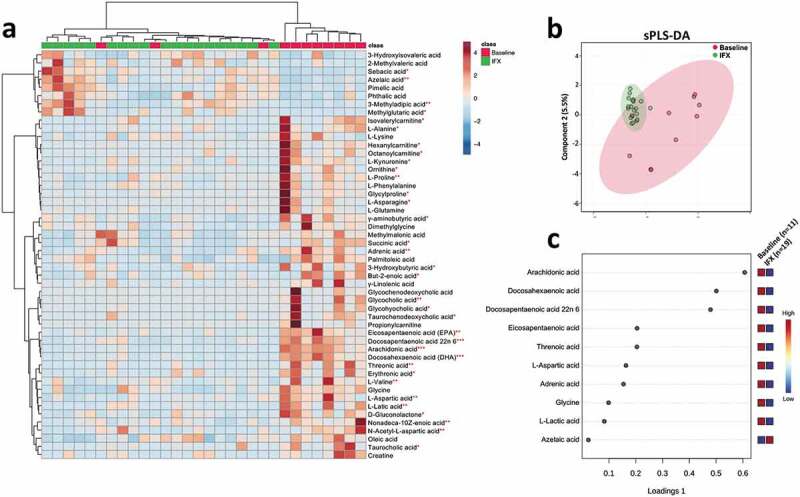
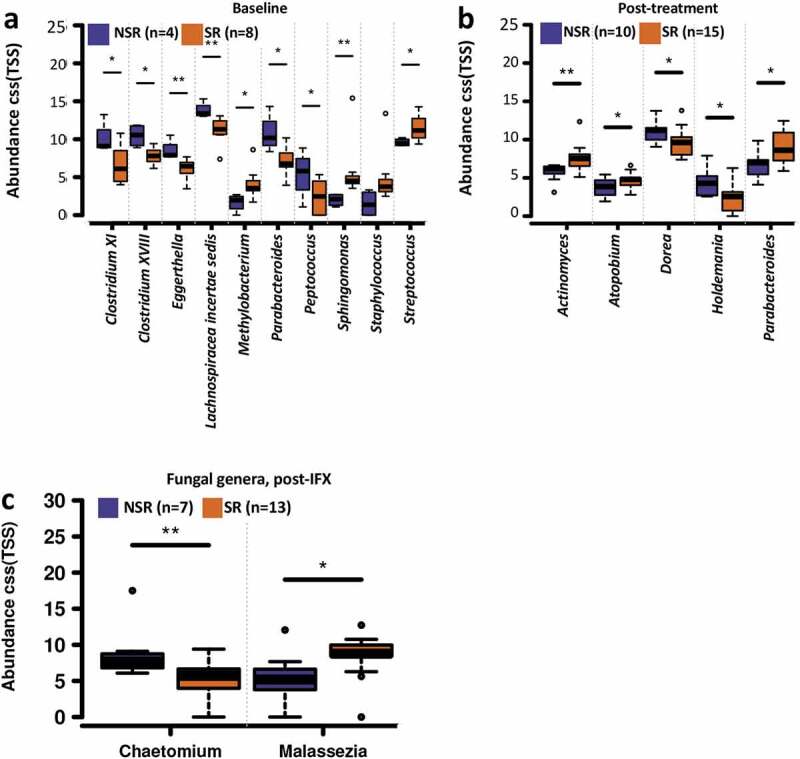
Gut microbial dysbiosis and altered metabonomics have been implicated in the pathogenesis of Crohn's disease (CD). The aim of our study was to characterize the gut microbiome structure and metabolic activities in pediatric CD patients with different clinical outcomes after infliximab (IFX) therapy. Fecal samples were collected from 20 healthy children and 29 newly diagnosed pediatric CD patients. 16S rRNA/ITS2 gene sequencing and targeted metabolomics analysis were applied to profile the gut bacterial microbiome, mycobiome, and metabolome, respectively. Pediatric CD patients exhibited lower relative abundances of short-chain fatty acids (SCFAs)-producing bacteria including clusters IV and XIVb, , and , which were correlated with reduced fecal levels of SCFAs. Decreased unconjugated bile acids (BAs) pool size and a lower unconjugated/conjugated BAs ratio were associated with reduced relative abundances of and clusters IV and XIVb which contain bile salt hydrolases (BSH) genes. IFX treatment enriched the BSH-producing bacteria in CD subjects, which may explain a decreased level of conjugated BAs and an increase in unconjugated BAs as well as the unconjugated/conjugated BAs ratio. Furthermore, a sustained response (SR) of IFX therapy was associated with higher abundances of , and , and higher fecal concentrations of amino acids, including L-aspartic acid, linoleic acid, and L-lactic acid at baseline. Our study suggests that the effects of IFX might be partially mediated by enriching bacteria taxa that producing SCFAs and BSH thereby inhibiting inflammation and restoring the BA metabolism. Some fecal bacteria and metabolites may be predictive of outcomes of IFX therapy for pediatric CD patients.
肠道微生物失调和代谢物组学改变与克罗恩病(CD)的发病机制有关。本研究旨在描述接受英夫利昔单抗(IFX)治疗后具有不同临床结局的儿科 CD 患者的肠道微生物组结构和代谢活性。收集了 20 名健康儿童和 29 名新诊断的儿科 CD 患者的粪便样本。应用 16S rRNA/ITS2 基因测序和靶向代谢组学分析分别对肠道细菌微生物组、真菌微生物组和代谢组进行了分析。儿科 CD 患者表现出较低的短链脂肪酸(SCFA)产生菌的相对丰度,包括 簇 IV 和 XIVb , 和 ,这与 SCFA 粪便水平降低有关。未结合胆汁酸(BA)库大小降低和未结合/结合 BA 比值降低与包含胆盐水解酶(BSH)基因的 簇 IV 和 XIVb 的相对丰度降低有关。IFX 治疗使 CD 患者中 BSH 产生菌富集,这可以解释结合 BA 水平降低、未结合 BA 增加以及未结合/结合 BA 比值增加。此外,IFX 治疗的持续缓解(SR)与基线时较高的 , 和 的丰度以及较高的氨基酸(包括 L-天冬氨酸、亚油酸和 L-乳酸)粪便浓度有关。本研究表明,IFX 的作用可能部分是通过富集产生 SCFA 和 BSH 的细菌分类群来实现的,从而抑制炎症和恢复 BA 代谢。一些粪便细菌和代谢物可能是预测儿科 CD 患者 IFX 治疗结局的指标。