Epigenetics and Diabetes Unit, Department of Clinical Sciences, Lund University Diabetes Centre, Lund University, Scania University Hospital, Malmö, Sweden
Department of Obstetrics and Gynecology, Hvidovre Hospital, University of Copenhagen, Copenhagen, Denmark.
Diabetes. 2021 Apr;70(4):854-866. doi: 10.2337/db20-0487. Epub 2021 Jan 11.
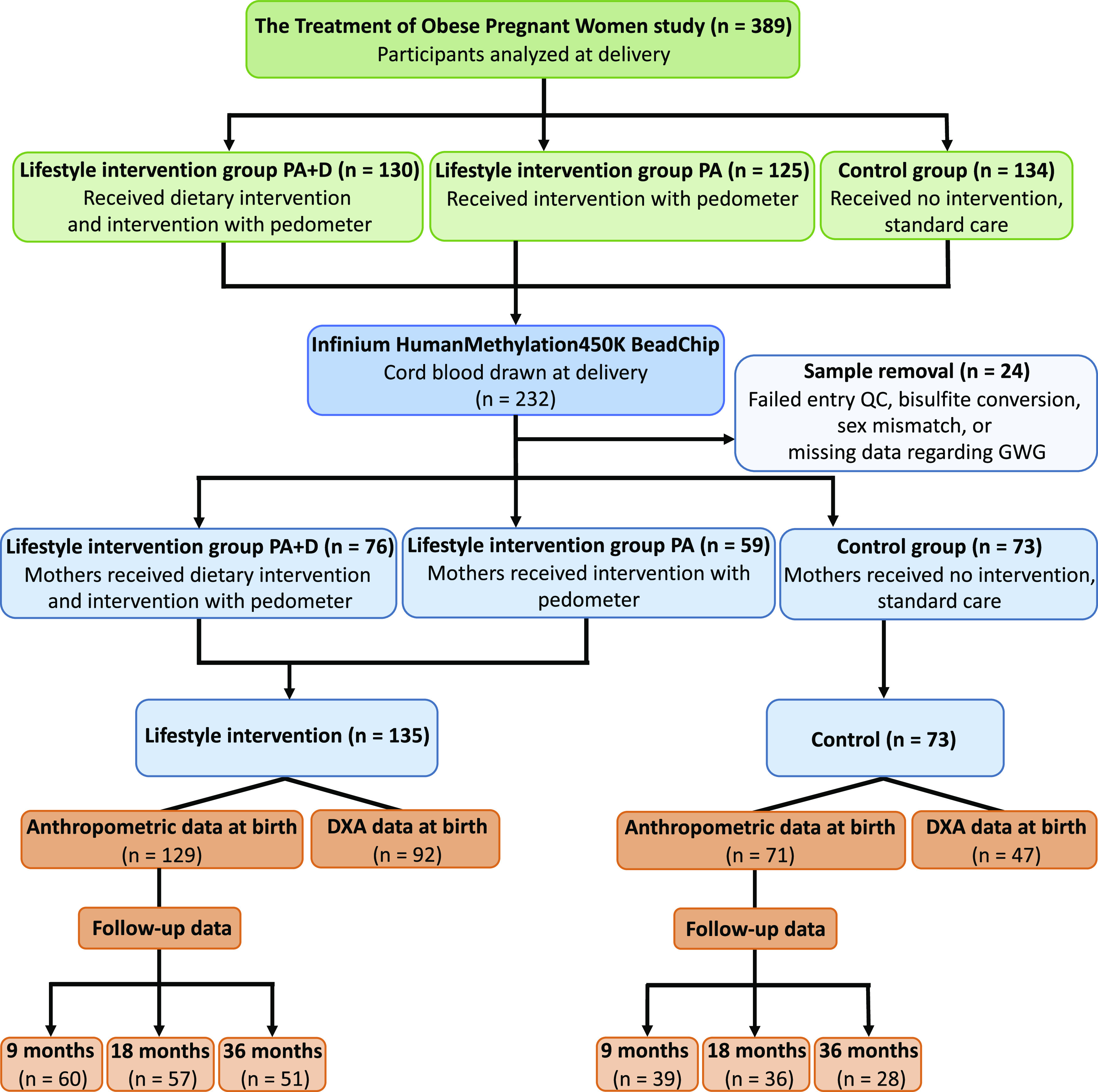
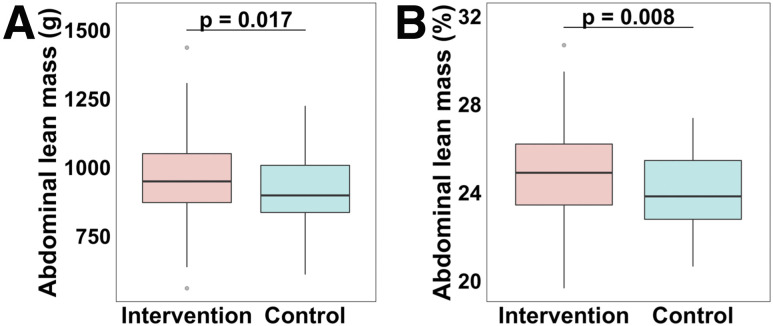
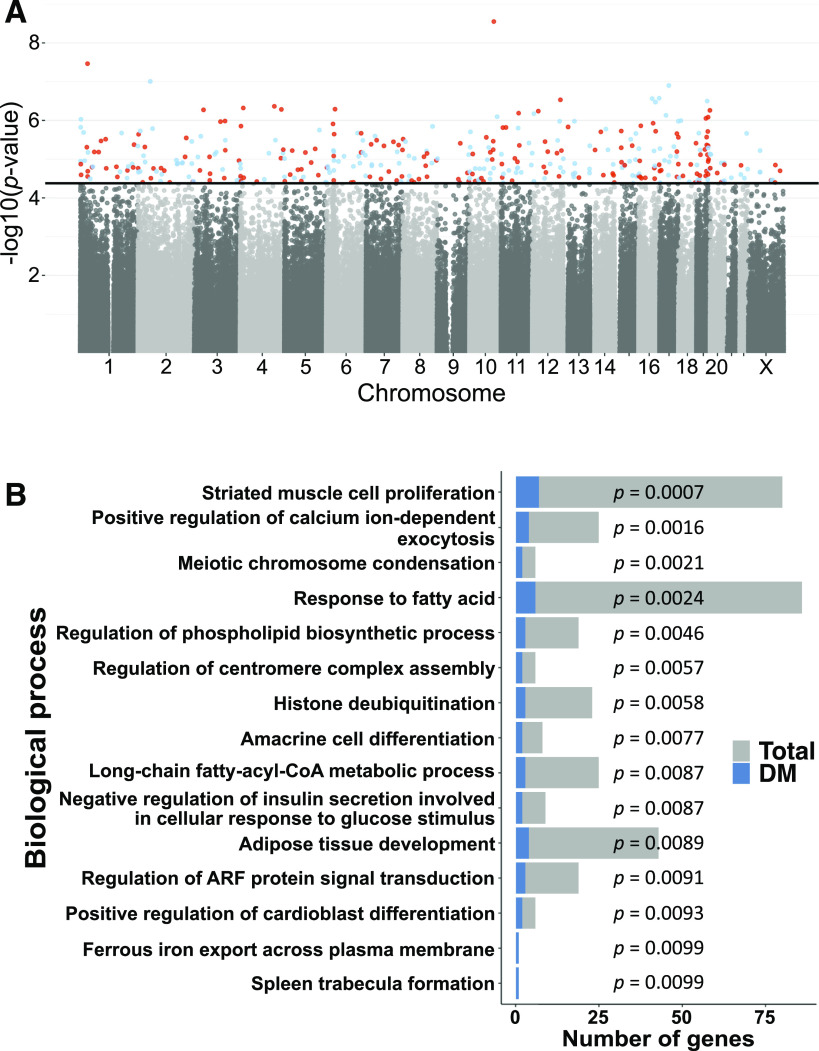
Maternal obesity may lead to epigenetic alterations in the offspring and might thereby contribute to disease later in life. We investigated whether a lifestyle intervention in pregnant women with obesity is associated with epigenetic variation in cord blood and body composition in the offspring. Genome-wide DNA methylation was analyzed in cord blood from 208 offspring from the Treatment of Obese Pregnant women (TOP)-study, which includes pregnant women with obesity randomized to lifestyle interventions comprised of physical activity with or without dietary advice versus control subjects (standard of care). DNA methylation was altered at 379 sites, annotated to 370 genes, in cord blood from offspring of mothers following a lifestyle intervention versus control subjects (false discovery rate [FDR] <5%) when using the Houseman reference-free method to correct for cell composition, and three of these sites were significant based on Bonferroni correction. These 370 genes are overrepresented in gene ontology terms, including response to fatty acids and adipose tissue development. Offspring of mothers included in a lifestyle intervention were born with more lean mass compared with control subjects. Methylation at 17 sites, annotated to, for example, , , , and , partially mediates the effect of the lifestyle intervention on lean mass in the offspring (FDR <5%). Moreover, 22 methylation sites were associated with offspring BMI scores during the first 3 years of life ( < 0.05). Overall, lifestyle interventions in pregnant women with obesity are associated with epigenetic changes in offspring, potentially influencing the offspring's lean mass and early growth.
母体肥胖可能导致后代的表观遗传改变,并可能由此导致其日后患病。我们研究了肥胖孕妇的生活方式干预是否与脐带血中的表观遗传变化以及后代的身体成分有关。在肥胖孕妇治疗研究(TOP)中,对 208 名后代的脐带血进行了全基因组 DNA 甲基化分析,该研究纳入了肥胖孕妇,她们被随机分配到包含运动和/或饮食建议的生活方式干预组与对照组(标准护理)。当使用 Houseman 无参考方法校正细胞组成时,与对照组相比,接受生活方式干预的母亲的后代脐带血中 379 个位点(注释到 370 个基因)的 DNA 甲基化发生了改变(错误发现率[FDR] <5%),其中 3 个位点基于 Bonferroni 校正具有统计学意义。这些 370 个基因在基因本体论术语中被过度表示,包括对脂肪酸的反应和脂肪组织发育。与对照组相比,接受生活方式干预的母亲所生的后代具有更多的瘦体重。17 个位点的甲基化,注释到例如、、、、和,部分介导了生活方式干预对后代瘦体重的影响(FDR <5%)。此外,22 个甲基化位点与后代生命最初 3 年的 BMI 评分相关( < 0.05)。总的来说,肥胖孕妇的生活方式干预与后代的表观遗传变化有关,这可能会影响后代的瘦体重和早期生长。