Division of Surgery and Interventional Science, University College London, Charles Bell House, Foley Street, London, W1W 7TY, UK.
Department of General Surgery, University College London Hospital, London, UK.
Hernia. 2022 Feb;26(1):297-307. doi: 10.1007/s10029-020-02360-x. Epub 2021 Jan 12.
Before being marketed, hernia mesh must undergo in vivo testing, which often includes biomechanical and histological assessment. Currently, there are no universal standards for this testing and methods vary greatly within the literature. A scoping review of relevant studies was undertaken to analyse the methodologies used for in vivo mesh testing.
Medline and Embase databases were searched for relevant studies. 513 articles were identified and 231 duplicates excluded. 126 papers were included after abstract and full text review. The data extraction was undertaken using standardised forms.
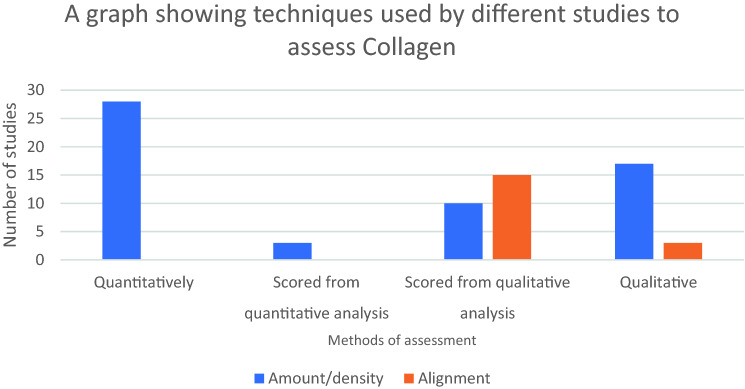
Mesh is most commonly tested in rats (53%). 78% of studies involve the formation of a defect; in 52% of which the fascia is not opposed. The most common hernia models use mesh to bridge an acute defect (50%). Tensile strength testing is the commonest form of mechanical testing (63%). Testing strip widths and test speeds vary greatly (4-30 mm and 1.625-240 mm/min, respectively). There is little consensus on which units to use for tensile strength testing. Collagen is assessed for its abundance (54 studies) more than its alignment (18 studies). Alignment is not measured quantitatively. At least 21 histological scoring systems are used for in vivo mesh testing.
The current practice of in vivo mesh testing lacks standardisation. There is significant inconsistency in every category of testing, both in methodology and comparators. We would call upon hernia organisations and materials testing institutions to discuss the need for a standardised approach to this field.
疝网在上市前必须进行体内测试,其中通常包括生物力学和组织学评估。目前,尚无此类测试的通用标准,文献中的方法差异很大。进行了一项相关研究的范围综述,以分析体内网测试中使用的方法。
在 Medline 和 Embase 数据库中搜索相关研究。确定了 513 篇文章,并排除了 231 篇重复文章。经过摘要和全文审查,共纳入 126 篇论文。使用标准化表格进行数据提取。
网最常被用于大鼠测试(53%)。78%的研究涉及形成缺陷;其中 52%的筋膜未对合。最常见的疝模型使用网来桥接急性缺陷(50%)。拉伸强度测试是最常见的机械测试形式(63%)。测试条带宽度和测试速度差异很大(4-30mm 和 1.625-240mm/min)。对于拉伸强度测试,使用的单位几乎没有共识。对于胶原的评估,其丰度(54 项研究)多于其排列(18 项研究)。排列未进行定量测量。至少有 21 种组织学评分系统用于体内网测试。
目前体内网测试的实践缺乏标准化。在测试的每一个类别中,包括方法和对照物,都存在很大的不一致性。我们呼吁疝组织和材料测试机构讨论需要对该领域采用标准化方法。