Pulmonology Division, School of Medicine, Pontifical Catholic University Rio Grande Do Sul (PUCRS), Hospital São Lucas da PUCRS, Porto Alegre, Brazil.
Health Sciences Doctorate Program, School of Medicine, Pontifical Catholic University Rio Grande Do Sul (PUCRS), Pulmonologist Hospital São Lucas da PUCRS, Porto Alegre, Brazil.
Clin Rev Allergy Immunol. 2022 Feb;62(1):72-89. doi: 10.1007/s12016-020-08830-5. Epub 2021 Jan 12.
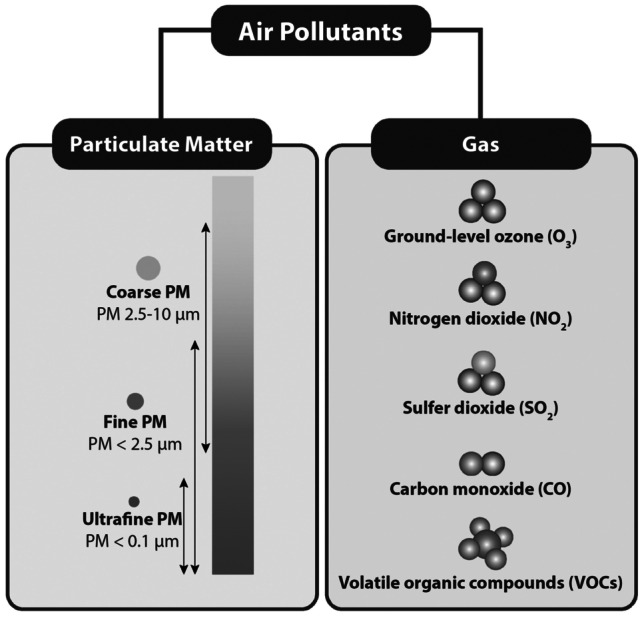
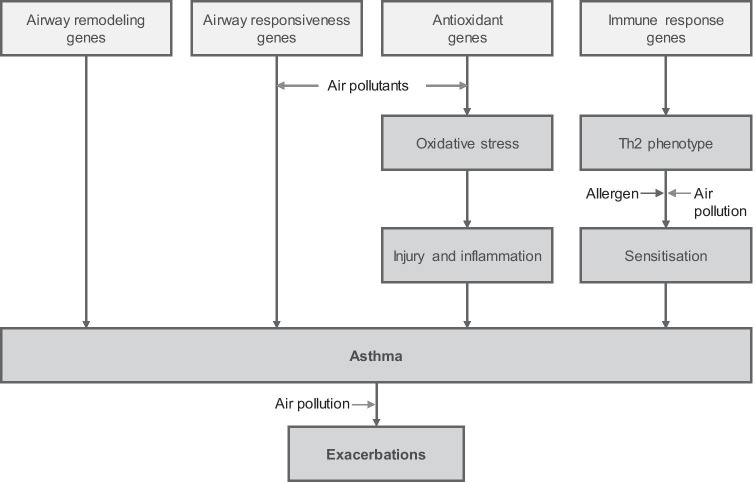
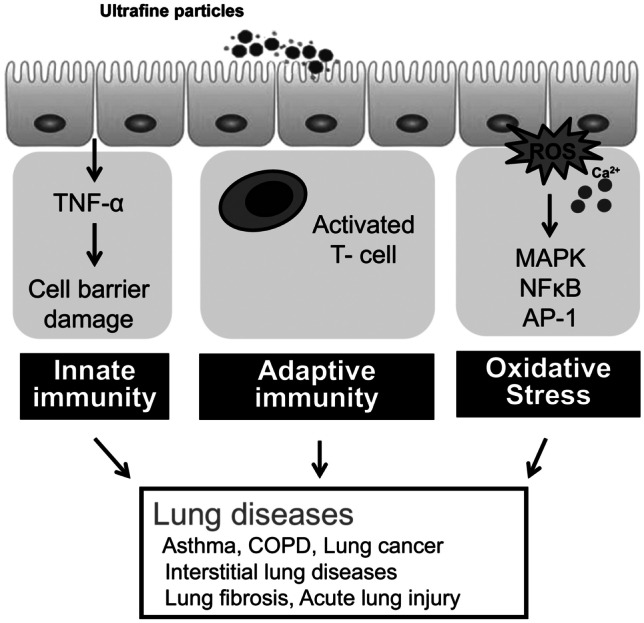
Air pollution is a worrisome risk factor for global morbidity and mortality and plays a special role in many respiratory conditions. It contributes to around 8 million deaths/year, with outdoor exposure being responsible for more than 4.2 million deaths throughout the world, while more than 3.8 million die from situations related to indoor pollution. Pollutant agents induce several respiratory symptoms. In addition, there is a clear interference in numerous asthma outcomes, such as incidence, prevalence, hospital admission, visits to emergency departments, mortality, and asthma attacks, among others. The particulate matter group of pollutants includes coarse particles/PM, fine particles/PM, and ultrafine particles/PM. The gaseous components include ground-level ozone, nitrogen dioxide, sulfur dioxide, and carbon monoxide. The timing, load, and route of allergen exposure are other items affecting allergic disease phenotypes. The complex interaction between pollutant exposures and human host factors has an implication in the development and rise of asthma as a public health problem. However, there are hiatuses in the understanding of the pathways in this disease. The routes through which pollutants induce asthma are multiple, and include the epigenetic changes that occur in the respiratory tract microbiome, oxidative stress, and immune dysregulation. In addition, the expansion of the modern Westernized lifestyle, which is characterized by intense urbanization and more time spent indoors, resulted in greater exposure to polluted air. Another point to consider is the different role of the environment according to age groups. Children growing up in economically disadvantaged neighborhoods suffer more important negative health impacts. This narrative review highlights the principal polluting agents, their sources of emission, epidemiological findings, and mechanistic evidence that links environmental exposures to asthma.
空气污染是全球发病率和死亡率的一个令人担忧的风险因素,在许多呼吸道疾病中起着特殊作用。它导致每年约 800 万人死亡,其中室外暴露导致全球超过 420 万人死亡,而超过 380 万人死于与室内污染有关的情况。污染物会引起多种呼吸道症状。此外,它对许多哮喘结果(如发病率、患病率、住院治疗、急诊就诊、死亡率和哮喘发作等)有明显的干扰。污染物的颗粒物质组包括粗颗粒/PM、细颗粒/PM 和超细颗粒/PM。气态成分包括地面臭氧、二氧化氮、二氧化硫和一氧化碳。过敏原暴露的时间、负荷和途径是影响过敏性疾病表型的其他因素。污染物暴露和人体宿主因素之间的复杂相互作用意味着哮喘作为一个公共卫生问题的发展和增加。然而,在理解这种疾病的途径方面还存在一些空白。污染物导致哮喘的途径有很多,包括呼吸道微生物组中发生的表观遗传变化、氧化应激和免疫失调。此外,现代西方化生活方式的扩展,其特点是城市化程度加剧和更多时间在室内度过,导致更多地接触污染空气。另一个需要考虑的问题是环境根据年龄组的不同作用。在经济落后的社区长大的儿童受到更多重要的负面健康影响。本叙述性综述强调了主要的污染因子、它们的排放源、流行病学发现以及将环境暴露与哮喘联系起来的机制证据。