Cheraghian Bahman, Hashemi Seyed Jalal, Hosseini Seyed Ahmad, Poustchi Hossein, Rahimi Zahra, Sarvandian Sara, Saki Malehi Amal, Alipour Meysam, Eghtesad Sareh, Fatahiasl Jafar, Bayat Arash, Raji Hanieh, Saki Nader
Alimentary Tract Research Center, Department of Biostatistics & Epidemiology, School of Public Health, Ahvaz Jundishapur University of Medical Sciences, Ahvaz, Iran.
Alimentary Tract Research Center, School of Medicine, Ahvaz Jundishapur University of Medical Sciences, Ahvaz, Iran.
Med J Islam Repub Iran. 2020 Oct 21;34:141. doi: 10.34171/mjiri.34.141. eCollection 2020.
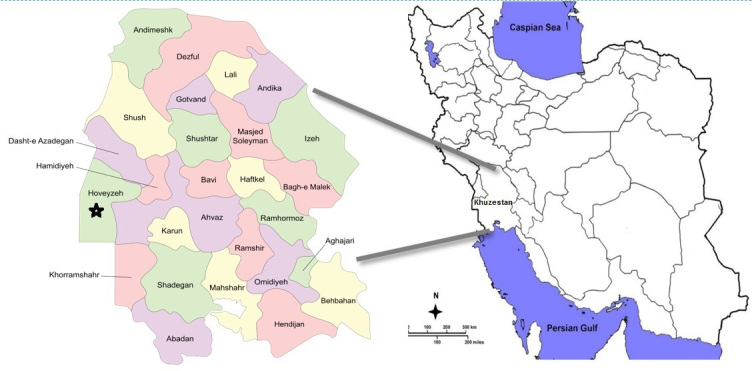
The Hoveyzeh cohort study (HCS) is a population-based cohort study that conducted in Hoveyzeh County (South-west Iran). HCS focus on common chronic diseases, disorders and risk factors of NCDs in the Arab ethnicity. A total number of 10009 participants (35-70 years old) were recruited in this prospective cohort study from May 2016 to August 2018. The HCS data were gathered by trained interviewer through interviewer-administered questionnaires. Also anthropometric measurements, physical examinations, clinical assessments, ophthalmology evaluation, auditory examinations, respiratory and cardiovascular assessments was conducted by means of standard instruments. Biological samples including blood, urine, hair, and nail collected and stored in the biobank. The overall participation rate was 82.7%. The prevalence of obesity was 27.4% in males and 47% in females. Cigarette smoking prevalence was 20.9% (40.6 % in men and 7.6 % in women). Prevalence of major non communicable diseases such as diabetes, hypertension, metabolic syndrome, cardiac ischemic, myocardial infarction and stroke was 22.2%, 26.4% 31.9 %, 13.6%, 1.85% and 1.6% respectively. Considering the high prevalence of obesity and smoking in the population of Hoveyzeh and since the important role of these risk factors in development of common non communicable diseases, this issue should be taken into consideration and the necessary interventions in this context must be considered to modify lifestyle. The HCS is the only comprehensive cohort in the region, enabling it to provide valuable evidence about NCDs for a wide geographical area covering millions of people in both Iran and Iraq.
霍韦泽队列研究(HCS)是一项基于人群的队列研究,在伊朗西南部的霍韦泽县开展。HCS聚焦于阿拉伯族裔中常见的慢性病、疾病及非传染性疾病的风险因素。在这项前瞻性队列研究中,从2016年5月至2018年8月共招募了10009名参与者(年龄在35至70岁之间)。HCS的数据由经过培训的访谈员通过访谈式问卷收集。此外,还借助标准仪器进行了人体测量、体格检查、临床评估、眼科评估、听力检查、呼吸和心血管评估。采集了包括血液、尿液、头发和指甲在内的生物样本并存储在生物样本库中。总体参与率为82.7%。男性肥胖患病率为27.4%,女性为47%。吸烟患病率为20.9%(男性为40.6%,女性为7.6%)。糖尿病、高血压、代谢综合征、心脏缺血、心肌梗死和中风等主要非传染性疾病的患病率分别为22.2%、26.4%、31.9%、13.6%、1.85%和1.6%。鉴于霍韦泽人群中肥胖和吸烟的高患病率,以及这些风险因素在常见非传染性疾病发展中的重要作用,应考虑这一问题,并在此背景下考虑采取必要的干预措施来改变生活方式。HCS是该地区唯一的综合队列研究,使其能够为涵盖伊朗和伊拉克数百万人口的广大地理区域提供有关非传染性疾病的宝贵证据。