Sorbonne Universités, Biomécanique et Bioingénierie, Université de Technologie de Compiègne, UMR CNRS 7338, Compiègne, France.
Centre Hospitalier COMPIÈGNE-NOYON, Compiègne, France.
BMC Geriatr. 2021 Jan 13;21(1):48. doi: 10.1186/s12877-020-02000-0.
To investigate how anatomical cross-sectional area and volume of quadriceps and triceps surae muscles were affected by ageing, and by resistance training in older and younger men, in vivo.
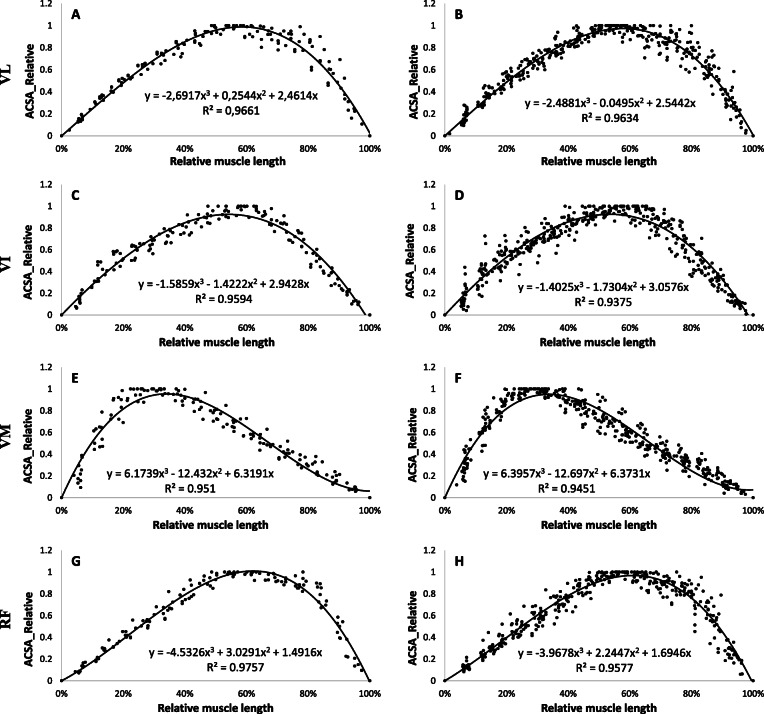
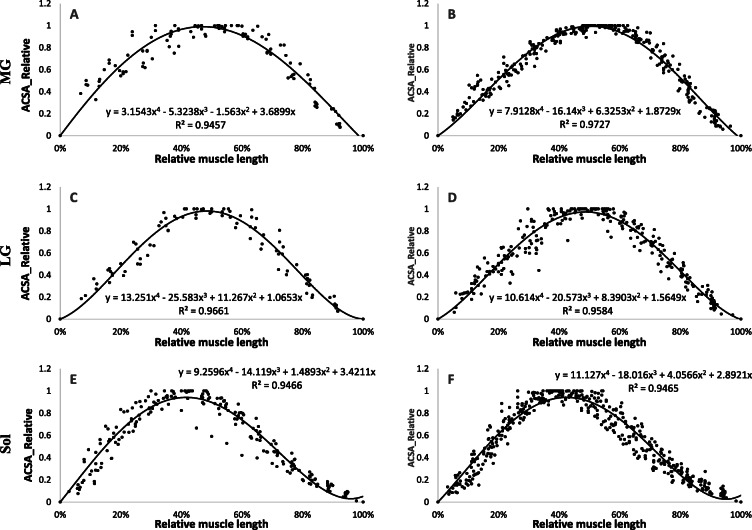
The old participants were randomly assigned to moderate (O55, n = 13) or high-load (O80, n = 14) resistance training intervention (12 weeks; 3 times/week) corresponding to 55% or 80% of one repetition maximum, respectively. Young men (Y55, n = 11) were assigned to the moderate-intensity strengthening exercise program. Each group received the exact same training volume on triceps surae and quadriceps group (Reps x Sets x Intensity). The fitting polynomial regression equations for each of anatomical cross-sectional area-muscle length curves were used to calculate muscle volume (contractile content) before and after 12 weeks using magnetic resonance imaging scans.
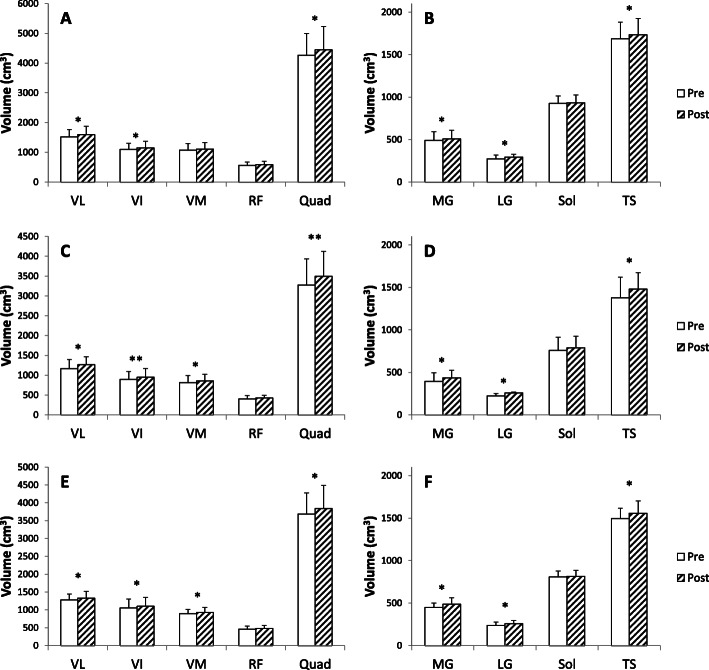
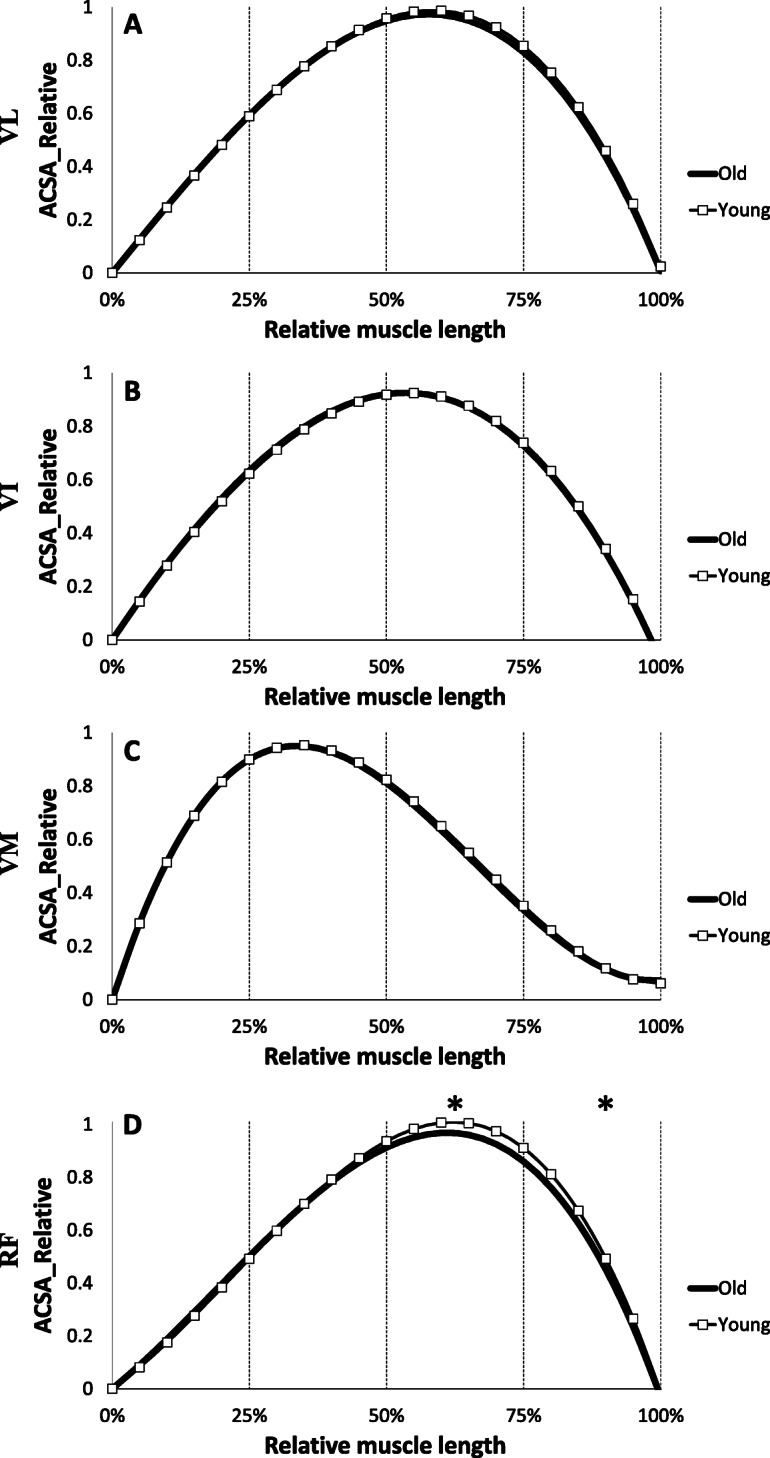
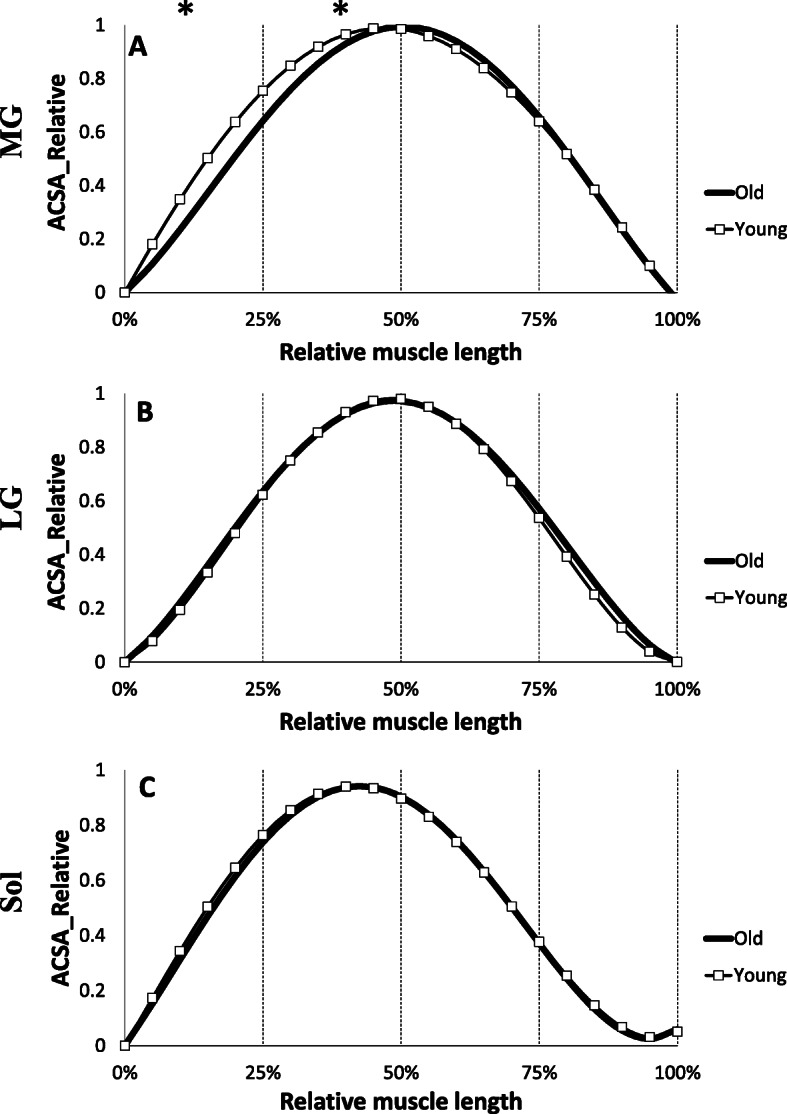
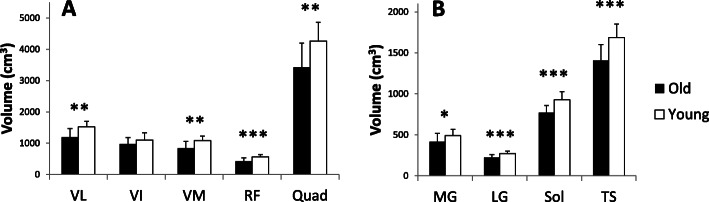
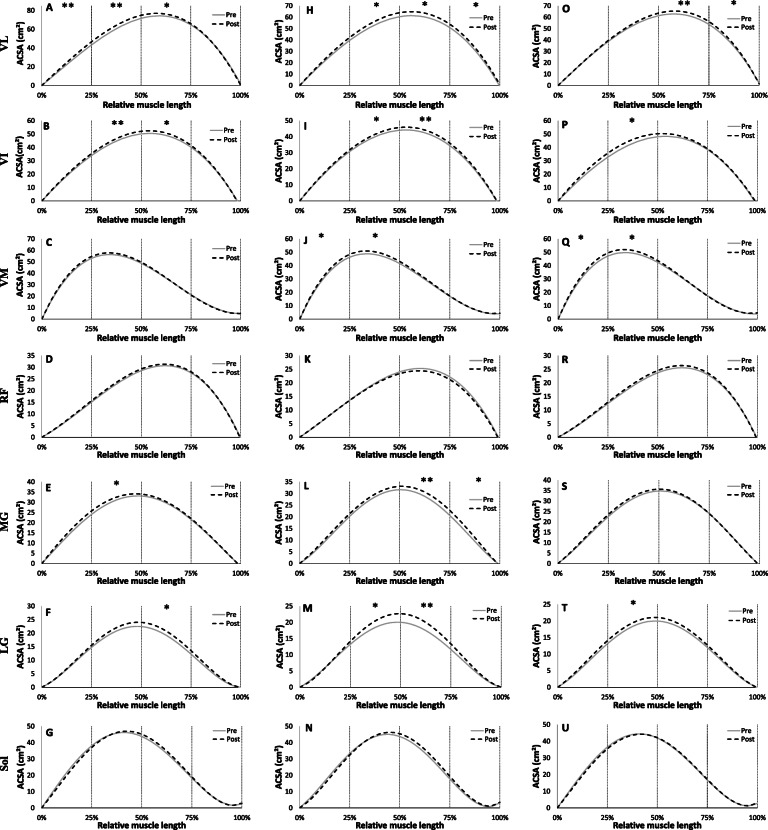
Only Rectus femoris and medial gastrocnemius muscle showed a higher relative anatomical cross-sectional area in the young than the elderly on the proximal end. The old group displayed a higher absolute volume of non-contractile material than young men in triceps surae (+ 96%). After training, Y55, O55 and O80 showed an increase in total quadriceps (+ 4.3%; + 6.7%; 4.2% respectively) and triceps surae (+ 2.8%; + 7.5%; 4.3% respectively) volume. O55 demonstrated a greater increase on average gains compared to Y55, while no difference between O55 and O80 was observed.
Muscle loss with aging is region-specific for some muscles and uniform for others. Equivalent strength training volume at moderate or high intensities increased muscle volume with no differences in muscle volume gains for old men. These data suggest that physical exercise at moderate intensity (55 to 60% of one repetition maximum) can reverse the aging related loss of muscle mass.
NCT03079180 in ClinicalTrials.gov . Registration date: March 14, 2017.
为了研究在体内,年龄和阻力训练如何影响股四头肌和小腿三头肌的解剖横截面积和体积。
老年参与者被随机分配到中等强度(O55,n=13)或高强度(O80,n=14)阻力训练干预组(12 周;每周 3 次),分别对应于 1 次重复最大值的 55%或 80%。年轻男性(Y55,n=11)被分配到中等强度强化运动方案。每个组在小腿三头肌和股四头肌组(Reps x Sets x Intensity)中接受相同的训练量。使用磁共振成像扫描,使用解剖横截面积-肌肉长度曲线的拟合多项式回归方程,计算 12 周前后的肌肉体积(收缩含量)。
仅股直肌和内侧比目鱼肌在近端的年轻人的相对解剖横截面积高于老年人。老年组的比目鱼肌中的非收缩物质的绝对体积高于年轻人(+96%)。训练后,Y55、O55 和 O80 的总股四头肌(+4.3%;+6.7%;4.2%)和小腿三头肌(+2.8%;+7.5%;4.3%)体积均增加。O55 的平均增益增加量大于 Y55,而 O55 和 O80 之间没有差异。
一些肌肉的衰老导致肌肉损失具有区域性,而其他肌肉则均匀损失。中等或高强度的等效力量训练量增加了肌肉体积,而老年男性的肌肉体积增加没有差异。这些数据表明,中等强度(1 次重复最大值的 55%至 60%)的体育锻炼可以逆转与衰老相关的肌肉质量损失。
NCT03079180 在 ClinicalTrials.gov 注册。注册日期:2017 年 3 月 14 日。