Lyme Disease Research Center, Division of Rheumatology, Department of Medicine, Johns Hopkins University School of Medicine, Baltimore, Maryland, USA.
Lyme Disease Research Center, Division of Rheumatology, Department of Medicine, Johns Hopkins University School of Medicine, Baltimore, Maryland, USA
BMJ Open. 2021 Jan 13;11(1):e040399. doi: 10.1136/bmjopen-2020-040399.
To identify underlying subgroups with distinct symptom profiles, and to characterise and compare these subgroups across a range of demographic, clinical and psychosocial factors, within a heterogeneous group of patients with well-defined post-treatment Lyme disease (PTLD).
A clinical case series of patents.
Participants were recruited from a single-site, Lyme disease referral clinic patient population and were evaluated by physical exam, clinical laboratory testing and standardised questionnaires.
Two hundred and twelve participants met study criteria for PTLD, with medical record-confirmed prior Lyme disease as well as current symptoms and functional impact.
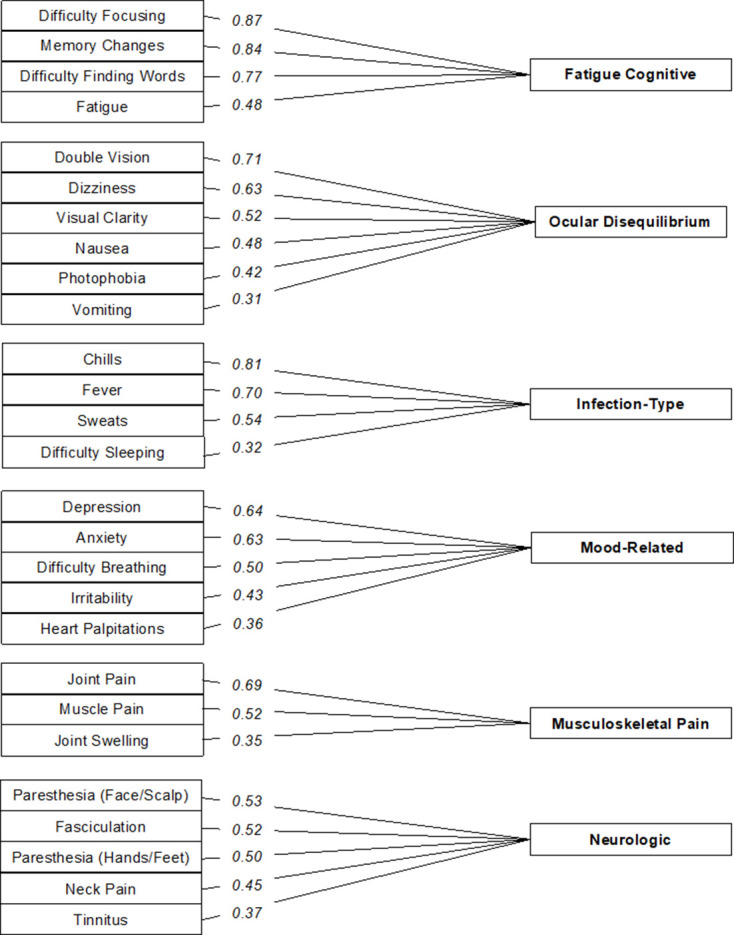
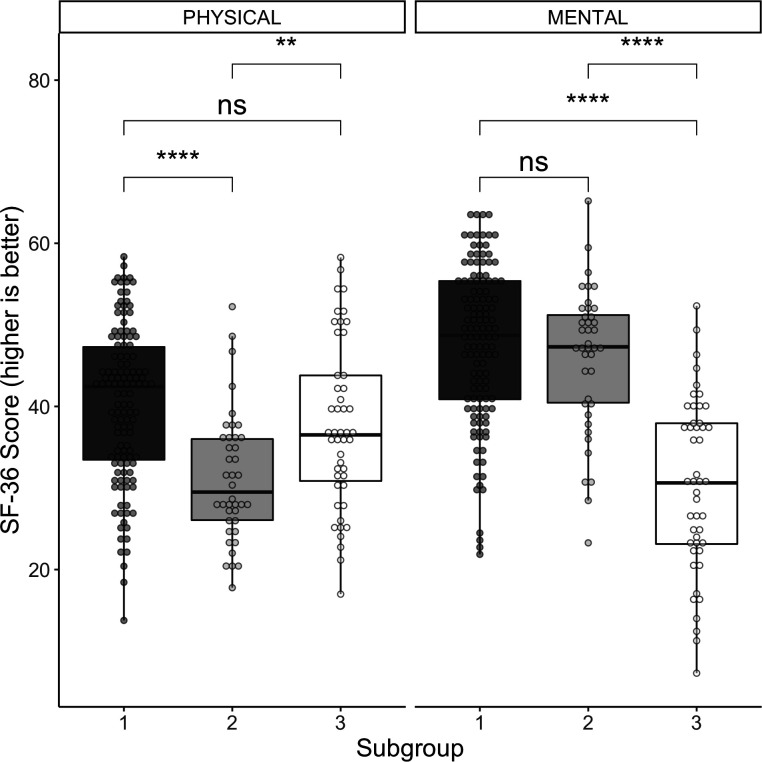
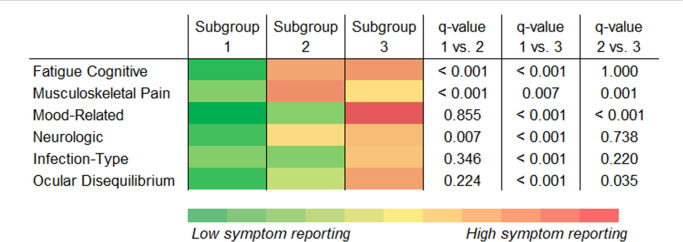
Exploratory factor analysis classified 30 self-reported symptoms into 6 factors: 'Fatigue Cognitive', 'Ocular Disequilibrium', 'Infection-Type', 'Mood-Related', 'Musculoskeletal Pain' and 'Neurologic'. A final latent profile analysis was conducted using 'Fatigue Cognitive', 'Musculoskeletal Pain' and 'Mood-Related' factor-based scores, which produced three emergent symptom profiles, and participants were classified into corresponding subgroups with 59.0%, 18.9% and 22.2% of the sample, respectively. Compared with the other two groups, subgroup 1 had similarly low levels across all factors relative to the sample as a whole, and reported lower rates of disability (1.6% vs 10.0%, 12.8%; q=0.126, 0.035) and higher self-efficacy (median: 7.5 vs 6.0, 5.3; q=0.068,<0.001). Subgroup 2 had the highest 'Musculoskeletal Pain' factor-based scores (q≤0.001). Subgroup 3 was characterised overall by higher symptom factor-based scores, and reported higher depression (q≤0.001).
This analysis identified six symptom factors and three potentially clinically relevant subgroups among patients with well-characterised PTLD. We found that these subgroups were differentiated not only by symptom phenotype, but also by a range of other factors. This may serve as an initial step towards engaging with the symptom heterogeneity that has long been observed among patients with this condition.
在一组明确诊断为治疗后莱姆病(PTLD)的异质患者中,确定具有不同症状特征的潜在亚组,并根据一系列人口统计学、临床和社会心理因素对这些亚组进行描述和比较。
患者的临床病例系列。
参与者从一个单一地点的莱姆病转诊诊所患者人群中招募,并通过体格检查、临床实验室检查和标准化问卷进行评估。
212 名参与者符合 PTLD 的研究标准,其病史均为有医学记录证实的莱姆病以及当前的症状和功能影响。
探索性因子分析将 30 种自我报告的症状分为 6 个因素:“疲劳认知”、“眼平衡失调”、“感染型”、“情绪相关”、“肌肉骨骼疼痛”和“神经相关”。最后使用“疲劳认知”、“肌肉骨骼疼痛”和“情绪相关”因子得分进行潜在剖面分析,产生了三个新的症状谱,参与者被分类到相应的亚组中,分别占样本的 59.0%、18.9%和 22.2%。与其他两组相比,亚组 1 的所有因子相对于整个样本的水平都相似较低,并且报告的残疾率较低(1.6%比 10.0%、12.8%;q=0.126、0.035),自我效能感较高(中位数:7.5 比 6.0、5.3;q=0.068、<0.001)。亚组 2 的“肌肉骨骼疼痛”因子得分最高(q≤0.001)。亚组 3 的总体特点是更高的症状因子得分,并且报告更高的抑郁(q≤0.001)。
本分析在明确诊断为 PTLD 的患者中确定了六个症状因子和三个潜在的临床相关亚组。我们发现,这些亚组不仅通过症状表型进行区分,还通过一系列其他因素进行区分。这可能是解决长期以来观察到的此类患者症状异质性的第一步。