Department of Oncology, Changhai Hospital, Second Military Medical University, No. 168 Changhai Road, Shanghai, 200433, China.
School of Life Sciences, Fudan University, No. 2005 Songhu Road, Shanghai, 200438, China.
Sci Rep. 2021 Jan 13;11(1):1141. doi: 10.1038/s41598-020-80881-2.
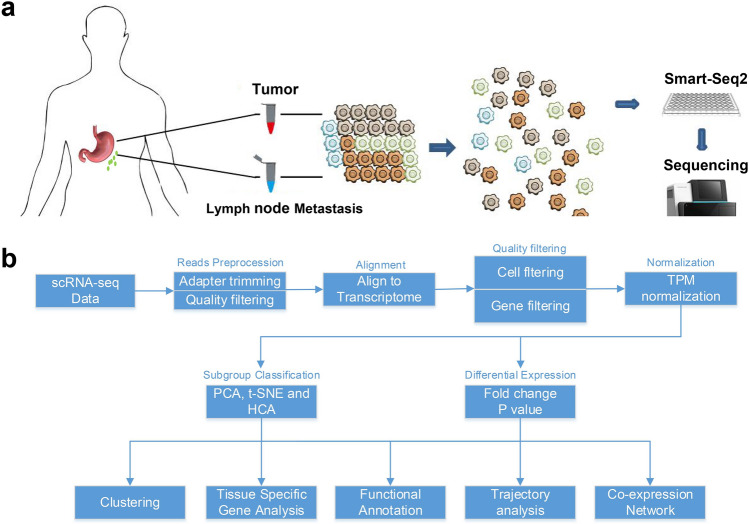
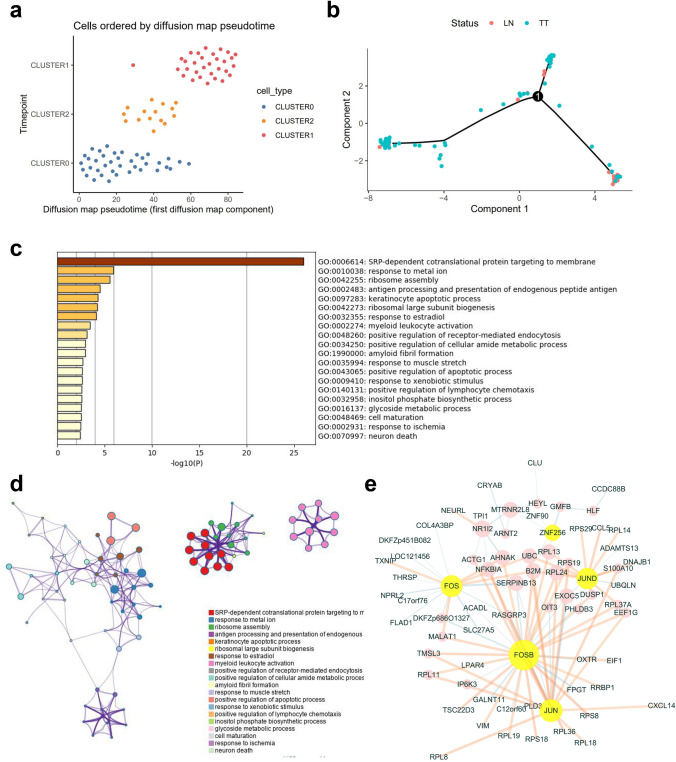
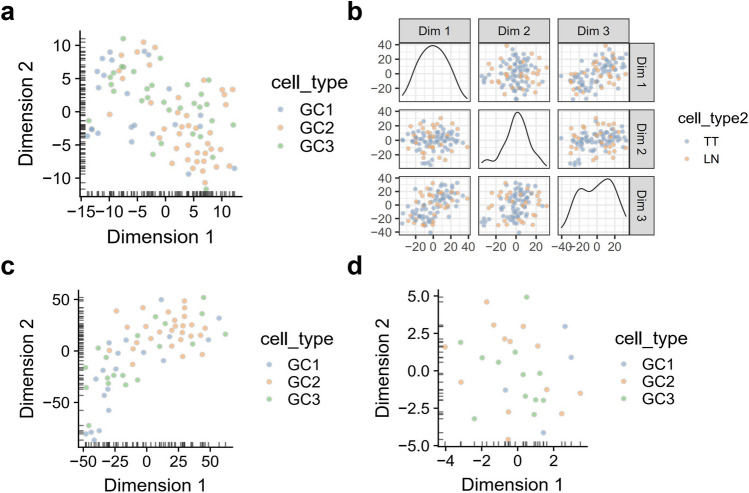
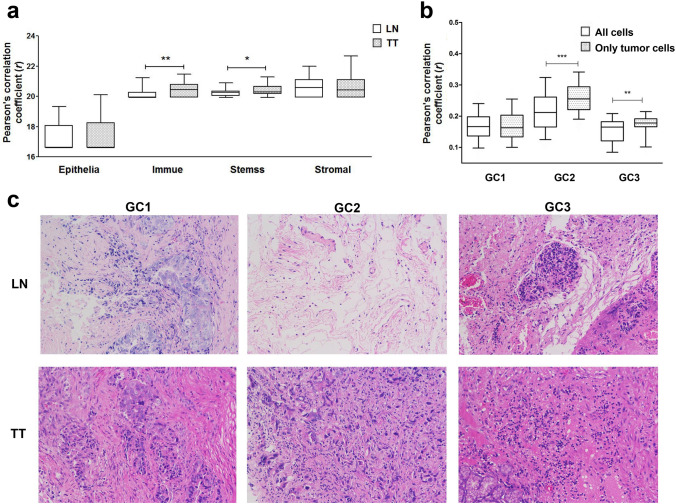
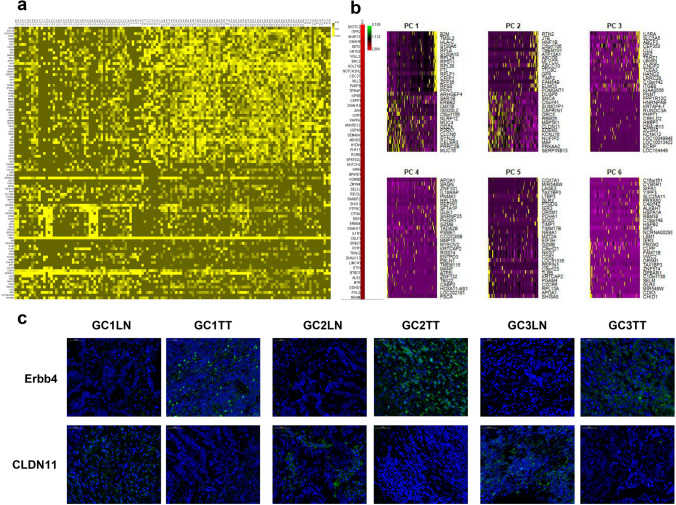
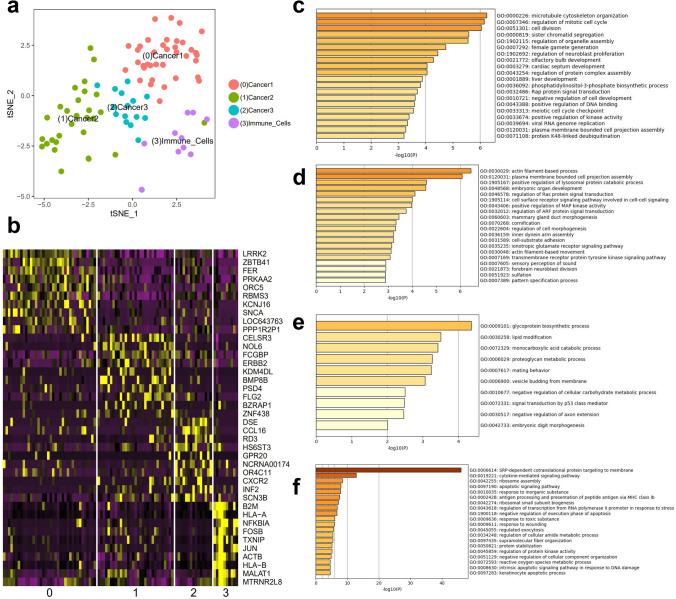
Gastric cancer (GC) is a leading cause of cancer-induced mortality, with poor prognosis with metastasis. The mechanism of gastric carcinoma lymph node metastasis remains unknown due to traditional bulk-leveled approaches masking the roles of subpopulations. To answer questions concerning metastasis from the gastric carcinoma intratumoural perspective, we performed single-cell level analysis on three gastric cancer patients with primary cancer and paired metastatic lymph node cancer tissues using single-cell RNA-seq (scRNA-seq). The results showed distinct carcinoma profiles from each patient, and diverse microenvironmental subsets were shared across different patients. Clustering data showed significant intratumoural heterogeneity. The results also revealed a subgroup of cells bridging the metastatic group and primary group, implying the transition state of cancer during the metastatic process. In the present study, we obtained a more comprehensive picture of gastric cancer lymph node metastasis, and we discovered some GC lymph node metastasis marker genes (ERBB2, CLDN11 and CDK12), as well as potential gastric cancer evolution-driving genes (FOS and JUN), which provide a basis for the treatment of GC.
胃癌(GC)是癌症导致死亡的主要原因,转移性疾病预后不良。由于传统的批量水平方法掩盖了亚群的作用,因此胃癌淋巴结转移的机制仍不清楚。为了从胃癌肿瘤内的角度回答有关转移的问题,我们使用单细胞 RNA 测序(scRNA-seq)对三例原发性胃癌和配对转移性淋巴结癌组织的三位胃癌患者进行了单细胞水平分析。结果显示,每个患者的癌谱明显不同,不同患者之间共享不同的微环境亚群。聚类数据显示出明显的肿瘤内异质性。结果还揭示了一个连接转移组和原发组的细胞亚群,暗示了转移过程中癌细胞的过渡状态。在本研究中,我们获得了更全面的胃癌淋巴结转移图像,并发现了一些 GC 淋巴结转移标记基因(ERBB2、CLDN11 和 CDK12),以及一些潜在的胃癌进化驱动基因(FOS 和 JUN),为 GC 的治疗提供了依据。