He Ruyuan, Li Donghang, Liu Bohao, Rao Jie, Meng Heng, Lin Weichen, Fan Tao, Hao Bo, Zhang Lin, Lu Zilong, Feng Haojie, Zhang Ziyao, Yuan Jingping, Geng Qing
Department of Thoracic Surgery, Renmin Hospital of Wuhan University, Wuhan, China.
Department of Pathology, Renmin Hospital of Wuhan University, Wuhan, China.
J Cancer. 2021 Jan 1;12(4):1105-1114. doi: 10.7150/jca.50439. eCollection 2021.
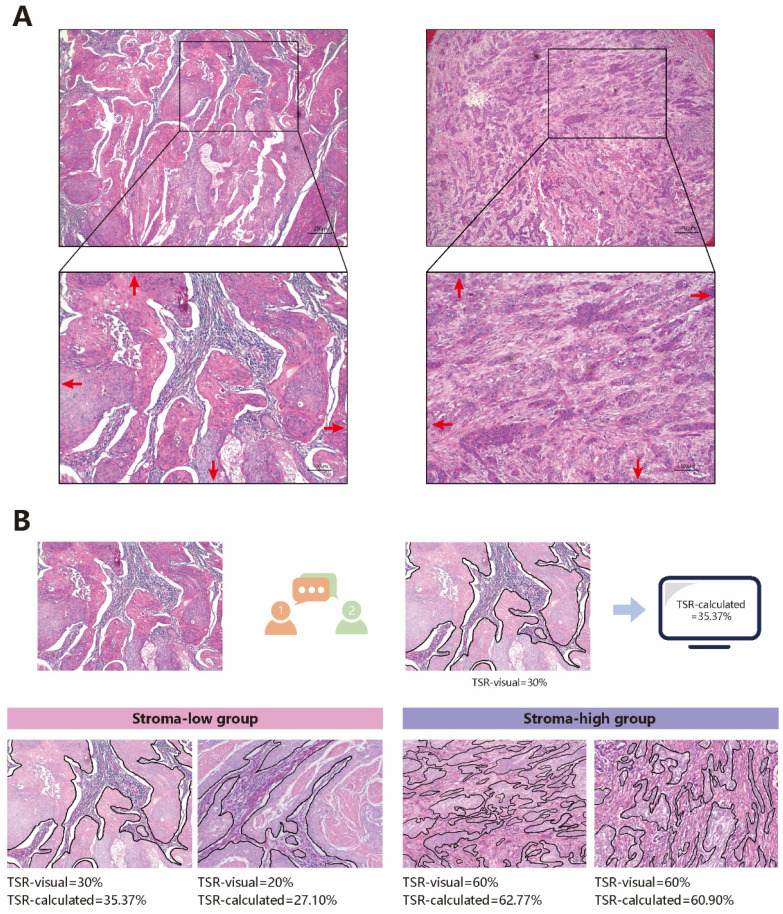
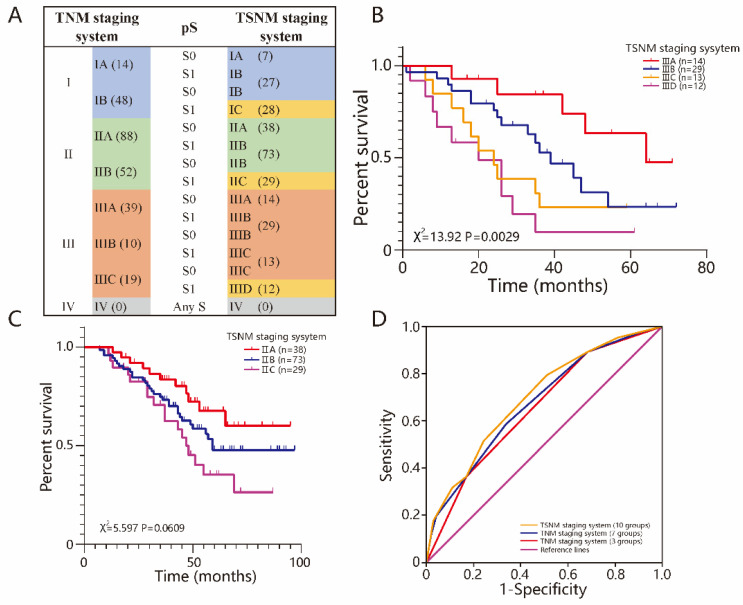
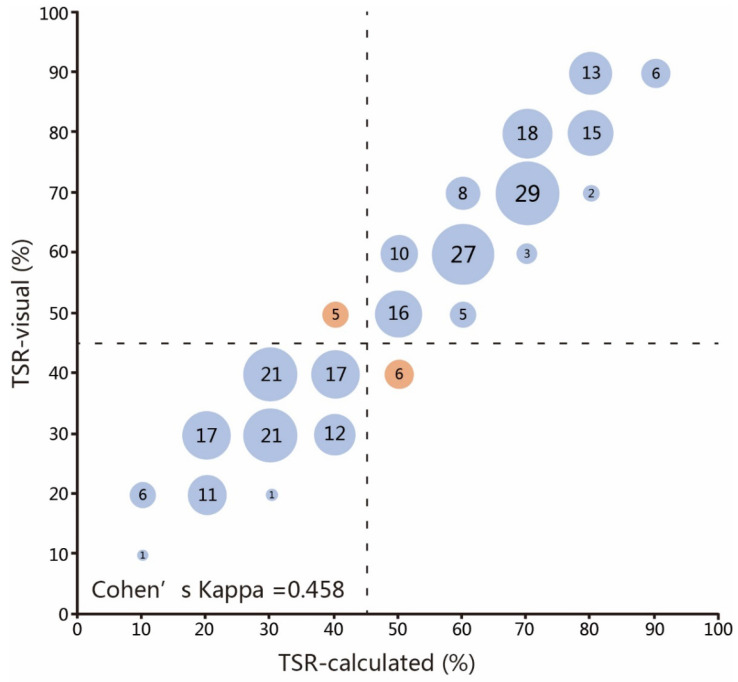
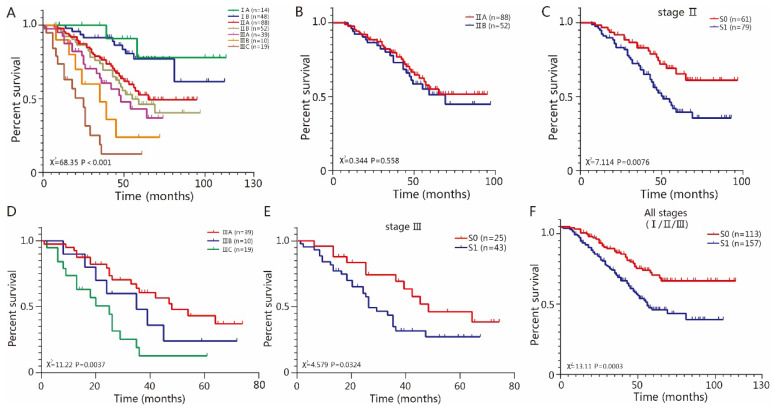
Tumor stroma is a crucial component of the tumor environment that interacted with tumor cells and modulated tumor cell proliferation, immune evasion, and metastasis. Tumor-stromal ratio (TSR) has been confirmed as an influential independent prognostic factor for diverse types of cancer, but it was seldom discussed in esophagus squamous cell carcinoma (ESCC). In present study, pathological sections from the most invasive part of the ESCC of 270 patients were analyzed for their TSR by visual inspection and software. The TSR was combined with the TNM staging system to further explain its predictive value of prognosis. The 57 cases ESCC from TCGA database also were included as an independently validated cohort. Our results indicated that TSR was a robust prognostic factor for ESCC patients. TSR by visual inspection was dependable to reflect the stroma percent of the tumor compared to software calculation. Compared with stroma-low groups, the risk of death increased by 153.1% for patients in the stroma-high group [HR=2.531 (95%CI 1.657-3.867), <0.001]. The results of ROC analysis in two cohorts indicated that TSNM staging system had better resolving ability with the largest area under the curve [0.698 95%CI (0.635-0.760), 0.691 95%CI (0.555-0.807)], compare to TNM. The novel TSNM staging system revealed strong predictive performance (<0.001). TSR was a reliable dependent indicator for ESCC prognosis. The TSNM staging system has a better discriminative ability than the conventional TNM staging system, especially for III stage patients.
肿瘤基质是肿瘤环境的关键组成部分,它与肿瘤细胞相互作用,调节肿瘤细胞的增殖、免疫逃逸和转移。肿瘤-基质比(TSR)已被确认为多种癌症的一个有影响力的独立预后因素,但在食管鳞状细胞癌(ESCC)中很少被讨论。在本研究中,通过目视检查和软件分析了270例ESCC患者最具侵袭性部位的病理切片的TSR。将TSR与TNM分期系统相结合,以进一步解释其对预后的预测价值。来自TCGA数据库的57例ESCC病例也被纳入作为独立验证队列。我们的结果表明,TSR是ESCC患者的一个强有力的预后因素。与软件计算相比,通过目视检查的TSR能够可靠地反映肿瘤的基质百分比。与基质低分组相比,基质高分组患者的死亡风险增加了153.1%[HR=2.531(95%CI 1.657-3.867),<0.001]。两个队列的ROC分析结果表明,与TNM相比,TSNM分期系统在曲线下面积最大[0.698 95%CI(0.635-0.760),0.691 95%CI(0.555-0.807)]时具有更好的分辨能力。新的TSNM分期系统显示出强大的预测性能(<0.001)。TSR是ESCC预后的一个可靠的相关指标。TSNM分期系统比传统的TNM分期系统具有更好的鉴别能力,特别是对于III期患者。